
Historical · U.S. House · New Mexico · At-Large
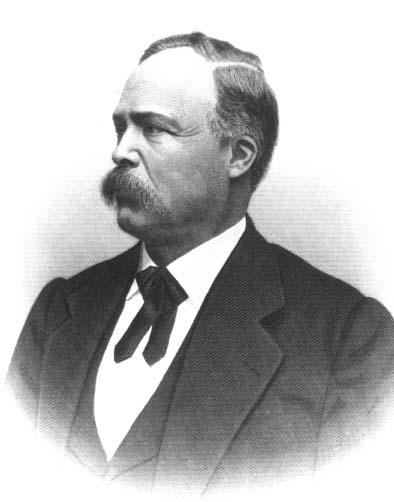
Miguel Otero
Former U.S. Representative · New Mexico At-Large · 1855–1861
Miguel Otero represented New Mexico's At-Large in the United States House of Representatives (1855–1861). The page below collects sourced biographical facts, term history, committee roles, and provenance for Otero.
Bioguide ID: O000125
Key facts
- Full name
- Miguel Otero
- State
- New Mexico
- District
- At-Large
- Party
- —
- House service
- 1855–1861
- First House term
- 1855
- Status
- Left office
- Current term ends
- —
- Born
- 1829
- Bioguide ID
- O000125
- Committee assignments
- —
- Dataset version
- 1.20260606
Biographical narrative
939 words · sourced from the Wikipedia REST extract
Miguel Otero was a significant political figure in the history of the New Mexico Territory, serving as a U.S. Representative for the at-large district. His tenure in the House of Representatives spanned three terms, beginning in 1855 and concluding in 1861. Otero's contributions to the political landscape of New Mexico were marked by his advocacy for infrastructure development, particularly the transcontinental railroad, as well as his involvement in various civic and legal roles throughout his life.
Early life and career
Miguel Antonio Otero was born on June 21, 1829, in Valencia, Nuevo México, to Don Vicente Otero and Doña Gertrudis Aragón de Otero, who were of Spanish descent. His father held various prominent civic roles, including judge and mayor in Valencia County, during both the Spanish and Mexican governance of the region. This background provided Otero with a strong foundation in public service and civic responsibility from an early age.
Otero received his early education in Valencia before pursuing higher education. In 1841, he enrolled at St. Louis University in Missouri, where he began to develop his academic and professional skills. He later graduated from Pingree College in Fishkill, New York, where he also took on the role of a teacher while studying law. After completing his studies, he returned to Missouri in 1851, where he was admitted to the bar and began practicing law.
In 1852, Otero returned to New Mexico, leading a herd of sheep, believed to belong to his brother, Antonio José Otero, overland to California. After this venture, he briefly practiced law before transitioning into a political career. His political involvement began in earnest when he became the private secretary to the Governor of New Mexico, William C. Lane, in 1852. Otero's political career continued to develop as he was elected to the second Legislative Assembly of the territory of New Mexico.
By 1854, Otero was appointed as the attorney general for the territory, a position he held for two years. His legal and political experience laid the groundwork for his subsequent election to the U.S. House of Representatives. In 1856, he successfully contested the election of José Manuel Gallegos and was seated as a Democratic Delegate to Congress, marking the beginning of his significant role in national politics.
House tenure
Otero's congressional career began with his election in 1856, and he was subsequently reelected to two more terms in the House of Representatives. His tenure was characterized by a strong commitment to the development of infrastructure in New Mexico, particularly the construction of the transcontinental railroad. He was an outspoken advocate for this cause, believing that improved transportation would benefit the economic growth of the territory.
During his time in Congress, Otero introduced significant legislation aimed at advancing the interests of New Mexico. One notable effort was the Memorial of the New Mexican Railway Company, which he presented in relation to the Pacific Railroad in 1860. His work in Congress was supported by influential figures, including the Bishop of New Mexico, Jean Baptiste Lamy, who played a role in his reelection campaigns.
Despite his successes, Otero chose not to seek renomination in 1860, concluding his congressional service with his final term ending on March 3, 1861. Following his departure from the House, he was nominated by President Abraham Lincoln to serve as the minister to Spain. However, Otero declined this position, opting instead for an appointment as secretary of the territory of New Mexico. His nomination was ultimately not confirmed by the Senate, partly due to his involvement in the 1860 Democratic National Convention and his perceived pro-Confederate sympathies.
Legislative focus and committees
Throughout his congressional career, Otero's legislative focus was primarily on infrastructure development, particularly the expansion of the railroad system in New Mexico. His advocacy for the transcontinental railroad was rooted in the belief that it would facilitate economic growth and improve connectivity for the territory. Otero's efforts included introducing memorials and resolutions that aimed to garner support for railway construction, reflecting his commitment to advancing the interests of New Mexico on a national level.
In addition to his focus on transportation, Otero's political career was marked by his involvement in various civic roles and his contributions to the legal framework of the territory. His early experiences as attorney general and his work in the Legislative Assembly provided him with a solid understanding of governance and public policy, which he applied during his time in Congress.
After leaving Congress, Otero continued to engage in business and civic activities. He was involved in merchandising, banking, and farming, achieving notable success in these endeavors. He became one of the founders and later the president of the San Miguel National Bank in Las Vegas, New Mexico, and also engaged in business ventures outside the territory, particularly in Kansas City, Missouri.
Otero's legacy extends beyond his political career, as he played a significant role in the economic development of New Mexico. His contributions to the territory were recognized posthumously, with Otero County in New Mexico and Otero County in Colorado named in his honor. His family continued the tradition of public service, with his son, also named Miguel Antonio Otero, eventually becoming the Governor of New Mexico, and his nephew, Mariano S. Otero, serving as a delegate to Congress.
Miguel Otero passed away on May 30, 1882, at the age of 52. He was laid to rest in Denver's Riverside Cemetery, leaving behind a legacy that would influence future generations in New Mexico and beyond. His life and career reflect the complexities of the political landscape during a transformative period in American history, particularly in the context of the New Mexico Territory's development.
Notable legislation
Sponsored and co-sponsored legislation for Miguel Otero is pending operator curation. The biographical narrative above carries the same provenance trail until per-bill rows are written.
Sources
- [1]https://en.wikipedia.org/wiki/Miguel_Antonio_Otero_(born_1829)Wikipedia · retrieved 2026-06-06
Notable quotes
Sourced quotes for Miguel Otero are pending operator curation. Narrative-scope provenance remains attached below.
Sources
- [1]https://en.wikipedia.org/wiki/Miguel_Antonio_Otero_(born_1829)Wikipedia · retrieved 2026-06-06
Key positions
Curated policy positions for Miguel Otero are pending operator review. The biographical narrative above carries the same provenance trail until per-topic positions are written.
Sources
- [1]https://en.wikipedia.org/wiki/Miguel_Antonio_Otero_(born_1829)Wikipedia · retrieved 2026-06-06
Terms served
- 1855–1857U.S. House · Term 1 · Democratic
- 1857–1859U.S. House · Term 2
- 1859–1861U.S. House · Term 3
Sources & provenance
Every attributable claim above carries a per-section [N] marker that resolves to the corresponding URL below. Each entry records the upstream provider, the canonical URL, and the timestamp at which the source was retrieved by the ingest pipeline.
Key facts
- https://bioguide.congress.gov/search/bio/O000125bioguide · retrieved 2026-06-06
- https://www.govtrack.us/congress/members/408378govtrack · retrieved 2026-06-06
Biographical narrative
- https://en.wikipedia.org/wiki/Miguel_Antonio_Otero_(born_1829)wikipedia · retrieved 2026-06-06
Find your representative
Every U.S. state elects representatives by district. Browse New Mexico’s delegation, the full former-representative roster, or explore the role and term length.
Related on The Candidate
- Preceded by Richard WeightmanEarlier holder of the New Mexico At-Large House seat · Democratic.Open
- Succeeded by John WattsLater holder of the New Mexico At-Large House seat · Republican.Open
- Albert SimmsFormer U.S. Representative · New Mexico District 1 · RepublicanOpen
- Benigno HernándezFormer U.S. Representative · New Mexico District 1 · RepublicanOpen
- Debra HaalandFormer U.S. Representative · New Mexico District 1 · DemocraticOpen
- Harvey FergussonFormer U.S. Representative · New Mexico District 1 · DemocraticOpen