
Historical · U.S. House · Nevada · District 2
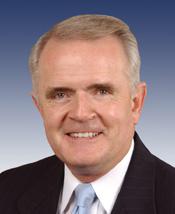
Jim Gibbons
Former U.S. Representative · Nevada District 2 · 1997–2007 · Republican
Jim Gibbons represented Nevada's District 2 in the United States House of Representatives (1997–2007) for the Republican party. The page below collects sourced biographical facts, term history, committee roles, and provenance for Gibbons.
Bioguide ID: G000152
Key facts
- Full name
- Jim Gibbons
- State
- Nevada
- District
- District 2
- Party
- Republican
- House service
- 1997–2007
- First House term
- 1997
- Status
- Left office
- Current term ends
- —
- Born
- 1944
- Bioguide ID
- G000152
- Committee assignments
- —
- Dataset version
- 1.20260605
Biographical narrative
929 words · sourced from the Wikipedia REST extract
James Arthur Gibbons is a former American politician and attorney who served as a U.S. Representative for Nevada's 2nd congressional district from 1997 until 2006. A member of the Republican Party, Gibbons transitioned from his congressional role to become the 28th Governor of Nevada, serving from 2007 to 2011. His political career is marked by his involvement in various legislative committees and his military service, which included a notable tenure in the United States Air Force and the Nevada Air National Guard.
Early life and career
Jim Gibbons was born on December 16, 1944, in Sparks, Nevada. He was raised in a religious household as a member of The Church of Jesus Christ of Latter-Day Saints. Gibbons pursued higher education at the University of Nevada, Reno, but his studies were interrupted when he enlisted in the United States Air Force during the Vietnam War, serving from 1967 to 1971. While attending college, he was an active member of the Sigma Nu fraternity, which contributed to his social and leadership development during his formative years.
After completing his military service, Gibbons continued his education at Southwestern Law School in Los Angeles, California, and later pursued postgraduate studies at the University of Southern California. He further enhanced his military qualifications by graduating from the U.S. Air Force Air Command and Staff College and the Air War College. In 1975, he joined the Nevada Air National Guard, where he eventually rose to the position of vice commander, serving from 1990 to 1996. During this period, Gibbons participated in the first Gulf War, where he was recognized for his service and awarded the Distinguished Flying Cross for his exceptional performance during a reconnaissance mission.
Gibbons began his political career in the Nevada Assembly, representing District 23, which was later renumbered as District 25, from 1988 to 1994. His initial election saw him securing approximately 64% of the vote, and he faced little opposition in subsequent elections, largely due to the Republican-leaning nature of his district. During his time in the Assembly, he was called to active service in the Gulf War, where he served as a pilot and Flight Leader flying the RF-4C Phantom II reconnaissance aircraft.
In 1994, Gibbons sought to advance his political career by running for the governorship of Nevada as the Republican nominee. However, he was unsuccessful in this bid, losing to the incumbent Democratic governor, Bob Miller.
House tenure
In 1996, Gibbons entered the race for the U.S. House of Representatives after Barbara Vucanovich, the long-serving representative of Nevada's 2nd congressional district, announced her retirement. Gibbons won the Republican primary, which was considered the more significant contest in this heavily Republican district, and subsequently won the general election in November. He served a total of five terms in the House, with his first term beginning in 1997 and concluding in 2006.
During his tenure in Congress, Gibbons was active on several important committees. He served as the vice chairman of the House Resources Committee and was a member of the Armed Services Committee, the Homeland Security Committee, and the Permanent Select Committee on Intelligence. His legislative work often focused on issues pertinent to his constituents and national security, reflecting his background in military service.
Gibbons was reelected four times with minimal opposition, including a notable run in 1998 where he faced no major-party challenger. His congressional staff included Michael Dayton, who served as his Chief of Staff until 2002, when Robert Uithoven took over the position. Uithoven remained with Gibbons' office for several years and later played a significant role in his gubernatorial campaign.
In 2006, Gibbons announced that he would not seek a sixth term in the House, choosing instead to run for governor of Nevada. His decision marked a significant shift in his political career as he aimed to take on a higher executive role within the state.
Legislative focus and committees
During his time in the U.S. House of Representatives, Gibbons was involved in various legislative efforts and served on multiple committees that shaped his focus on national and local issues. As vice chairman of the House Resources Committee, he played a role in addressing matters related to natural resources, public lands, and environmental policies, which are particularly relevant to Nevada's diverse landscapes and economic interests.
His membership on the Armed Services Committee allowed him to contribute to discussions surrounding military readiness, veterans' affairs, and defense policies, drawing on his personal experience as a veteran. Additionally, his involvement with the Homeland Security Committee underscored his commitment to national security and emergency preparedness, which were critical issues during his time in office, particularly in the post-9/11 era.
Gibbons also participated in the Permanent Select Committee on Intelligence, where he engaged in oversight of intelligence operations and national security matters. His background in military service and his legal training provided him with a unique perspective on the complexities of intelligence and defense.
Throughout his congressional career, Gibbons focused on issues that resonated with his constituents, including economic development, public safety, and veterans' affairs. His legislative priorities reflected the needs of Nevada's residents, particularly in light of the state's economic challenges and demographic changes.
In summary, Jim Gibbons' political career is characterized by his military service, his tenure in the Nevada Assembly, and his time as a U.S. Representative. His legislative work and committee assignments illustrate his commitment to addressing the needs of his constituents and contributing to national security and resource management. After serving in the House, he transitioned to the role of governor, where he continued to influence Nevada's political landscape until 2011.
Notable legislation
Sponsored and co-sponsored legislation for Jim Gibbons is pending operator curation. The biographical narrative above carries the same provenance trail until per-bill rows are written.
Sources
- [1]https://en.wikipedia.org/wiki/Jim_Gibbons_(American_politician)Wikipedia · retrieved 2026-06-05
Notable quotes
Sourced quotes for Jim Gibbons are pending operator curation. Narrative-scope provenance remains attached below.
Sources
- [1]https://en.wikipedia.org/wiki/Jim_Gibbons_(American_politician)Wikipedia · retrieved 2026-06-05
Key positions
Curated policy positions for Jim Gibbons are pending operator review. The biographical narrative above carries the same provenance trail until per-topic positions are written.
Sources
- [1]https://en.wikipedia.org/wiki/Jim_Gibbons_(American_politician)Wikipedia · retrieved 2026-06-05
Terms served
- 1997–1999U.S. House · Term 1 · Republican
- 1999–2001U.S. House · Term 2 · Republican
- 2001–2003U.S. House · Term 3 · Republican
- 2003–2005U.S. House · Term 4 · Republican
- 2005–2007U.S. House · Term 5 · Republican
Sources & provenance
Every attributable claim above carries a per-section [N] marker that resolves to the corresponding URL below. Each entry records the upstream provider, the canonical URL, and the timestamp at which the source was retrieved by the ingest pipeline.
Key facts
- https://bioguide.congress.gov/search/bio/G000152bioguide · retrieved 2026-06-05
- http://www.house.gov/gibbonshouse.gov · retrieved 2026-06-05
Biographical narrative
- https://en.wikipedia.org/wiki/Jim_Gibbons_(American_politician)wikipedia · retrieved 2026-06-05
Find your representative
Every U.S. state elects representatives by district. Browse Nevada’s delegation, the full former-representative roster, or explore the role and term length.
Related on The Candidate
- Preceded by Barbara VucanovichEarlier holder of the Nevada District 2 House seat · Republican.Open
- James BilbrayFormer U.S. Representative · Nevada District 1 · DemocraticOpen
- Shelley BerkleyFormer U.S. Representative · Nevada District 1 · DemocraticOpen
- Jon Porter Sr.Former U.S. Representative · Nevada District 3 · RepublicanOpen
- Republican PartyFederal candidates and office holders on the Republican line.Open
- Representatives from NevadaEvery former U.S. Representative who has represented Nevada.Open