
Historical · U.S. House · New York · District 1
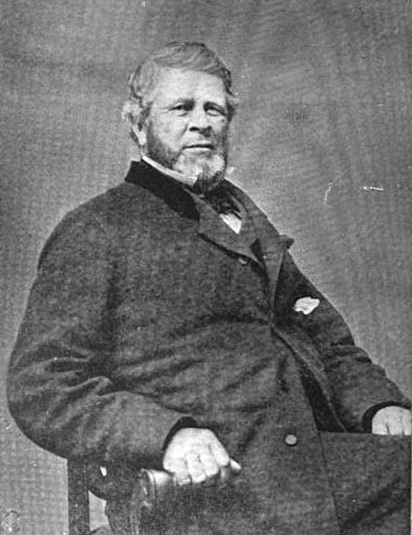
Edward Smith
Former U.S. Representative · New York District 1 · 1861–1863 · Democratic
Edward Smith represented New York's District 1 in the United States House of Representatives (1861–1863) for the Democratic party. The page below collects sourced biographical facts, term history, committee roles, and provenance for Smith.
Bioguide ID: S000529
Key facts
- Full name
- Edward Smith
- State
- New York
- District
- District 1
- Party
- Democratic
- House service
- 1861–1863
- First House term
- 1861
- Status
- Left office
- Current term ends
- —
- Born
- 1809
- Bioguide ID
- S000529
- Committee assignments
- —
- Dataset version
- 1.20260606
Biographical narrative
831 words · sourced from the Wikipedia REST extract
Edward Smith was an American politician who served as a U.S. Representative from New York during the early years of the American Civil War. A member of the Democratic Party, he held office for one term in the House of Representatives from 1861 to 1863. His political career was marked by his engagement in local governance prior to his congressional service, as well as his return to agricultural pursuits following his time in office.
Early life and career
Edward Smith was born on May 5, 1809, in Smithtown, Long Island, New York. He received his early education at private schools, which laid the foundation for his future endeavors. Following his education, Smith engaged in agricultural activities, which were a significant aspect of life in the rural communities of Long Island during that period. His involvement in farming not only provided him with a livelihood but also connected him to the local community and its needs.
In addition to his agricultural pursuits, Smith took on various roles in local government, reflecting his commitment to public service. He served as Justice of the Peace in Smithtown from 1833 to 1843, a position that allowed him to adjudicate minor legal disputes and contribute to the administration of justice in his community. Following this role, he was appointed as an assessor from 1840 to 1843, where he was responsible for evaluating property values for taxation purposes. His experience in these positions likely provided him with insights into the political and economic issues facing his constituents.
Smith's political career continued to evolve as he took on the role of supervisor for Smithtown from 1856 to 1860. In this capacity, he was responsible for overseeing local government operations and addressing the needs of the township. His various roles in local governance helped to establish his reputation as a dedicated public servant and laid the groundwork for his eventual election to the U.S. Congress.
House tenure
Edward Smith's congressional career began when he was elected as a Democrat to the Thirty-seventh Congress, which convened on March 4, 1861. He successfully defeated the incumbent representative, Luther C. Carter, in the election, marking a significant achievement in his political journey. Smith's term in the House of Representatives coincided with a tumultuous period in American history, as the nation was embroiled in the Civil War. His tenure lasted until March 3, 1863, at which point he completed his single term in office.
During his time in Congress, Smith participated in legislative discussions and decisions that were critical to the war effort and the broader political landscape of the United States. However, specific details regarding his contributions to particular legislation or debates during his time in office are not extensively documented. His election as a Democrat during the Civil War suggests that he may have been involved in discussions related to the war's impact on New York and the nation as a whole.
After completing his term, Smith chose not to seek renomination in 1862. This decision marked the end of his congressional career, and he returned to his agricultural roots in Suffolk County, New York. His choice to resume farming indicates a preference for a quieter life after the intense political climate of the Civil War era.
Legislative focus and committees
While specific details about Edward Smith's legislative focus and committee assignments during his time in the House of Representatives are not provided, it can be inferred that as a member of the Democratic Party during the Civil War, he would have been involved in issues pertinent to the war and its effects on his constituents. The Democratic Party at that time often held differing views from the Republican majority regarding the war, particularly concerning issues of states' rights and the conduct of the war.
Given the context of his election and the period in which he served, Smith may have engaged in discussions surrounding military funding, support for soldiers and their families, and the economic implications of the war on New York and the nation. His background in local governance and agriculture likely informed his perspectives on these issues, as he would have been attuned to the needs and concerns of his constituents.
After leaving Congress, Smith returned to farming, which suggests a continuation of his commitment to the agricultural community. His later years were spent in Smithtown, where he remained connected to the area he had served throughout his life. Edward Smith passed away on August 7, 1885, in Smithtown, New York. He was laid to rest in St. James' Protestant Episcopal Cemetery, located in St. James, Long Island, New York.
In summary, Edward Smith's life and career reflect the experiences of a local leader who transitioned into national politics during a critical period in American history. His service as a U.S. Representative, though limited to a single term, occurred during a time of significant national upheaval, and his return to farming after his congressional tenure underscores his enduring connection to his roots in Long Island.
Notable legislation
Sponsored and co-sponsored legislation for Edward Smith is pending operator curation. The biographical narrative above carries the same provenance trail until per-bill rows are written.
Sources
- [1]https://en.wikipedia.org/wiki/Edward_H._Smith_(politician)Wikipedia · retrieved 2026-06-06
Notable quotes
Sourced quotes for Edward Smith are pending operator curation. Narrative-scope provenance remains attached below.
Sources
- [1]https://en.wikipedia.org/wiki/Edward_H._Smith_(politician)Wikipedia · retrieved 2026-06-06
Key positions
Curated policy positions for Edward Smith are pending operator review. The biographical narrative above carries the same provenance trail until per-topic positions are written.
Sources
- [1]https://en.wikipedia.org/wiki/Edward_H._Smith_(politician)Wikipedia · retrieved 2026-06-06
Terms served
- 1861–1863U.S. House · Term 1 · Democratic
Sources & provenance
Every attributable claim above carries a per-section [N] marker that resolves to the corresponding URL below. Each entry records the upstream provider, the canonical URL, and the timestamp at which the source was retrieved by the ingest pipeline.
Key facts
- https://bioguide.congress.gov/search/bio/S000529bioguide · retrieved 2026-06-06
- https://www.govtrack.us/congress/members/410012govtrack · retrieved 2026-06-06
Biographical narrative
- https://en.wikipedia.org/wiki/Edward_H._Smith_(politician)wikipedia · retrieved 2026-06-06
Find your representative
Every U.S. state elects representatives by district. Browse New York’s delegation, the full former-representative roster, or explore the role and term length.
Related on The Candidate
- Preceded by Luther CarterEarlier holder of the New York District 1 House seat · Republican.Open
- Succeeded by Dwight TownsendLater holder of the New York District 1 House seat · Democratic.Open
- Abel HuntingtonFormer U.S. Representative · New York District 1 · JacksonOpen
- Alfred ChapinFormer U.S. Representative · New York District 1 · DemocraticOpen
- Cadwallader ColdenFormer U.S. Representative · New York District 1 · FederalistOpen
- Charles FloydFormer U.S. Representative · New York District 1 · DemocraticOpen