
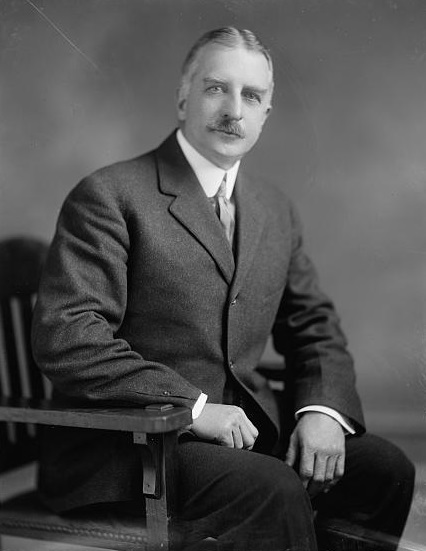
Historical · U.S. House · New York · District 1
Frederick Hicks
Former U.S. Representative · New York District 1 · 1915–1923 · Republican
Frederick Hicks represented New York's District 1 in the United States House of Representatives (1915–1923) for the Republican party. The page below collects sourced biographical facts, term history, committee roles, and provenance for Hicks.
Bioguide ID: H000564
Key facts
- Full name
- Frederick Hicks
- State
- New York
- District
- District 1
- Party
- Republican
- House service
- 1915–1923
- First House term
- 1915
- Status
- Left office
- Current term ends
- —
- Born
- 1872
- Bioguide ID
- H000564
- Committee assignments
- —
- Dataset version
- 1.20260606
Biographical narrative
836 words · sourced from the Wikipedia REST extract
Frederick Hicks was an American banker and politician who served as a U.S. Representative from New York's 1st congressional district from 1916 to 1923. A member of the Republican Party, Hicks was notable for his involvement in significant legislative matters during his tenure, including his support for women's suffrage. His political career was marked by a contentious election process and a commitment to public service that extended beyond his time in Congress.
Early life and career
Frederick Charles Hicks was born on March 6, 1872, in Westbury, New York. He received his early education in the public school system before attending Swarthmore College and later Harvard University. After completing his education, Hicks entered the banking industry, where he built a career that would later inform his political endeavors. His background in finance likely contributed to his understanding of economic issues during his time in Congress.
Hicks came from a politically active family; his brother, William Willets Cocks, also served as a U.S. Representative from New York. This familial connection may have influenced Hicks's own political aspirations. In 1901, he published a work titled "Lectures on the Theory of Economics," indicating his interest in economic theory and policy, which would become relevant in his legislative work.
Despite his early aspirations, Hicks faced challenges in his political career. He ran unsuccessfully for election to the Sixty-third Congress in 1912. However, he persevered and was elected to the Sixty-fourth Congress in 1914. His election was notable for its narrow margin; he was initially declared the winner by just 15 votes. This result led to a series of legal challenges that ultimately reduced his lead to 4 votes and then 10 votes. The protracted legal disputes surrounding the election made it one of the longest and most contentious in the history of the House of Representatives. Hicks was not officially certified as the winner until December 21, 1915, and he was sworn in when Congress reconvened in January 1916.
House tenure
Frederick Hicks served in the U.S. House of Representatives from January 4, 1916, until March 3, 1923, completing four terms in total. During his time in office, he was a member of the Republican Party, which was influential in shaping national policy during the early 20th century. Hicks's tenure coincided with significant historical events, including World War I and the women's suffrage movement.
One of the most notable aspects of Hicks's congressional career was his support for women's suffrage. He played a crucial role in the passage of the Nineteenth Amendment, which granted women the right to vote. This commitment was underscored by a personal sacrifice; Hicks was at the bedside of his dying wife when the final vote on the amendment was scheduled. Despite the emotional toll, he chose to participate in the vote at her urging, ultimately providing the decisive vote that helped secure the amendment's passage. This moment is often highlighted as a testament to his dedication to both his family and his political responsibilities.
Hicks's political career came to an end when he chose not to seek renomination in 1922. Following his departure from Congress, he declined a diplomatic position in Uruguay that had been offered to him by President Warren Harding, indicating a desire to step back from the political spotlight.
Legislative focus and committees
During his time in the House of Representatives, Frederick Hicks was involved in various legislative matters, reflecting the priorities of the Republican Party and the interests of his constituents in New York. His background in banking and economics likely influenced his approach to fiscal and economic policies, although specific details regarding his committee assignments or legislative initiatives are not extensively documented.
In addition to his legislative work, Hicks's post-congressional career included significant roles within the Republican Party. He served as the eastern director of the Republican National Committee campaign in 1924, contributing to the party's efforts in national elections. His political acumen was further recognized when President Calvin Coolidge appointed him as a member of a commission representing the United States at the Centennial celebration of the Battle of Aracucho in Lima, Peru, in December 1924. This appointment highlighted his ongoing involvement in international and diplomatic matters even after his congressional service.
In 1925, Hicks was appointed as the Alien Property Custodian, a role he held until his death later that year. This position involved overseeing the management of property owned by foreign nationals, particularly in the context of the geopolitical landscape following World War I. Hicks's work in this capacity reflected his continued commitment to public service and his expertise in economic and legal matters.
Frederick Hicks passed away on December 14, 1925, in Washington, D.C. He was interred in Quaker Cemetery in Westbury, Long Island, New York. His legacy includes his contributions to the legislative process during a transformative period in American history, particularly in relation to women's rights and economic policy. His life and career exemplify the complexities of early 20th-century American politics and the role of individual representatives in shaping national policy.
Notable legislation
Sponsored and co-sponsored legislation for Frederick Hicks is pending operator curation. The biographical narrative above carries the same provenance trail until per-bill rows are written.
Sources
- [1]https://en.wikipedia.org/wiki/Frederick_C._HicksWikipedia · retrieved 2026-06-06
Notable quotes
Sourced quotes for Frederick Hicks are pending operator curation. Narrative-scope provenance remains attached below.
Sources
- [1]https://en.wikipedia.org/wiki/Frederick_C._HicksWikipedia · retrieved 2026-06-06
Key positions
Curated policy positions for Frederick Hicks are pending operator review. The biographical narrative above carries the same provenance trail until per-topic positions are written.
Sources
- [1]https://en.wikipedia.org/wiki/Frederick_C._HicksWikipedia · retrieved 2026-06-06
Terms served
- 1915–1917U.S. House · Term 1 · Republican
- 1917–1919U.S. House · Term 2 · Republican
- 1919–1921U.S. House · Term 3 · Republican
- 1921–1923U.S. House · Term 4 · Republican
Sources & provenance
Every attributable claim above carries a per-section [N] marker that resolves to the corresponding URL below. Each entry records the upstream provider, the canonical URL, and the timestamp at which the source was retrieved by the ingest pipeline.
Key facts
- https://bioguide.congress.gov/search/bio/H000564bioguide · retrieved 2026-06-06
- https://www.govtrack.us/congress/members/405426govtrack · retrieved 2026-06-06
Biographical narrative
- https://en.wikipedia.org/wiki/Frederick_C._Hickswikipedia · retrieved 2026-06-06
Find your representative
Every U.S. state elects representatives by district. Browse New York’s delegation, the full former-representative roster, or explore the role and term length.
Related on The Candidate
- Preceded by Lathrop BrownEarlier holder of the New York District 1 House seat · Democratic.Open
- Succeeded by Robert BaconLater holder of the New York District 1 House seat · Republican.Open
- Abel HuntingtonFormer U.S. Representative · New York District 1 · JacksonOpen
- Alfred ChapinFormer U.S. Representative · New York District 1 · DemocraticOpen
- Cadwallader ColdenFormer U.S. Representative · New York District 1 · FederalistOpen
- Charles FloydFormer U.S. Representative · New York District 1 · DemocraticOpen