
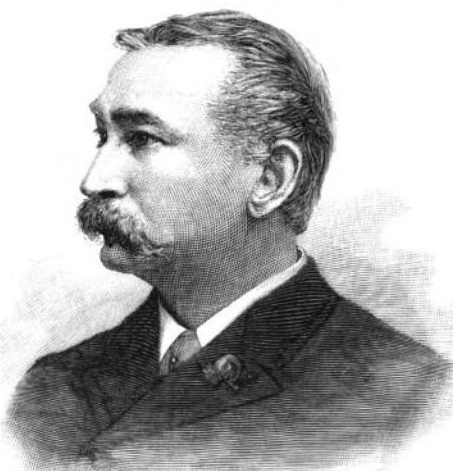
Historical · U.S. House · New York · District 1
James Covert
Former U.S. Representative · New York District 1 · 1877–1895 · Democratic
James Covert represented New York's District 1 in the United States House of Representatives (1877–1895) for the Democratic party. The page below collects sourced biographical facts, term history, committee roles, and provenance for Covert.
Bioguide ID: C000814
Key facts
- Full name
- James Covert
- State
- New York
- District
- District 1
- Party
- Democratic
- House service
- 1877–1895
- First House term
- 1877
- Status
- Left office
- Current term ends
- —
- Born
- 1842
- Bioguide ID
- C000814
- Committee assignments
- —
- Dataset version
- 1.20260606
Biographical narrative
921 words · sourced from the Wikipedia REST extract
James Covert was an American lawyer and politician who served as a U.S. Representative from New York. A member of the Democratic Party, he held office in the House of Representatives for a total of five terms between 1877 and 1895. Covert's political career was marked by his involvement in various legislative committees, including significant roles as Chairman of the House Committee on Agriculture and the House Committee on Patents. His contributions to public service extended beyond Congress, as he held several local government positions prior to his election to the House.
Early life and career
James Covert was born on September 2, 1842, in Oyster Bay, New York. He received his early education in the public schools of the area and furthered his academic pursuits in Locust Valley. This foundational education provided him with the necessary skills and knowledge to pursue a career in law. Covert studied law diligently and was admitted to the bar in 1863, which marked the beginning of his professional legal career. He commenced his practice in Flushing, New York, where he established himself as a competent attorney.
In addition to his legal practice, Covert was actively involved in local governance and education. He served as the district school commissioner from 1867 to 1870, a role that allowed him to influence educational policies and practices in his community. Following this position, he took on the role of assistant prosecuting attorney for Queens County, where he was responsible for prosecuting criminal cases and upholding the law. Covert's legal expertise and commitment to public service led to his election as Surrogate of Queens County, a position he held from 1870 to 1874. In this capacity, he oversaw matters related to wills, estates, and guardianships, further solidifying his reputation as a dedicated public servant.
House tenure
Covert's political career at the federal level began when he was elected as a Democrat to the 45th and 46th United States Congresses. His first term in the House of Representatives commenced on March 4, 1877, and concluded on March 3, 1881. During this period, he was actively involved in legislative processes and served as Chairman of the House Committee on Agriculture during the 46th Congress. This role placed him at the forefront of discussions and decisions related to agricultural policies, which were critical to the economy and livelihood of many Americans at the time.
After a brief hiatus from Congress, Covert returned to public office when he was elected to the 51st, 52nd, and 53rd United States Congresses, serving from March 4, 1889, until March 3, 1895. His return to the House was marked by continued engagement in legislative matters, and he once again took on a leadership role as Chairman of the House Committee on Patents during the 53rd Congress. This committee was responsible for overseeing issues related to intellectual property and patent law, which were becoming increasingly important as the United States experienced rapid industrialization and innovation.
Throughout his congressional tenure, Covert participated in various debates and discussions that shaped the legislative landscape of the time. His work on committees allowed him to influence key policies and advocate for the interests of his constituents in New York. Covert's experience in both agriculture and intellectual property positioned him as a knowledgeable legislator who could address a range of issues pertinent to the American public.
Legislative focus and committees
James Covert's legislative focus during his time in Congress reflected the interests and needs of his constituents, as well as the broader national priorities of the late 19th century. As Chairman of the House Committee on Agriculture, Covert was involved in discussions surrounding agricultural policies, which were vital to the economy, particularly in rural areas. The agricultural sector was a significant part of the American economy during this period, and Covert's leadership on this committee allowed him to advocate for farmers and agricultural workers, addressing issues such as crop prices, land use, and farming practices.
In his later congressional terms, Covert's role as Chairman of the House Committee on Patents highlighted the growing importance of intellectual property rights in an era of technological advancement. The late 19th century was characterized by significant innovations and inventions, and the protection of these intellectual properties became essential for fostering creativity and economic growth. Covert's involvement in patent legislation allowed him to contribute to the establishment of a legal framework that would support inventors and entrepreneurs, ensuring that their rights were protected.
Covert's legislative work was not limited to these two committees, as he participated in various discussions and initiatives that addressed a wide range of issues affecting his constituents and the nation. His experience as a lawyer and his background in local government provided him with a unique perspective on the challenges facing both urban and rural communities. Throughout his time in Congress, he remained committed to representing the interests of New Yorkers and advocating for policies that would benefit the public.
After concluding his service in Congress in 1895, Covert returned to his legal practice. He relocated to Brooklyn in 1896, where he continued to engage in legal work until his passing. James Covert died on May 16, 1910, in Brooklyn, New York. His contributions to public service, both at the local and federal levels, left a lasting impact on his community and the legislative processes of his time. He was interred at Mount Olivet Cemetery in Maspeth, New York, where he rests alongside many of his contemporaries who also dedicated their lives to public service and the advancement of their communities.
Notable legislation
Sponsored and co-sponsored legislation for James Covert is pending operator curation. The biographical narrative above carries the same provenance trail until per-bill rows are written.
Sources
- [1]https://en.wikipedia.org/wiki/James_W._CovertWikipedia · retrieved 2026-06-06
Notable quotes
Sourced quotes for James Covert are pending operator curation. Narrative-scope provenance remains attached below.
Sources
- [1]https://en.wikipedia.org/wiki/James_W._CovertWikipedia · retrieved 2026-06-06
Key positions
Curated policy positions for James Covert are pending operator review. The biographical narrative above carries the same provenance trail until per-topic positions are written.
Sources
- [1]https://en.wikipedia.org/wiki/James_W._CovertWikipedia · retrieved 2026-06-06
Terms served
- 1877–1879U.S. House · Term 1 · Democratic
- 1879–1881U.S. House · Term 2 · Democratic
- 1889–1891U.S. House · Term 3 · Democratic
- 1891–1893U.S. House · Term 4 · Democratic
- 1893–1895U.S. House · Term 5 · Democratic
Sources & provenance
Every attributable claim above carries a per-section [N] marker that resolves to the corresponding URL below. Each entry records the upstream provider, the canonical URL, and the timestamp at which the source was retrieved by the ingest pipeline.
Key facts
- https://bioguide.congress.gov/search/bio/C000814bioguide · retrieved 2026-06-06
- https://www.govtrack.us/congress/members/402932govtrack · retrieved 2026-06-06
Biographical narrative
- https://en.wikipedia.org/wiki/James_W._Covertwikipedia · retrieved 2026-06-06
Find your representative
Every U.S. state elects representatives by district. Browse New York’s delegation, the full former-representative roster, or explore the role and term length.
Related on The Candidate
- Preceded by Henry MetcalfeEarlier holder of the New York District 1 House seat · Democratic.Open
- Succeeded by Joseph BelfordLater holder of the New York District 1 House seat · Republican.Open
- Abel HuntingtonFormer U.S. Representative · New York District 1 · JacksonOpen
- Alfred ChapinFormer U.S. Representative · New York District 1 · DemocraticOpen
- Cadwallader ColdenFormer U.S. Representative · New York District 1 · FederalistOpen
- Charles FloydFormer U.S. Representative · New York District 1 · DemocraticOpen