
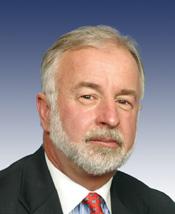
Historical · U.S. House · New York · District 1
Timothy Bishop
Former U.S. Representative · New York District 1 · 2003–2015 · Democratic
Timothy Bishop represented New York's District 1 in the United States House of Representatives (2003–2015) for the Democratic party. The page below collects sourced biographical facts, term history, committee roles, and provenance for Bishop.
Bioguide ID: B001242
Key facts
- Full name
- Timothy Bishop
- State
- New York
- District
- District 1
- Party
- Democratic
- House service
- 2003–2015
- First House term
- 2003
- Status
- Left office
- Current term ends
- —
- Born
- 1950
- Bioguide ID
- B001242
- Committee assignments
- —
- Dataset version
- 1.20260605
Biographical narrative
800 words · sourced from the Wikipedia REST extract
Timothy H. Bishop is a former U.S. Representative who served New York's 1st congressional district from 2003 until 2015. A member of the Democratic Party, Bishop's political career began with his election to Congress in 2002, where he succeeded incumbent Republican Felix Grucci. Over his six terms in office, Bishop focused on various legislative issues, participated in multiple committees, and engaged in significant community advocacy. His tenure was marked by both electoral successes and challenges, culminating in a defeat in the 2014 election.
Early life and career
Timothy Howard Bishop was born on June 1, 1950, in Southampton, New York. He is a twelfth-generation resident of the area and is the son of Catherine Roesel and Howard Cortland Bishop. His family history includes notable figures, such as his great-grandfather, Benjamin H. Bishop, who served as mayor of Southampton. Bishop's ancestry includes English, Irish, and German roots.
Bishop pursued higher education at the College of the Holy Cross, where he earned a bachelor's degree in 1972. He later obtained a master's degree from Long Island University in 1981. His professional career began at Southampton College in 1973, where he took on various roles, including admissions counselor, director of financial aid, and provost. Over a span of 16 years, he contributed to the college's growth and reputation, helping it produce 36 Fulbright Scholars. Bishop was instrumental in developing a successful fundraising initiative known as the All for the Sea rock concerts, which generated significant revenue for the college.
House tenure
Bishop entered politics with his election to the U.S. House of Representatives in 2002, defeating incumbent Felix J. Grucci, Jr. in a competitive race. His campaign was marked by controversy, including allegations from Grucci regarding Bishop's handling of rape statistics at Southampton College, which were based on misleading information. Despite these challenges, Bishop won the election and began his first term in January 2003.
Following his initial victory, Bishop was re-elected multiple times. In 2004, he defeated Republican William M. Manger, Jr. with a significant margin. His subsequent elections in 2006 and 2008 saw him maintain strong support, particularly against Republican candidates Italo Zanzi and Lee Zeldin, respectively. In 2010, Bishop faced a closer race against Republican Randy Altschuler, winning by a narrow margin. He again defeated Altschuler in 2012, although the Independence Party endorsement, which he had previously received, went to his opponent that year.
In 2014, Bishop sought re-election but faced a challenging race against Lee Zeldin, whom he had previously defeated in 2008. Despite running unopposed in the Democratic primary, Bishop lost the general election, concluding his congressional career on January 3, 2015.
Legislative focus and committees
During his time in the House, Bishop was involved in various legislative initiatives and supported key pieces of legislation. He voted in favor of the Affordable Care Act and the Health Care and Education Reconciliation Act of 2010, demonstrating his commitment to healthcare reform. Additionally, he supported the Housing and Economic Recovery Act of 2008, the Emergency Economic Stabilization Act (commonly known as TARP), and the American Recovery and Reinvestment Act of 2009, which aimed to stimulate the economy during the financial crisis.
Bishop was also active in advocating for local issues, such as participating in efforts to save the 106th Air Rescue Wing at Gabreski Airport from closure by the Pentagon. He sponsored legislation to prevent the dumping of contaminated dredge waste in Long Island Sound and supported the Shinnecock Indian tribe's quest for federal recognition, including advocating for funding in the federal budget.
Throughout his congressional tenure, Bishop served on several committees, including the Committee on Education and the Workforce, where he was involved in subcommittees focusing on workforce protections and higher education. He also served on the Committee on Transportation and Infrastructure, participating in various subcommittees related to maritime transportation, railroads, and environmental resources.
In addition to his committee work, Bishop was a member of several caucuses, reflecting his interests in various policy areas. He co-chaired the National Archives Caucus and the Democratic Budget Group and was involved in caucuses addressing autism research, addiction treatment, and military family issues, among others.
Bishop's congressional career was not without controversy. In September 2013, the Office of Congressional Ethics recommended further investigation into allegations that he solicited a campaign contribution in exchange for assistance with a fireworks permit. Although Bishop denied the allegations and the investigation by the Justice Department concluded without charges, the ethics probe remained open until he left office.
Overall, Timothy H. Bishop's career in the U.S. House of Representatives was characterized by a focus on healthcare, education, and local advocacy, alongside a commitment to serving his constituents in New York's 1st congressional district. His legislative efforts and committee assignments reflect a dedication to addressing both national and local issues during his six terms in office.
Notable legislation
Sponsored and co-sponsored legislation for Timothy Bishop is pending operator curation. The biographical narrative above carries the same provenance trail until per-bill rows are written.
Sources
- [1]https://en.wikipedia.org/wiki/Tim_BishopWikipedia · retrieved 2026-06-05
Notable quotes
Sourced quotes for Timothy Bishop are pending operator curation. Narrative-scope provenance remains attached below.
Sources
- [1]https://en.wikipedia.org/wiki/Tim_BishopWikipedia · retrieved 2026-06-05
Key positions
Curated policy positions for Timothy Bishop are pending operator review. The biographical narrative above carries the same provenance trail until per-topic positions are written.
Sources
- [1]https://en.wikipedia.org/wiki/Tim_BishopWikipedia · retrieved 2026-06-05
Terms served
- 2003–2005U.S. House · Term 1 · Democratic
- 2005–2007U.S. House · Term 2 · Democratic
- 2007–2009U.S. House · Term 3 · Democratic
- 2009–2011U.S. House · Term 4 · Democratic
- 2011–2013U.S. House · Term 5 · Democratic
- 2013–2015U.S. House · Term 6 · Democratic
Sources & provenance
Every attributable claim above carries a per-section [N] marker that resolves to the corresponding URL below. Each entry records the upstream provider, the canonical URL, and the timestamp at which the source was retrieved by the ingest pipeline.
Key facts
- https://bioguide.congress.gov/search/bio/B001242bioguide · retrieved 2026-06-05
- http://timbishop.house.govhouse.gov · retrieved 2026-06-05
Biographical narrative
- https://en.wikipedia.org/wiki/Tim_Bishopwikipedia · retrieved 2026-06-05
Find your representative
Every U.S. state elects representatives by district. Browse New York’s delegation, the full former-representative roster, or explore the role and term length.
Related on The Candidate
- Preceded by Felix GrucciEarlier holder of the New York District 1 House seat · Republican.Open
- Succeeded by Lee ZeldinLater holder of the New York District 1 House seat · Republican.Open
- Abel HuntingtonFormer U.S. Representative · New York District 1 · JacksonOpen
- Alfred ChapinFormer U.S. Representative · New York District 1 · DemocraticOpen
- Cadwallader ColdenFormer U.S. Representative · New York District 1 · FederalistOpen
- Charles FloydFormer U.S. Representative · New York District 1 · DemocraticOpen