
Historical · U.S. House · New York · District 10
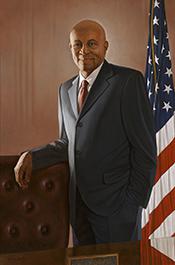
Ed Towns
Former U.S. Representative · New York District 10 · 1983–2013 · Democratic
Ed Towns represented New York's District 10 in the United States House of Representatives (1983–2013) for the Democratic party. The page below collects sourced biographical facts, term history, committee roles, and provenance for Towns.
Bioguide ID: T000326
Key facts
- Full name
- Ed Towns
- State
- New York
- District
- District 10
- Party
- Democratic
- House service
- 1983–2013
- First House term
- 1983
- Status
- Left office
- Current term ends
- —
- Born
- 1934
- Bioguide ID
- T000326
- Committee assignments
- —
- Dataset version
- 1.20260605
Biographical narrative
1,012 words · sourced from the Wikipedia REST extract
Edolphus Towns is a former U.S. Representative who served the 10th congressional district of New York from 1993 until 2013. A member of the Democratic Party, Towns had a lengthy career in public service, spanning three decades in the U.S. House of Representatives. He was known for his leadership roles, including serving as the chairman of the House Oversight and Government Reform Committee from 2009 to 2011. Throughout his tenure, he focused on various legislative issues, particularly those affecting underserved communities in Brooklyn.
Early life and career
Edolphus Towns was born on July 21, 1934, in Chadbourn, North Carolina. He was raised in a family that valued education and service; his parents were Versie Brown and Edolphus Towns. Towns completed his high school education at West Side High School in Chadbourn in 1952. He pursued higher education at North Carolina A&T State University, where he earned a bachelor's degree in sociology in 1956. Later, he obtained a master's degree in social work from Adelphi University in 1973. During his academic journey, he became a member of the Phi Beta Sigma fraternity, which is known for its commitment to scholarship and community service.
Towns's professional career began in education and healthcare. He worked as an administrator at Beth Israel Medical Center and served as a professor at Medgar Evers College and Fordham University. Additionally, he dedicated part of his career to teaching orientation and mobility skills to blind students in public schools. His commitment to service extended beyond education; he also served in the United States Army from 1956 to 1958, where he received basic combat training at Fort Hood, Texas, as part of the 4th Armored Division. Following his military service, Towns became an ordained Baptist minister, further emphasizing his commitment to community and service.
In the early 1970s, Towns sought to enter politics. He ran for a seat in the New York Assembly in 1970 but was defeated in the Democratic primary. He attempted another run in 1972, again facing defeat in the primary. Despite these early setbacks, his political aspirations remained strong, ultimately leading him to a successful career in the U.S. House of Representatives.
House tenure
Towns's congressional career began in 1983 when he was elected to represent New York's 11th congressional district. He won the Democratic primary with a plurality of 48% and subsequently secured the general election with a significant majority, receiving 84% of the vote. His electoral success continued throughout his career, as he consistently won general elections with high percentages, rarely falling below 85%. Following redistricting, he transitioned to represent New York's 10th congressional district in 1993, where he served until his retirement in 2013.
Throughout his 15 terms in Congress, Towns faced various challenges, including primary contests from within his party. Notably, he encountered rivalries with figures such as Brooklyn Democratic Party Chairman Clarence Norman and political activist Ken Diamondstone. In 2006, he faced his most competitive primary challenge from Charles Barron and Roger Green, ultimately winning but with his lowest primary performance at 47%. Despite these challenges, Towns maintained a strong base of support within his district.
Towns's tenure was marked by his involvement in significant legislative initiatives. He served on the Energy and Commerce Committee and was a member of the Congressional Black Caucus. His legislative efforts included co-sponsoring the Student Right to Know Act, which mandated reporting on graduation rates among student athletes, and creating the Telecommunications Development Fund to support minority business initiatives. He also advocated for the establishment of federal programs for poison control centers.
In 2009, Towns took on the role of chairman of the House Oversight and Government Reform Committee, where he focused on various oversight issues, including investigations into financial institutions. However, his leadership was not without controversy; he faced criticism for delaying investigations into Countrywide Financial's VIP loan program, particularly after reports surfaced regarding his own involvement in the program. Despite these challenges, Towns continued to advocate for his constituents, emphasizing the needs of underserved communities in Brooklyn.
In December 2010, Towns announced that he would not seek the position of Ranking Minority Member of the Oversight Committee for the next Congress, a decision attributed to a lack of support from party leadership. His decision to retire was announced in April 2012, concluding his 15th term in office. Towns's district underwent changes due to redistricting, and he ultimately chose not to run for re-election.
Legislative focus and committees
Throughout his congressional career, Towns focused on a range of issues that were significant to his constituents and the broader community. He was particularly vocal about the needs of underserved populations in Brooklyn, advocating for federal resources and programs to support these communities. His efforts earned him recognition from various organizations, including the National Audubon Society, which acknowledged his work in securing federal funds for environmental restoration projects.
Towns's legislative priorities included education, healthcare, and economic development. He was involved in initiatives aimed at improving access to education for students, particularly those from disadvantaged backgrounds. His work on the Telecommunications Development Fund exemplified his commitment to fostering economic opportunities for minority-owned businesses.
In addition to his legislative accomplishments, Towns's tenure was characterized by his participation in various committees and caucuses. As a member of the Energy and Commerce Committee, he engaged in discussions around energy policy, healthcare reform, and telecommunications. His involvement in the Congressional Black Caucus allowed him to collaborate with other lawmakers on issues affecting African American communities and to advocate for social justice and equity.
Despite facing criticism for certain positions, including his support for the Central American Free Trade Agreement, Towns remained focused on his constituents' needs. He worked to address environmental concerns, particularly in the aftermath of the September 11 attacks, advocating for testing in neighborhoods affected by the disaster.
In summary, Edolphus Towns's career in the U.S. House of Representatives was marked by significant legislative achievements and a commitment to serving the needs of his constituents in Brooklyn. His leadership roles and advocacy for underserved communities reflect his dedication to public service and the pursuit of social equity.
Notable legislation
Sponsored and co-sponsored legislation for Ed Towns is pending operator curation. The biographical narrative above carries the same provenance trail until per-bill rows are written.
Sources
- [1]https://en.wikipedia.org/wiki/Edolphus_TownsWikipedia · retrieved 2026-06-05
Notable quotes
Sourced quotes for Ed Towns are pending operator curation. Narrative-scope provenance remains attached below.
Sources
- [1]https://en.wikipedia.org/wiki/Edolphus_TownsWikipedia · retrieved 2026-06-05
Key positions
Curated policy positions for Ed Towns are pending operator review. The biographical narrative above carries the same provenance trail until per-topic positions are written.
Sources
- [1]https://en.wikipedia.org/wiki/Edolphus_TownsWikipedia · retrieved 2026-06-05
Terms served
- 1983–1985U.S. House · Term 1 · Democratic
- 1985–1987U.S. House · Term 2 · Democratic
- 1987–1989U.S. House · Term 3 · Democratic
- 1989–1991U.S. House · Term 4 · Democratic
- 1991–1993U.S. House · Term 5 · Democratic
- 1993–1995U.S. House · Term 6 · Democratic
- 1995–1997U.S. House · Term 7 · Democratic
- 1997–1999U.S. House · Term 8 · Democratic
- 1999–2001U.S. House · Term 9 · Democratic
- 2001–2003U.S. House · Term 10 · Democratic
- 2003–2005U.S. House · Term 11 · Democratic
- 2005–2007U.S. House · Term 12 · Democratic
- 2007–2009U.S. House · Term 13 · Democratic
- 2009–2011U.S. House · Term 14 · Democratic
- 2011–2013U.S. House · Term 15 · Democratic
Sources & provenance
Every attributable claim above carries a per-section [N] marker that resolves to the corresponding URL below. Each entry records the upstream provider, the canonical URL, and the timestamp at which the source was retrieved by the ingest pipeline.
Key facts
- https://bioguide.congress.gov/search/bio/T000326bioguide · retrieved 2026-06-05
- http://www.house.gov/townshouse.gov · retrieved 2026-06-05
Biographical narrative
- https://en.wikipedia.org/wiki/Edolphus_Townswikipedia · retrieved 2026-06-05
Find your representative
Every U.S. state elects representatives by district. Browse New York’s delegation, the full former-representative roster, or explore the role and term length.
Related on The Candidate
- Preceded by Emanuel CellerEarlier holder of the New York District 10 House seat · Democratic.Open
- Abel HuntingtonFormer U.S. Representative · New York District 1 · JacksonOpen
- Alfred ChapinFormer U.S. Representative · New York District 1 · DemocraticOpen
- Cadwallader ColdenFormer U.S. Representative · New York District 1 · FederalistOpen
- Charles FloydFormer U.S. Representative · New York District 1 · DemocraticOpen
- Democratic PartyFederal candidates and office holders on the Democratic line.Open