
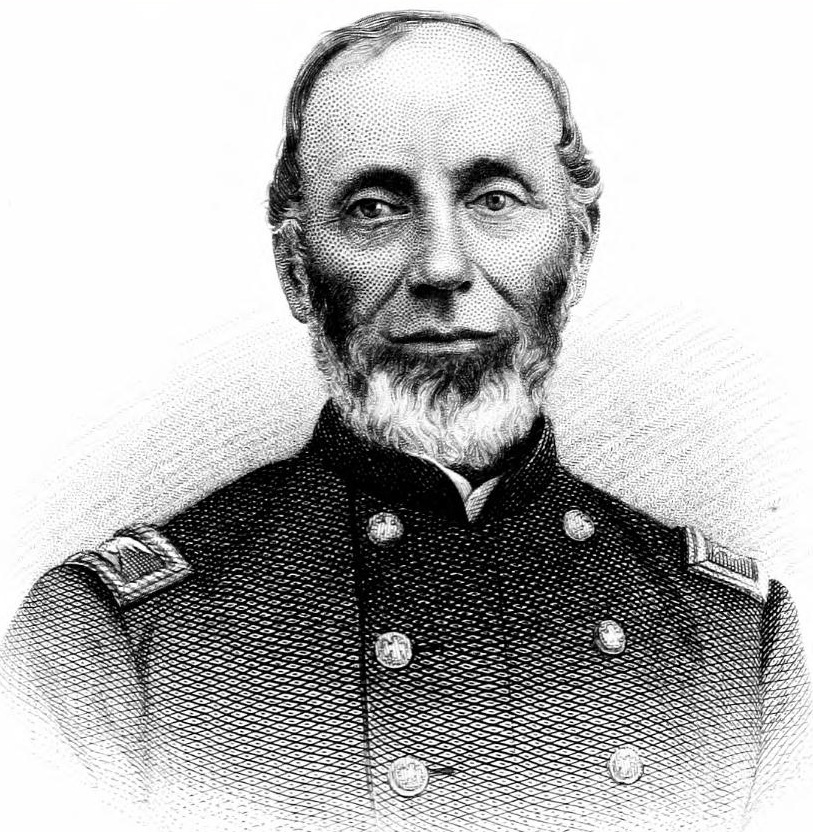
Historical · U.S. House · New York · District 10
Eliakim Sherrill
Former U.S. Representative · New York District 10 · 1847–1849 · Whig
Eliakim Sherrill represented New York's District 10 in the United States House of Representatives (1847–1849) for the Whig party. The page below collects sourced biographical facts, term history, committee roles, and provenance for Sherrill.
Bioguide ID: S000351
Key facts
- Full name
- Eliakim Sherrill
- State
- New York
- District
- District 10
- Party
- Whig
- House service
- 1847–1849
- First House term
- 1847
- Status
- Left office
- Current term ends
- —
- Born
- 1813
- Bioguide ID
- S000351
- Committee assignments
- —
- Dataset version
- 1.20260606
Biographical narrative
958 words · sourced from the Wikipedia REST extract
Eliakim Sherrill was a notable figure in 19th-century American politics and military service, serving as a U.S. Representative from New York during the antebellum period. A member of the Whig Party, Sherrill's congressional career spanned from 1847 to 1849, during which he represented New York's 10th congressional district. Following his time in Congress, he became a brigade commander in the Union Army during the American Civil War, where he played a significant role in key battles, ultimately sacrificing his life at the Battle of Gettysburg. His legacy is remembered not only for his political contributions but also for his military service and the impact he had on his community and family.
Early life and career
Eliakim Sherrill was born on February 16, 1813, in Greenville, New York. His early education took place in public schools, where he laid the groundwork for his future endeavors. In 1832, he relocated to Herkimer County, New York, marking the beginning of his adult life in a new community. In 1838, he married Emily Eldridge, who was the daughter of Judge Eldridge from Madison County. This marriage connected him to a prominent family in the region and likely influenced his later political career.
Sherrill's professional life began in the tannery business, which he operated in Shandaken, New York. This venture into local industry demonstrated his entrepreneurial spirit and commitment to contributing to the local economy. His involvement in local politics soon followed, as he sought to engage with the community on a broader scale. He held several political offices, which provided him with valuable experience and insight into the workings of government and public service.
In addition to his business and political pursuits, Sherrill served as a major in the State Militia, further establishing his leadership credentials. His military involvement would later play a crucial role in his life, particularly during the Civil War. His political career took a significant step forward when he was elected as a Whig to the 30th United States Congress. He served in this capacity from March 4, 1847, until March 3, 1849. His tenure in Congress was marked by the political dynamics of the time, as the nation grappled with issues surrounding slavery, states' rights, and the expansion of the United States.
After his congressional service, Sherrill continued to engage in public life. He was elected to the New York State Senate, representing the 10th District in 1854 and 1855. Following his time in the Senate, he moved to Brooklyn and later to Geneva, New York, in 1860, where he transitioned to agricultural pursuits by managing a farm. This period of his life reflects a shift from urban political engagement to rural community involvement, showcasing his adaptability and commitment to serving his constituents in various capacities.
House tenure
Eliakim Sherrill's congressional career was relatively brief, spanning only one term in the U.S. House of Representatives. As a member of the Whig Party, he participated in a political landscape characterized by significant tensions over issues such as slavery and territorial expansion. His election to the 30th Congress came at a time when the Whig Party was a major political force, advocating for a range of policies that included economic development and infrastructure improvements.
During his time in the House, Sherrill engaged with the pressing issues of his day, although specific details about his legislative contributions or the bills he supported are not extensively documented. His role as a congressman would have involved participation in debates, committee work, and the representation of his constituents' interests. The Whig Party's platform during this period was focused on promoting internal improvements and opposing the expansion of slavery into new territories, which were central themes in national politics.
Sherrill's congressional service ended on March 3, 1849, after which he returned to state-level politics and local affairs. His experience in Congress likely influenced his subsequent political activities and shaped his understanding of governance and public policy. Although he did not seek re-election to the House, his political career continued with his election to the New York State Senate, where he served for two years.
Legislative focus and committees
While specific details regarding Eliakim Sherrill's legislative focus and committee assignments during his time in the House of Representatives are not available, it is important to contextualize his role within the broader framework of the Whig Party's objectives during the late 1840s. The Whigs were known for their advocacy of economic modernization, including support for infrastructure projects such as roads, canals, and railroads, which were essential for facilitating commerce and connecting communities.
As a congressman, Sherrill would have been expected to align with the party's goals, contributing to discussions on economic development and the expansion of the nation's infrastructure. The political climate of the time was also heavily influenced by debates over slavery, particularly in relation to new territories acquired through the Mexican-American War. Although Sherrill's specific positions on these contentious issues are not documented, it is likely that he engaged with them in some capacity, given their prominence in national discourse.
Following his congressional term, Sherrill's political involvement continued at the state level, where he served in the New York State Senate. His legislative focus during this period may have included local issues pertinent to his constituents, reflecting his ongoing commitment to public service.
In summary, Eliakim Sherrill's career as a U.S. Representative and his subsequent military service during the Civil War illustrate a life dedicated to both political and civic engagement. His experiences in Congress and the State Senate, coupled with his military leadership, highlight his multifaceted contributions to his community and the nation. Sherrill's legacy is further enriched by his family's continued involvement in public service, exemplified by his granddaughter, who served as the Second Lady of the United States.
Notable legislation
Sponsored and co-sponsored legislation for Eliakim Sherrill is pending operator curation. The biographical narrative above carries the same provenance trail until per-bill rows are written.
Sources
- [1]https://en.wikipedia.org/wiki/Eliakim_SherrillWikipedia · retrieved 2026-06-06
Notable quotes
Sourced quotes for Eliakim Sherrill are pending operator curation. Narrative-scope provenance remains attached below.
Sources
- [1]https://en.wikipedia.org/wiki/Eliakim_SherrillWikipedia · retrieved 2026-06-06
Key positions
Curated policy positions for Eliakim Sherrill are pending operator review. The biographical narrative above carries the same provenance trail until per-topic positions are written.
Sources
- [1]https://en.wikipedia.org/wiki/Eliakim_SherrillWikipedia · retrieved 2026-06-06
Terms served
- 1847–1849U.S. House · Term 1 · Whig
Sources & provenance
Every attributable claim above carries a per-section [N] marker that resolves to the corresponding URL below. Each entry records the upstream provider, the canonical URL, and the timestamp at which the source was retrieved by the ingest pipeline.
Key facts
- https://bioguide.congress.gov/search/bio/S000351bioguide · retrieved 2026-06-06
- https://www.govtrack.us/congress/members/409847govtrack · retrieved 2026-06-06
Biographical narrative
- https://en.wikipedia.org/wiki/Eliakim_Sherrillwikipedia · retrieved 2026-06-06
Find your representative
Every U.S. state elects representatives by district. Browse New York’s delegation, the full former-representative roster, or explore the role and term length.
Related on The Candidate
- Preceded by Samuel GordonEarlier holder of the New York District 10 House seat · Democratic.Open
- Succeeded by Herman GouldLater holder of the New York District 10 House seat · Whig.Open
- Abel HuntingtonFormer U.S. Representative · New York District 1 · JacksonOpen
- Alfred ChapinFormer U.S. Representative · New York District 1 · DemocraticOpen
- Cadwallader ColdenFormer U.S. Representative · New York District 1 · FederalistOpen
- Charles FloydFormer U.S. Representative · New York District 1 · DemocraticOpen