
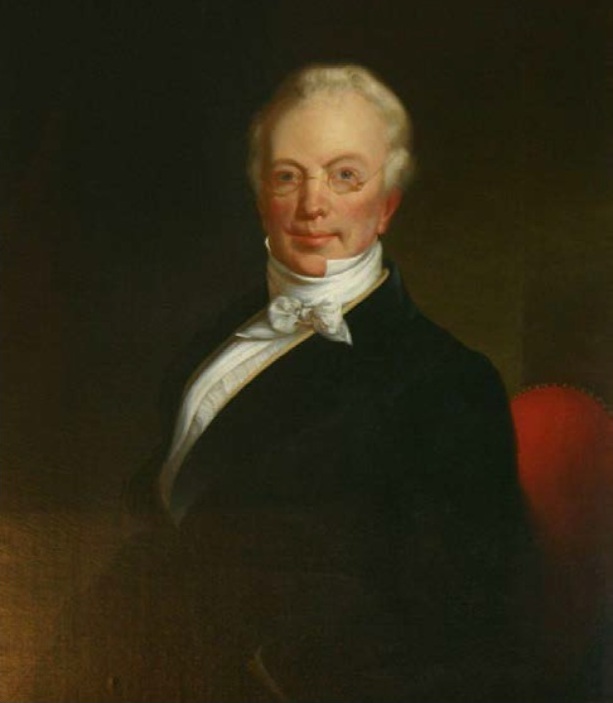
Historical · U.S. House · New York · District 11
John De Graff
Former U.S. Representative · New York District 11 · 1827–1839 · Democratic
John De Graff represented New York's District 11 in the United States House of Representatives (1827–1839) for the Democratic party. The page below collects sourced biographical facts, term history, committee roles, and provenance for Graff.
Bioguide ID: D000193
Key facts
- Full name
- John De Graff
- State
- New York
- District
- District 11
- Party
- Democratic
- House service
- 1827–1839
- First House term
- 1827
- Status
- Left office
- Current term ends
- —
- Born
- 1783
- Bioguide ID
- D000193
- Committee assignments
- —
- Dataset version
- 1.20260606
Biographical narrative
943 words · sourced from the Wikipedia REST extract
John De Graff was a prominent American businessman and politician who served as a U.S. Representative from New York. His political career spanned two non-consecutive terms in the House of Representatives, during which he was affiliated with the Democratic Party and was initially elected as a Jacksonian. De Graff was also notable for his contributions to local governance in Schenectady, where he served multiple terms as mayor and was involved in various civic initiatives. His business acumen, particularly in mercantile pursuits and banking, complemented his political endeavors, making him a significant figure in early 19th-century New York.
Early life and career
John De Graff was born on October 2, 1783, in Schenectady, New York. He was the son of Isaac DeGraff, a veteran of the American Revolution who served as a judge, and Susanna Van Epps. De Graff received his education in the common schools of Schenectady and attended the Schenectady Academy, an institution affiliated with the Dutch Reformed Church. His early education laid the groundwork for his future endeavors in business and politics.
In the early stages of his career, De Graff engaged in mercantile activities and banking in Schenectady. His business ventures proved successful, leading to the establishment of a firm that maintained offices in major cities such as London and Paris. In addition to his mercantile pursuits, De Graff was an astute real estate investor, owning multiple properties, including houses, farms, commercial buildings, and pastures in and around Schenectady. His financial success allowed him to play a significant role in local economic development.
De Graff's involvement in the military began in the early 1800s when he served in the local militia. He attained the rank of Ensign in the Schenectady regiment, which was commanded by Jacob Swits. His military service coincided with a period of national conflict, particularly during the War of 1812, where he made notable contributions. De Graff lent substantial financial support to the government, providing funds to equip a naval fleet. His personal credit and private funds amounted to $100,000, which facilitated the construction and outfitting of ships that played a crucial role in the American victory at the Battle of Plattsburgh. Despite his contributions, De Graff faced financial losses due to the depreciation of treasury notes used for repayment.
In 1811, De Graff attended Union College, where he became a member of the Phi Beta Kappa honor society. This academic achievement further enriched his background and prepared him for his future roles in public service.
House tenure
John De Graff's political career in the U.S. House of Representatives began when he was elected as a Jacksonian to the Twentieth Congress, serving from March 4, 1827, to March 3, 1829. His election marked the beginning of his formal involvement in national politics, representing New York's 11th congressional district. After his initial term, he returned to local governance, serving as the mayor of Schenectady from 1832 to 1835 and again from 1836 to 1837. Notably, during his tenure as mayor, he became the first individual to be popularly elected to the position, as previous mayors had been appointed by the city council.
De Graff returned to the House of Representatives for a second term, this time as a Democrat, serving in the Twenty-fifth Congress from March 4, 1837, to March 3, 1839. His political career was characterized by a commitment to local issues and civic engagement. After completing his second term, he chose not to seek renomination and declined an appointment to the role of Secretary of the Treasury under President Martin Van Buren. Following his departure from Congress, De Graff resumed his business activities and continued to be involved in local affairs.
During the 1840 elections, De Graff ran for a seat in the New York State Assembly. Although he initially appeared to have lost the election, he contested the results, claiming that electoral fraud had occurred in Schenectady's second ward. Despite presenting evidence to support his claims, the Assembly ultimately voted to seat the Whig nominee, Theodore W. Sanders.
In addition to his congressional service, De Graff returned to the mayoral office in Schenectady, serving from 1842 to 1843 and again from 1845 to 1846. His repeated terms as mayor underscored his ongoing influence in local politics and governance.
Legislative focus and committees
Throughout his time in the House of Representatives, John De Graff's legislative focus reflected his interests in local governance and civic development. While specific details regarding the committees he served on during his congressional terms are not documented, his background in business and finance likely informed his perspectives on economic issues. His experience as a businessman and banker would have provided him with insights into the economic challenges facing his constituents and the nation during his time in office.
De Graff's commitment to education and civic engagement was evident in his role as mayor, where he oversaw initiatives that included the establishment of educational institutions. He was instrumental in the founding of the Schenectady Lyceum and Academy, a boarding school for boys, and served on its original board of trustees. His advocacy for education extended to the African American community, as he supported the construction of a school for African American students and included reports on its progress in communications with state educational authorities.
After his congressional service, De Graff continued to engage in business and banking until his death on July 26, 1848, in Schenectady. He remained an influential figure in his community, contributing to various local initiatives and maintaining a focus on civic responsibility throughout his life. De Graff was interred in Vale Cemetery, leaving behind a legacy marked by his contributions to both business and public service.
Notable legislation
Sponsored and co-sponsored legislation for John De Graff is pending operator curation. The biographical narrative above carries the same provenance trail until per-bill rows are written.
Sources
- [1]https://en.wikipedia.org/wiki/John_I._De_GraffWikipedia · retrieved 2026-06-06
Notable quotes
Sourced quotes for John De Graff are pending operator curation. Narrative-scope provenance remains attached below.
Sources
- [1]https://en.wikipedia.org/wiki/John_I._De_GraffWikipedia · retrieved 2026-06-06
Key positions
Curated policy positions for John De Graff are pending operator review. The biographical narrative above carries the same provenance trail until per-topic positions are written.
Sources
- [1]https://en.wikipedia.org/wiki/John_I._De_GraffWikipedia · retrieved 2026-06-06
Terms served
- 1827–1829U.S. House · Term 1 · Jackson
- 1837–1839U.S. House · Term 2 · Democratic
Sources & provenance
Every attributable claim above carries a per-section [N] marker that resolves to the corresponding URL below. Each entry records the upstream provider, the canonical URL, and the timestamp at which the source was retrieved by the ingest pipeline.
Key facts
- https://bioguide.congress.gov/search/bio/D000193bioguide · retrieved 2026-06-06
- https://www.govtrack.us/congress/members/403303govtrack · retrieved 2026-06-06
Biographical narrative
- https://en.wikipedia.org/wiki/John_I._De_Graffwikipedia · retrieved 2026-06-06
Find your representative
Every U.S. state elects representatives by district. Browse New York’s delegation, the full former-representative roster, or explore the role and term length.
Related on The Candidate
- Preceded by Henry AshleyEarlier holder of the New York District 11 House seat · Jackson.Open
- Succeeded by Anson BrownLater holder of the New York District 11 House seat · Whig.Open
- Abel HuntingtonFormer U.S. Representative · New York District 1 · JacksonOpen
- Alfred ChapinFormer U.S. Representative · New York District 1 · DemocraticOpen
- Cadwallader ColdenFormer U.S. Representative · New York District 1 · FederalistOpen
- Charles FloydFormer U.S. Representative · New York District 1 · DemocraticOpen