
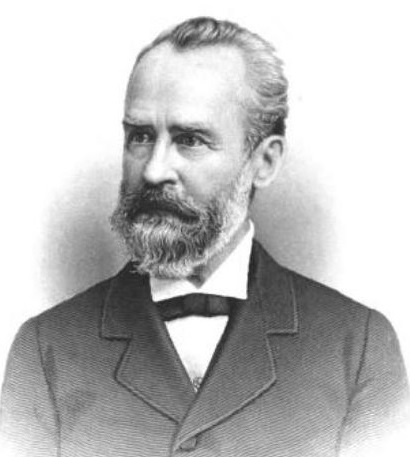
Historical · U.S. House · New York · District 11
Theodoric Westbrook
Former U.S. Representative · New York District 11 · 1853–1855 · Democratic
Theodoric Westbrook represented New York's District 11 in the United States House of Representatives (1853–1855) for the Democratic party. The page below collects sourced biographical facts, term history, committee roles, and provenance for Westbrook.
Bioguide ID: W000307
Key facts
- Full name
- Theodoric Westbrook
- State
- New York
- District
- District 11
- Party
- Democratic
- House service
- 1853–1855
- First House term
- 1853
- Status
- Left office
- Current term ends
- —
- Born
- 1821
- Bioguide ID
- W000307
- Committee assignments
- —
- Dataset version
- 1.20260606
Biographical narrative
924 words · sourced from the Wikipedia REST extract
Theodoric Westbrook was a U.S. Representative from New York, serving in the House of Representatives during the early 1850s. A member of the Democratic Party, he represented New York's 11th congressional district from 1853 until 1855. His career extended beyond his time in Congress, as he later served as a Justice of the New York Supreme Court and was involved in various legal and civic endeavors throughout his life. Westbrook's legacy is marked by both his public service and a notable scandal that arose during his judicial career.
Early life and career
Theodoric Romeyn Westbrook was born on November 20, 1821, in Fishkill, New York. He was raised in a community that valued education, and he took advantage of local schooling opportunities. Westbrook's academic journey culminated in his graduation from Rutgers College in 1838, an institution known for its rigorous academic standards and commitment to developing future leaders. Following his graduation, he pursued a career in law, studying under prominent legal figures Abraham B. Hasbrouck and Marius Schoonmaker. This legal training laid the foundation for his future career in law and politics.
Westbrook was admitted to the bar in 1843, allowing him to begin practicing law in Kingston, New York. His legal career was marked by a commitment to his clients and the legal profession. Among those who trained under him was Stephen Gardner Champlin, who would go on to have his own legal career. Westbrook's practice in Kingston positioned him as a respected member of the local legal community, and he became known for his legal acumen and dedication to the law.
House tenure
Westbrook's political career began when he was elected as a Democrat to the Thirty-third Congress, which convened on March 4, 1853. During his time in the House of Representatives, he participated in the legislative process and contributed to discussions that shaped national policy. His tenure in Congress was relatively brief, lasting until March 3, 1855. After completing his term, Westbrook chose not to seek renomination in 1854, opting instead to return to his legal practice.
While in Congress, Westbrook was part of a tumultuous period in American history, marked by growing tensions over issues such as slavery and states' rights. Although specific details of his legislative contributions are not extensively documented, his role as a member of the House during this critical time in U.S. history would have involved engagement with these pressing national issues. Following his departure from Congress, Westbrook continued to focus on his legal career, which would later lead him to a significant judicial position.
Legislative focus and committees
Westbrook's legislative focus during his time in the House of Representatives is not extensively detailed in available records. However, as a member of the Democratic Party during the early 1850s, he likely aligned with the party's positions on various issues of the day, including economic development, infrastructure, and states' rights. The Democratic Party at that time was known for advocating for agrarian interests and opposing the expansion of federal power, which may have influenced Westbrook's legislative priorities.
After his congressional service, Westbrook continued to engage in public service and the legal profession. His commitment to the law and public service was further exemplified when he was elected as a Justice of the New York Supreme Court in 1873. This position allowed him to influence the legal landscape of New York and contribute to the judiciary's role in upholding the law. His judicial career was marked by significant responsibilities, including presiding over cases that impacted the lives of many New Yorkers.
Westbrook's legacy is also intertwined with a notable scandal that arose during his time on the bench. He became embroiled in controversy related to his relationship with financier Jay Gould. Westbrook had indicated to Gould that he would leverage his judicial authority to assist in Gould's efforts to take control of the Manhattan Elevated Railway Company. This relationship raised ethical concerns, particularly when it was revealed that Westbrook conducted judicial proceedings in Gould's office. The implications of this relationship were serious, as it was alleged that Gould utilized insider information and corrupt practices to manipulate the company's stock value, ultimately leading to its bankruptcy and harming shareholders.
The scandal surrounding Westbrook's actions drew significant attention, particularly when Assemblyman Theodore Roosevelt urged an investigation into the matter by a special committee of the New York State Assembly in 1882. However, the findings of this inquiry were reportedly suppressed, with allegations that committee members accepted bribes to quash the investigation. Despite the controversy, Westbrook continued to serve on the bench, reflecting the complexities of political and judicial accountability during that era.
Westbrook's life came to an end on October 6, 1885, when he died in his hotel room in Troy, New York, while there to conduct court proceedings. His passing marked the conclusion of a career that spanned law, politics, and public service. He was interred in Wiltwyck Cemetery in Kingston, New York, leaving behind a legacy that includes both his contributions to the legal field and the controversies that marred his judicial career. Following his death, he was succeeded on the bench by Alton B. Parker, who would go on to have his own notable career in law and politics.
In summary, Theodoric Westbrook's life and career reflect the complexities of American political and legal history during the 19th century. His contributions as a U.S. Representative and later as a Justice of the New York Supreme Court illustrate the interplay between law and politics, while the controversies he faced highlight the challenges of ethical governance.
Notable legislation
Sponsored and co-sponsored legislation for Theodoric Westbrook is pending operator curation. The biographical narrative above carries the same provenance trail until per-bill rows are written.
Sources
- [1]https://en.wikipedia.org/wiki/Theodoric_R._WestbrookWikipedia · retrieved 2026-06-06
Notable quotes
Sourced quotes for Theodoric Westbrook are pending operator curation. Narrative-scope provenance remains attached below.
Sources
- [1]https://en.wikipedia.org/wiki/Theodoric_R._WestbrookWikipedia · retrieved 2026-06-06
Key positions
Curated policy positions for Theodoric Westbrook are pending operator review. The biographical narrative above carries the same provenance trail until per-topic positions are written.
Sources
- [1]https://en.wikipedia.org/wiki/Theodoric_R._WestbrookWikipedia · retrieved 2026-06-06
Terms served
- 1853–1855U.S. House · Term 1 · Democratic
Sources & provenance
Every attributable claim above carries a per-section [N] marker that resolves to the corresponding URL below. Each entry records the upstream provider, the canonical URL, and the timestamp at which the source was retrieved by the ingest pipeline.
Key facts
- https://bioguide.congress.gov/search/bio/W000307bioguide · retrieved 2026-06-06
- https://www.govtrack.us/congress/members/411471govtrack · retrieved 2026-06-06
Biographical narrative
- https://en.wikipedia.org/wiki/Theodoric_R._Westbrookwikipedia · retrieved 2026-06-06
Find your representative
Every U.S. state elects representatives by district. Browse New York’s delegation, the full former-representative roster, or explore the role and term length.
Related on The Candidate
- Preceded by Josiah SutherlandEarlier holder of the New York District 11 House seat · Democratic.Open
- Succeeded by Rufus KingLater holder of the New York District 11 House seat · Ind. Republican-Democrat.Open
- Abel HuntingtonFormer U.S. Representative · New York District 1 · JacksonOpen
- Alfred ChapinFormer U.S. Representative · New York District 1 · DemocraticOpen
- Cadwallader ColdenFormer U.S. Representative · New York District 1 · FederalistOpen
- Charles FloydFormer U.S. Representative · New York District 1 · DemocraticOpen