
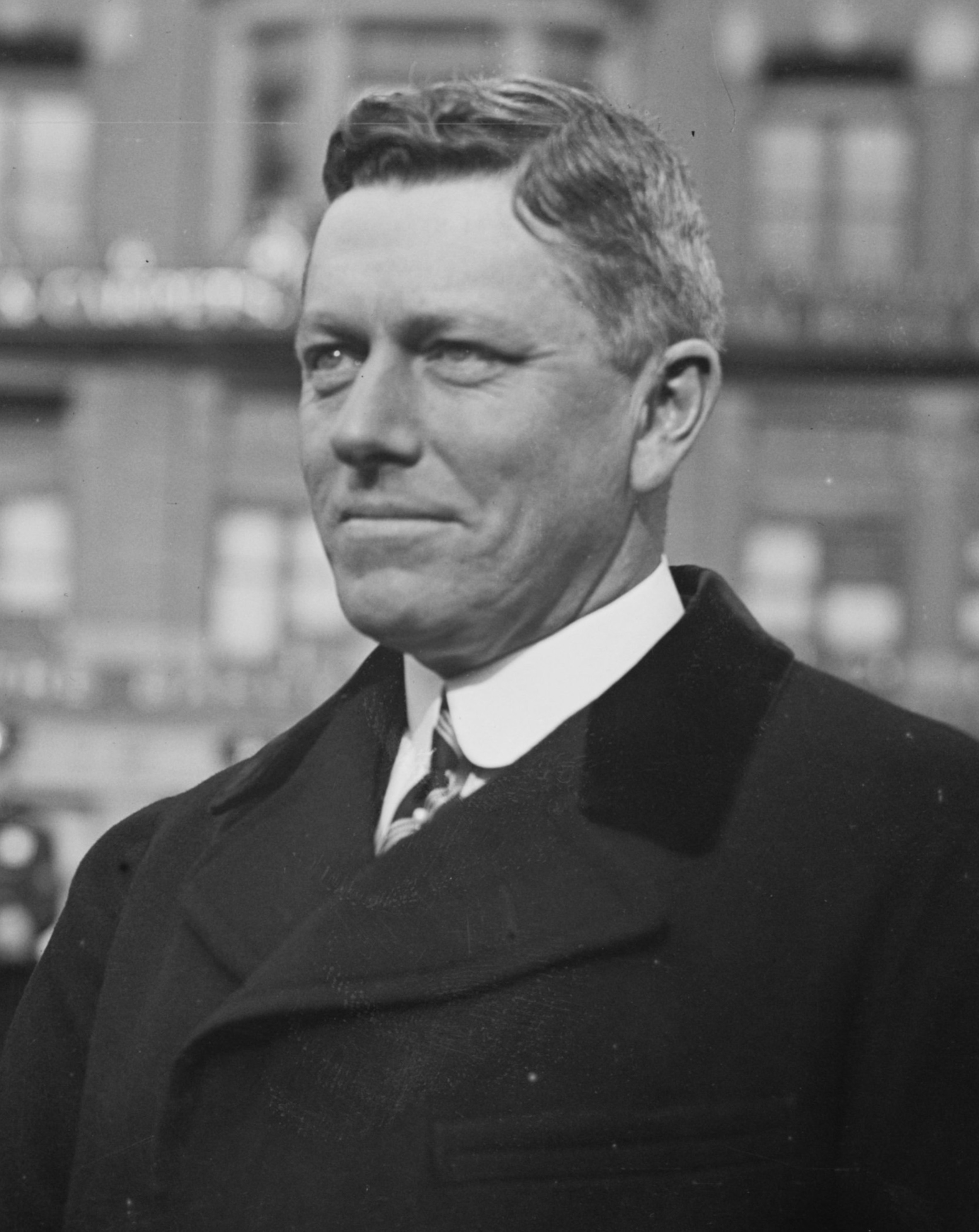
Historical · U.S. House · New York · District 12
George McClellan
Former U.S. Representative · New York District 12 · 1895–1905 · Democratic
George McClellan represented New York's District 12 in the United States House of Representatives (1895–1905) for the Democratic party. The page below collects sourced biographical facts, term history, committee roles, and provenance for McClellan.
Bioguide ID: M000331
Key facts
- Full name
- George McClellan
- State
- New York
- District
- District 12
- Party
- Democratic
- House service
- 1895–1905
- First House term
- 1895
- Status
- Left office
- Current term ends
- —
- Born
- 1865
- Bioguide ID
- M000331
- Committee assignments
- —
- Dataset version
- 1.20260606
Biographical narrative
875 words · sourced from the Wikipedia REST extract
George McClellan was an American politician and historian who served as a U.S. Representative for New York's 12th congressional district from 1895 until 1903, when he transitioned to become the Mayor of New York City. Born on November 23, 1865, he was the son of Civil War general George B. McClellan, who was notably the Democratic presidential nominee in 1864. Throughout his political career, McClellan was recognized for his involvement in various civic matters and his contributions to both local and national politics.
Early life and career
George McClellan was born in Dresden, in the Kingdom of Saxony, while his parents were visiting Europe. He spent his early years in Trenton, New Jersey, where his father served as Governor. McClellan received his education at several institutions, including Saint John's School in Ossining, New York. He later attended Princeton University, earning a Bachelor of Arts degree in 1886 and a Master of Arts degree in 1889. His academic achievements were later recognized by several universities, including Princeton, Fordham University, and Union College, which conferred upon him honorary Doctor of Laws degrees.
Following his graduation, McClellan pursued a career in journalism, working as a reporter and editor for the New York World and other newspapers. In 1892, he was admitted to the bar, allowing him to practice law. His early career also included a role as secretary and treasurer of the New York and Brooklyn Bridge, where he gained valuable experience in public service and infrastructure.
McClellan's political career began in earnest when he was elected president of the Board of Aldermen of New York City in 1892, a position he held for two years. During a portion of 1894, he served as acting mayor, which helped to bolster his public profile and popularity. His success in local politics paved the way for his election to the U.S. House of Representatives in 1894, where he represented New York's 12th congressional district.
House tenure
George McClellan's congressional career began in 1895 and lasted until 1903. During this time, he was elected to five consecutive terms in the House of Representatives. As a member of the Democratic Party, McClellan was known for his conservative stance on various issues. He served on the influential Ways and Means Committee, which plays a critical role in shaping tax and revenue policies.
Throughout his time in Congress, McClellan was a vocal opponent of the Spanish-American War, which erupted in 1898. He advocated for a diplomatic resolution rather than military intervention, aligning himself with President William McKinley's efforts to seek a compromise. His opposition to the war was consistent with his broader political philosophy, which emphasized caution and deliberation in matters of foreign policy.
In addition to his foreign policy views, McClellan was a proponent of the gold standard, a contentious issue within the Democratic Party at the time. His support for this monetary policy highlighted the divisions within the party, particularly between fiscally conservative members and those advocating for the free coinage of silver. Despite these divisions, McClellan managed to maintain a degree of popularity among his constituents, which ultimately contributed to his successful re-elections.
In late 1903, McClellan resigned from Congress after being elected Mayor of New York City, marking a significant transition in his political career. His tenure in the House of Representatives was characterized by his active participation in legislative debates and his commitment to the interests of his district.
Legislative focus and committees
During his time in the U.S. House of Representatives, George McClellan's legislative focus was shaped by his positions on various committees, most notably the Ways and Means Committee. This committee is responsible for overseeing taxation and revenue-related legislation, making it a crucial platform for influencing fiscal policy. McClellan's involvement in this committee allowed him to engage with significant economic issues of the day, including debates surrounding the gold standard and taxation.
McClellan's opposition to the Spanish-American War was a defining aspect of his congressional career. His stance reflected a broader skepticism about military engagement and interventionism, which resonated with certain segments of the Democratic Party and the electorate. By advocating for diplomatic solutions, McClellan positioned himself as a moderate voice during a time of heightened nationalistic fervor.
In addition to his work on the Ways and Means Committee, McClellan's legislative efforts were also informed by his background in law and public service. His experience in local government and his legal training contributed to his understanding of the complexities of governance and policy-making. While specific details of his legislative initiatives are not extensively documented, his overall approach was characterized by a commitment to pragmatic solutions and a focus on the needs of his constituents.
After leaving Congress, McClellan continued to be active in public life, eventually serving as Mayor of New York City from 1904 to 1909. His time in office was marked by significant developments in urban infrastructure and public policy, further solidifying his legacy in New York City's political history.
In summary, George McClellan's career as a U.S. Representative was marked by his involvement in key legislative issues and his commitment to public service. His tenure in Congress laid the groundwork for his subsequent role as Mayor of New York City, where he continued to influence the political landscape of the region.
Notable legislation
Sponsored and co-sponsored legislation for George McClellan is pending operator curation. The biographical narrative above carries the same provenance trail until per-bill rows are written.
Sources
- [1]https://en.wikipedia.org/wiki/George_B._McClellan_Jr.Wikipedia · retrieved 2026-06-06
Notable quotes
Sourced quotes for George McClellan are pending operator curation. Narrative-scope provenance remains attached below.
Sources
- [1]https://en.wikipedia.org/wiki/George_B._McClellan_Jr.Wikipedia · retrieved 2026-06-06
Key positions
Curated policy positions for George McClellan are pending operator review. The biographical narrative above carries the same provenance trail until per-topic positions are written.
Sources
- [1]https://en.wikipedia.org/wiki/George_B._McClellan_Jr.Wikipedia · retrieved 2026-06-06
Terms served
- 1895–1897U.S. House · Term 1 · Democratic
- 1897–1899U.S. House · Term 2 · Democratic
- 1899–1901U.S. House · Term 3 · Democratic
- 1901–1903U.S. House · Term 4 · Democratic
- 1903–1905U.S. House · Term 5 · Democratic
Sources & provenance
Every attributable claim above carries a per-section [N] marker that resolves to the corresponding URL below. Each entry records the upstream provider, the canonical URL, and the timestamp at which the source was retrieved by the ingest pipeline.
Key facts
- https://bioguide.congress.gov/search/bio/M000331bioguide · retrieved 2026-06-06
- https://www.govtrack.us/congress/members/407341govtrack · retrieved 2026-06-06
Biographical narrative
- https://en.wikipedia.org/wiki/George_B._McClellan_Jr.wikipedia · retrieved 2026-06-06
Find your representative
Every U.S. state elects representatives by district. Browse New York’s delegation, the full former-representative roster, or explore the role and term length.
Related on The Candidate
- Preceded by Joseph LittleEarlier holder of the New York District 12 House seat · Democratic.Open
- Succeeded by Meyer LondonLater holder of the New York District 12 House seat · Socialist.Open
- Abel HuntingtonFormer U.S. Representative · New York District 1 · JacksonOpen
- Alfred ChapinFormer U.S. Representative · New York District 1 · DemocraticOpen
- Cadwallader ColdenFormer U.S. Representative · New York District 1 · FederalistOpen
- Charles FloydFormer U.S. Representative · New York District 1 · DemocraticOpen