
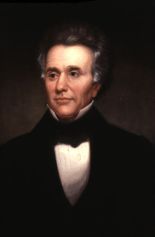
Historical · U.S. House · New York · District 12
Reuben Walworth
Former U.S. Representative · New York District 12 · 1821–1823 · Republican
Reuben Walworth represented New York's District 12 in the United States House of Representatives (1821–1823) for the Republican party. The page below collects sourced biographical facts, term history, committee roles, and provenance for Walworth.
Bioguide ID: W000118
Key facts
- Full name
- Reuben Walworth
- State
- New York
- District
- District 12
- Party
- Republican
- House service
- 1821–1823
- First House term
- 1821
- Status
- Left office
- Current term ends
- —
- Born
- 1788
- Bioguide ID
- W000118
- Committee assignments
- —
- Dataset version
- 1.20260606
Biographical narrative
807 words · sourced from the Wikipedia REST extract
Reuben Walworth was a prominent American lawyer, jurist, and politician who served as a U.S. Representative for New York's 12th congressional district. A member of the Republican Party, Walworth's congressional tenure lasted from 1821 to 1823. He is also known for his significant contributions to equity law in the United States and for his long-standing role as Chancellor of New York. In addition to his political career, Walworth was involved in various judicial capacities and was nominated multiple times for the U.S. Supreme Court, although he was never confirmed. His legal career spanned several decades, during which he played a vital role in shaping the judicial landscape of New York and beyond.
Early life and career
Reuben Walworth was born on October 26, 1788, in Bozrah, Connecticut, to Benjamin Walworth, a merchant and quartermaster during the American Revolutionary War, and Apphia Hyde Cardell Walworth. His father, Benjamin, moved the family to Hoosick, New York, in 1792 after receiving a land grant for his military service. The Walworth family was large, with Reuben being the third of eleven children. His family was deeply rooted in the legal profession, with several of his siblings also pursuing careers in law and public service.
Walworth received his early education in local schools and began teaching at the age of 16. He later pursued a legal education by reading law under the guidance of John Russel in Troy, New York. He was admitted to the New York bar in 1809, marking the beginning of his legal career. In January 1810, he relocated to Plattsburgh, New York, where he continued to build his legal practice. His early career included an appointment as a master of chancery in 1811, a position that involved overseeing legal matters related to widows and orphans.
During the War of 1812, Walworth served as adjutant-general of the New York militia and as aide to General Benjamin Mooers. He witnessed the naval victory at the Battle of Lake Champlain in 1814, which was a significant event in the war. By the end of the conflict, he had attained the rank of colonel and led the judge advocate general corps of his division.
Following the war, Walworth continued to advance in his legal career. He gained recognition for his expertise in equity law, which would later influence his judicial responsibilities. His legal acumen caught the attention of President John Tyler, who nominated him to the U.S. Supreme Court three times in 1844, although these nominations were never brought to a vote in the Senate.
House tenure
Reuben Walworth was elected to the 17th United States Congress as a member of the Democratic-Republican Party, representing New York's 12th congressional district. His term began on December 3, 1821, and concluded on March 3, 1823. During this period, he served alongside fellow Democratic-Republican Nathaniel Pitcher, who would later become the governor of New York. Walworth's congressional career was relatively brief, as he did not seek re-election following the redistricting that resulted in a one-representative district.
After his time in Congress, Walworth continued his legal career and was appointed as Judge of the New York Fourth Circuit Court in April 1823. This position allowed him to further influence the judicial system in New York, and he later moved to Saratoga Springs, where he continued his legal practice.
Legislative focus and committees
While specific details regarding Walworth's legislative focus during his time in Congress are not extensively documented, his background in law and equity likely informed his approach to legislative matters. Following his congressional tenure, he was appointed Chancellor of New York in 1828, a position he held until the office was abolished in 1847 due to a new state constitution. As Chancellor, Walworth was instrumental in shaping the rules and orders of the New York Court of Chancery, which had a lasting impact on equity practice in the United States.
Walworth's legal expertise was recognized nationally, leading to his involvement in significant legal matters, including his appointment as a commissioner by the U.S. Supreme Court in 1850 concerning the Wheeling Suspension Bridge. This case was notable for addressing the complexities of federal and state powers in relation to commerce and navigation.
In addition to his judicial roles, Walworth was also a candidate for Governor of New York in 1848, representing the Hunker faction of the Democratic Party. However, he was defeated in a competitive three-way race. Throughout his career, Walworth remained a respected figure in legal circles, known for his opinions on civil procedure and arbitration.
Reuben Walworth's contributions to law and public service extended beyond his time in Congress, as he continued to influence the judicial landscape of New York and the broader United States throughout his life. He passed away on November 27, 1867, leaving behind a legacy marked by his significant roles in both the legal and political arenas.
Notable legislation
Sponsored and co-sponsored legislation for Reuben Walworth is pending operator curation. The biographical narrative above carries the same provenance trail until per-bill rows are written.
Sources
- [1]https://en.wikipedia.org/wiki/Reuben_H._WalworthWikipedia · retrieved 2026-06-06
Notable quotes
Sourced quotes for Reuben Walworth are pending operator curation. Narrative-scope provenance remains attached below.
Sources
- [1]https://en.wikipedia.org/wiki/Reuben_H._WalworthWikipedia · retrieved 2026-06-06
Key positions
Curated policy positions for Reuben Walworth are pending operator review. The biographical narrative above carries the same provenance trail until per-topic positions are written.
Sources
- [1]https://en.wikipedia.org/wiki/Reuben_H._WalworthWikipedia · retrieved 2026-06-06
Terms served
- 1821–1823U.S. House · Term 1 · Republican
Sources & provenance
Every attributable claim above carries a per-section [N] marker that resolves to the corresponding URL below. Each entry records the upstream provider, the canonical URL, and the timestamp at which the source was retrieved by the ingest pipeline.
Key facts
- https://bioguide.congress.gov/search/bio/W000118bioguide · retrieved 2026-06-06
- https://www.govtrack.us/congress/members/411294govtrack · retrieved 2026-06-06
Biographical narrative
- https://en.wikipedia.org/wiki/Reuben_H._Walworthwikipedia · retrieved 2026-06-06
Find your representative
Every U.S. state elects representatives by district. Browse New York’s delegation, the full former-representative roster, or explore the role and term length.
Related on The Candidate
- Preceded by Ezra GrossEarlier holder of the New York District 12 House seat · Republican.Open
- Succeeded by Henry MartindaleLater holder of the New York District 12 House seat · Anti Masonic.Open
- Abel HuntingtonFormer U.S. Representative · New York District 1 · JacksonOpen
- Alfred ChapinFormer U.S. Representative · New York District 1 · DemocraticOpen
- Cadwallader ColdenFormer U.S. Representative · New York District 1 · FederalistOpen
- Charles FloydFormer U.S. Representative · New York District 1 · DemocraticOpen