
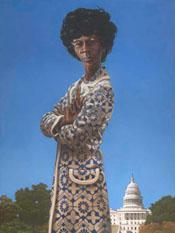
Historical · U.S. House · New York · District 12
Shirley Chisholm
Former U.S. Representative · New York District 12 · 1969–1983 · Democratic
Shirley Chisholm represented New York's District 12 in the United States House of Representatives (1969–1983) for the Democratic party. The page below collects sourced biographical facts, term history, committee roles, and provenance for Chisholm.
Bioguide ID: C000371
Key facts
- Full name
- Shirley Chisholm
- State
- New York
- District
- District 12
- Party
- Democratic
- House service
- 1969–1983
- First House term
- 1969
- Status
- Left office
- Current term ends
- —
- Born
- 1924
- Bioguide ID
- C000371
- Committee assignments
- —
- Dataset version
- 1.20260605
Biographical narrative
1,070 words · sourced from the Wikipedia REST extract
Shirley Anita Chisholm was an influential American politician who made history as the first black woman elected to the United States Congress. Serving as a U.S. Representative for New York's 12th congressional district from 1969 to 1983, Chisholm was a prominent figure in the Democratic Party and a trailblazer for women and minority rights. In 1972, she became the first black candidate to seek a major-party nomination for President of the United States, marking a significant milestone in American political history. Throughout her career, she was known for her commitment to social justice, civil rights, and educational reform.
Early life and career
Shirley Anita St. Hill was born on November 30, 1924, in Brooklyn, New York City, to immigrant parents of Afro-Guyanese and Afro-Barbadian descent. Her father, Charles Christopher St. Hill, emigrated from British Guiana and worked in various labor-intensive jobs, while her mother, Ruby Seale, was a seamstress and domestic worker. The family faced economic challenges, and when Shirley was five years old, she and her two younger sisters were sent to Barbados to live with their maternal grandmother, Emaline Seale. This period in Barbados had a lasting impact on Chisholm, instilling in her a sense of identity and resilience.
Chisholm returned to the United States in 1934 and continued her education in Brooklyn. She attended Girls' High School, where she excelled academically and became vice president of the Junior Arista honor society. Despite receiving scholarship offers from prestigious colleges, financial constraints led her to choose Brooklyn College, where she earned her Bachelor of Arts degree in sociology in 1946, graduating cum laude. During her time at college, she was active in student organizations, advocating for the inclusion of African-American history in the curriculum and the representation of women in student government.
After completing her education, Chisholm began her career as a teacher's aide at the Mt. Calvary Child Care Center in Harlem. Her early experiences in education and her involvement in local Democratic Party politics during the 1950s laid the groundwork for her future political career. In 1964, she was elected to the New York State Assembly, where she faced challenges as a woman in a male-dominated political landscape. Her determination and commitment to social justice propelled her forward, leading to her historic election to the U.S. Congress in 1968.
House tenure
Shirley Chisholm's tenure in the U.S. House of Representatives began in 1969, representing New York's 12th congressional district, which included parts of Brooklyn, particularly the Bedford-Stuyvesant neighborhood. Over her seven terms in office, Chisholm became known for her advocacy on behalf of marginalized communities, focusing on issues such as education, healthcare, and civil rights. Her election to Congress was a significant achievement, as she was the first black woman to hold such a position, breaking barriers and paving the way for future generations of women and minority politicians.
During her time in Congress, Chisholm was a vocal advocate for expanding food and nutrition programs for low-income families. She worked tirelessly to address the needs of her constituents, often highlighting the struggles faced by the poor and advocating for policies that would improve their quality of life. Her commitment to social justice was evident in her legislative efforts, as she sought to create a more equitable society.
Chisholm's influence extended beyond her district, as she rose to leadership positions within the Democratic Party. She was known for her ability to build coalitions and work across party lines, although she often faced resistance due to her gender and race. Despite these challenges, she remained steadfast in her mission to advocate for the rights of women and minorities, using her platform to raise awareness about social injustices.
In 1972, Chisholm made history again by becoming the first black woman to run for the Democratic Party's presidential nomination. Her candidacy was groundbreaking, as she sought to challenge the status quo and bring attention to issues affecting marginalized communities. Although she did not secure the nomination, her campaign inspired many and highlighted the need for greater representation of women and people of color in politics.
Chisholm's congressional career continued until 1983, when she chose not to seek re-election. Her time in office was marked by significant achievements, but also by the challenges she faced as a pioneering figure in American politics. After leaving Congress, she continued to be active in political organizing and education, teaching at Mount Holyoke College and engaging in various community initiatives.
Legislative focus and committees
Throughout her congressional career, Shirley Chisholm was deeply committed to addressing social and economic inequalities. Her legislative focus included education reform, healthcare access, and civil rights. She was particularly passionate about improving the lives of women, children, and the economically disadvantaged, advocating for policies that would provide greater opportunities and support for these groups.
Chisholm served on several important committees during her time in the House, including the Education and Labor Committee, where she worked on initiatives to improve educational access and quality for all students. Her efforts in this area were driven by her belief in the transformative power of education and the need for equitable resources for underserved communities.
In addition to her work on education, Chisholm was a strong advocate for healthcare reform. She recognized the disparities in access to healthcare services and fought for policies that would expand coverage and improve health outcomes for low-income individuals and families. Her commitment to social justice extended to various issues, including housing, employment, and civil rights, as she sought to address the systemic barriers faced by marginalized communities.
Chisholm's legacy as a legislator is characterized by her unwavering dedication to advocating for those who were often overlooked in the political process. She was known for her ability to articulate the needs and concerns of her constituents, using her platform to bring attention to pressing social issues. Her work in Congress laid the groundwork for future generations of leaders who continue to fight for equality and justice in American society.
After retiring from Congress, Chisholm remained active in public life, continuing to advocate for social change and education. Although she faced health challenges later in life, her contributions to American politics and her role as a trailblazer for women and minorities have left a lasting impact on the political landscape. In recognition of her achievements, she was posthumously awarded the Presidential Medal of Freedom and the Congressional Gold Medal, honoring her legacy as a pioneering figure in American history.
Notable legislation
Sponsored and co-sponsored legislation for Shirley Chisholm is pending operator curation. The biographical narrative above carries the same provenance trail until per-bill rows are written.
Sources
- [1]https://en.wikipedia.org/wiki/Shirley_ChisholmWikipedia · retrieved 2026-06-05
Notable quotes
Sourced quotes for Shirley Chisholm are pending operator curation. Narrative-scope provenance remains attached below.
Sources
- [1]https://en.wikipedia.org/wiki/Shirley_ChisholmWikipedia · retrieved 2026-06-05
Key positions
Curated policy positions for Shirley Chisholm are pending operator review. The biographical narrative above carries the same provenance trail until per-topic positions are written.
Sources
- [1]https://en.wikipedia.org/wiki/Shirley_ChisholmWikipedia · retrieved 2026-06-05
Terms served
- 1969–1971U.S. House · Term 1 · Democratic
- 1971–1973U.S. House · Term 2 · Democratic
- 1973–1975U.S. House · Term 3 · Democratic
- 1975–1977U.S. House · Term 4 · Democratic
- 1977–1979U.S. House · Term 5 · Democratic
- 1979–1981U.S. House · Term 6 · Democratic
- 1981–1983U.S. House · Term 7 · Democratic
Sources & provenance
Every attributable claim above carries a per-section [N] marker that resolves to the corresponding URL below. Each entry records the upstream provider, the canonical URL, and the timestamp at which the source was retrieved by the ingest pipeline.
Key facts
- https://bioguide.congress.gov/search/bio/C000371bioguide · retrieved 2026-06-05
- https://www.govtrack.us/congress/members/402510govtrack · retrieved 2026-06-05
Biographical narrative
- https://en.wikipedia.org/wiki/Shirley_Chisholmwikipedia · retrieved 2026-06-05
Find your representative
Every U.S. state elects representatives by district. Browse New York’s delegation, the full former-representative roster, or explore the role and term length.
Related on The Candidate
- Preceded by Edna KellyEarlier holder of the New York District 12 House seat · Democratic.Open
- Succeeded by Carolyn MaloneyLater holder of the New York District 12 House seat · Democratic.Open
- Abel HuntingtonFormer U.S. Representative · New York District 1 · JacksonOpen
- Alfred ChapinFormer U.S. Representative · New York District 1 · DemocraticOpen
- Cadwallader ColdenFormer U.S. Representative · New York District 1 · FederalistOpen
- Charles FloydFormer U.S. Representative · New York District 1 · DemocraticOpen