
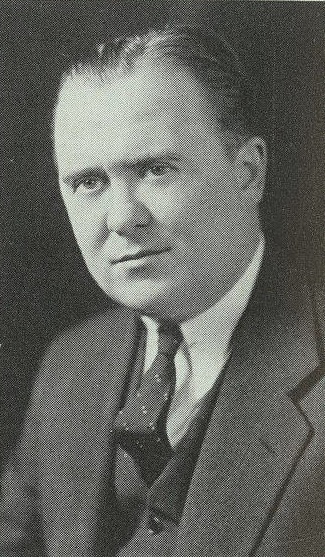
Historical · U.S. House · New York · District 13
Donald O’Toole
Former U.S. Representative · New York District 13 · 1937–1953 · Democratic
Donald O’Toole represented New York's District 13 in the United States House of Representatives (1937–1953) for the Democratic party. The page below collects sourced biographical facts, term history, committee roles, and provenance for O’Toole.
Bioguide ID: O000133
Key facts
- Full name
- Donald O’Toole
- State
- New York
- District
- District 13
- Party
- Democratic
- House service
- 1937–1953
- First House term
- 1937
- Status
- Left office
- Current term ends
- —
- Born
- 1902
- Bioguide ID
- O000133
- Committee assignments
- —
- Dataset version
- 1.20260605
Biographical narrative
942 words · sourced from the Wikipedia REST extract
Donald O'Toole was an American lawyer and politician who served as a United States Representative for New York's 13th congressional district from 1937 until 1953. A member of the Democratic Party, O'Toole's political career spanned over a decade during a transformative period in American history. His tenure in Congress was marked by significant national events, including the Great Depression and World War II, which influenced his legislative priorities and the political landscape of the time. After leaving Congress, he continued to serve in various capacities within the New York State government until his passing in 1964.
Early life and career
Donald O'Toole was born on August 1, 1902, in Brooklyn, New York. He grew up in a diverse urban environment that shaped his understanding of the complexities of city life and governance. O'Toole attended both public and parochial schools, which provided him with a foundational education. He graduated from St. James Academy in Brooklyn in 1916, a stepping stone that led him to pursue higher education.
In 1925, O'Toole graduated from the law department of Fordham University, a prestigious institution known for its rigorous academic standards. His education did not stop there; he furthered his studies as a postgraduate student at both Columbia University and New York University. This commitment to education culminated in his admission to the bar in 1927, allowing him to begin his legal practice in New York City. His legal career provided him with valuable experience and insights into the workings of the law, which would later inform his legislative work.
Before his election to Congress, O'Toole entered local politics and served on the Board of Aldermen from 1934 to 1936. This role allowed him to engage directly with the issues affecting his constituents and gain a deeper understanding of municipal governance. His experience in local government laid the groundwork for his subsequent election to the U.S. House of Representatives, where he would serve for multiple terms.
House tenure
O'Toole was elected to the United States House of Representatives in 1936, beginning his first term on January 3, 1937. He was a member of the Democratic Party, which was the dominant political force in the United States during this period, particularly under the leadership of President Franklin D. Roosevelt. O'Toole's election came at a time when the nation was grappling with the effects of the Great Depression, and his legislative agenda was likely influenced by the pressing economic challenges of the era.
During his time in Congress, O'Toole was re-elected for a total of eight consecutive terms, serving until January 3, 1953. His long tenure in the House allowed him to build a reputation as a dedicated public servant and a reliable representative for his constituents in New York's 13th district. Throughout his congressional career, he participated in various legislative initiatives and debates, contributing to the development of policies that aimed to address the needs of his district and the nation.
Despite his success in securing multiple terms, O'Toole faced challenges in his later political career. He was an unsuccessful candidate for re-election in 1952, which marked the end of his congressional service. Additionally, he sought election again in 1954 but was not successful in that endeavor either. After leaving Congress, O'Toole returned to his legal practice, where he continued to apply his skills and experience in the field of law.
Legislative focus and committees
During his time in the House of Representatives, Donald O'Toole was involved in a range of legislative issues that reflected the priorities of his constituents and the broader national agenda. Although specific details about the bills he sponsored or supported are not provided, it can be inferred that his legislative focus was likely aligned with the Democratic Party's platform during the mid-20th century, which included social welfare programs, labor rights, and economic recovery initiatives.
O'Toole's tenure coincided with significant national events, including the New Deal programs aimed at revitalizing the economy and the wartime efforts during World War II. As a member of Congress during this transformative period, he would have had the opportunity to engage in discussions and decisions that shaped the future of the nation. His legal background may have informed his approach to complex legislative matters, allowing him to navigate the intricacies of federal law and policy.
In addition to his legislative responsibilities, O'Toole served on various committees during his time in Congress. These committees played a crucial role in shaping legislation and overseeing government operations. While specific committee assignments are not detailed in the provided information, it is common for members of Congress to serve on committees that align with their interests and the needs of their constituents. Such roles would have allowed O'Toole to influence key areas of policy and advocate for the interests of his district.
After his congressional career, O'Toole continued to serve the public in other capacities. He was appointed as the executive director of the New York State Department of Commerce and Industry from 1955 to 1957, a role that likely involved overseeing economic development initiatives and promoting business interests within the state. He later served as commissioner of the department from August 1, 1958, to April 29, 1959. These positions allowed him to apply his legislative experience to state-level governance and contribute to the economic growth of New York.
Donald O'Toole passed away on September 12, 1964, in Ocala, Florida. He was laid to rest in Holy Cross Cemetery in Brooklyn, New York, marking the end of a life dedicated to public service and the legal profession. His legacy as a long-serving member of Congress reflects the complexities of American political life during a pivotal era in the nation's history.
Notable legislation
Sponsored and co-sponsored legislation for Donald O’Toole is pending operator curation. The biographical narrative above carries the same provenance trail until per-bill rows are written.
Sources
- [1]https://en.wikipedia.org/wiki/Donald_Lawrence_O'TooleWikipedia · retrieved 2026-06-05
Notable quotes
Sourced quotes for Donald O’Toole are pending operator curation. Narrative-scope provenance remains attached below.
Sources
- [1]https://en.wikipedia.org/wiki/Donald_Lawrence_O'TooleWikipedia · retrieved 2026-06-05
Key positions
Curated policy positions for Donald O’Toole are pending operator review. The biographical narrative above carries the same provenance trail until per-topic positions are written.
Sources
- [1]https://en.wikipedia.org/wiki/Donald_Lawrence_O'TooleWikipedia · retrieved 2026-06-05
Terms served
- 1937–1939U.S. House · Term 1 · Democratic
- 1939–1941U.S. House · Term 2 · Democratic
- 1941–1943U.S. House · Term 3 · Democratic
- 1943–1945U.S. House · Term 4 · Democratic
- 1945–1947U.S. House · Term 5 · Democratic
- 1947–1949U.S. House · Term 6 · Democratic
- 1949–1951U.S. House · Term 7 · Democratic
- 1951–1953U.S. House · Term 8 · Democratic
Sources & provenance
Every attributable claim above carries a per-section [N] marker that resolves to the corresponding URL below. Each entry records the upstream provider, the canonical URL, and the timestamp at which the source was retrieved by the ingest pipeline.
Key facts
- https://bioguide.congress.gov/search/bio/O000133bioguide · retrieved 2026-06-05
- https://www.govtrack.us/congress/members/408312govtrack · retrieved 2026-06-05
Biographical narrative
- https://en.wikipedia.org/wiki/Donald_Lawrence_O'Toolewikipedia · retrieved 2026-06-05
Find your representative
Every U.S. state elects representatives by district. Browse New York’s delegation, the full former-representative roster, or explore the role and term length.
Related on The Candidate
- Preceded by George LoftEarlier holder of the New York District 13 House seat · Democratic.Open
- Succeeded by Bertram PodellLater holder of the New York District 13 House seat · Democratic.Open
- Abel HuntingtonFormer U.S. Representative · New York District 1 · JacksonOpen
- Alfred ChapinFormer U.S. Representative · New York District 1 · DemocraticOpen
- Cadwallader ColdenFormer U.S. Representative · New York District 1 · FederalistOpen
- Charles FloydFormer U.S. Representative · New York District 1 · DemocraticOpen