
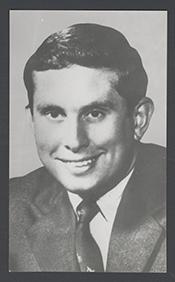
Historical · U.S. House · New York · District 13
Stephen Solarz
Former U.S. Representative · New York District 13 · 1975–1993 · Democratic
Stephen Solarz represented New York's District 13 in the United States House of Representatives (1975–1993) for the Democratic party. The page below collects sourced biographical facts, term history, committee roles, and provenance for Solarz.
Bioguide ID: S000673
Key facts
- Full name
- Stephen Solarz
- State
- New York
- District
- District 13
- Party
- Democratic
- House service
- 1975–1993
- First House term
- 1975
- Status
- Left office
- Current term ends
- —
- Born
- 1940
- Bioguide ID
- S000673
- Committee assignments
- —
- Dataset version
- 1.20260605
Biographical narrative
1,031 words · sourced from the Wikipedia REST extract
Stephen J. Solarz was a prominent American politician and educator who served as a U.S. Representative for New York's 13th congressional district from 1975 until 1993. A member of the Democratic Party, Solarz was known for his active involvement in international relations and foreign policy issues. His career in Congress was marked by significant engagement in various global matters, including relations with countries such as the Philippines, India, and Iraq. Solarz's political journey began in the New York State Assembly, and he transitioned to the U.S. House of Representatives, where he served for nearly two decades before his political career was affected by the House banking scandal.
Early life and career
Stephen Joshua Solarz was born on September 12, 1940, in Manhattan, New York City. He attended public schools in the city and graduated from Midwood High School in 1958. Following his high school education, Solarz pursued higher education at Brandeis University, where he earned a Bachelor of Arts degree in 1962. He furthered his studies at Columbia University, obtaining a Master of Arts in public law and government in 1967. During the 1967-1968 academic year, he taught political science at Brooklyn College, marking the beginning of his professional career in education.
Solarz's entry into politics began in 1966 when he served as the campaign manager for an anti-war candidate seeking a U.S. House seat. This experience laid the groundwork for his own political aspirations. In 1968, he successfully ran for a seat in the New York State Assembly, where he served from 1969 to 1974. During his tenure in the Assembly, he participated in the 178th, 179th, and 180th New York State Legislatures. In 1973, Solarz ran for Brooklyn borough president in the Democratic primary but was defeated. His campaign was primarily aimed at increasing his name recognition and establishing political connections rather than securing the position.
In 1974, Solarz was a delegate to the Democratic National Mid-term Convention, further solidifying his involvement in the Democratic Party. His political career was on an upward trajectory, leading to his eventual candidacy for the U.S. House of Representatives.
House tenure
Stephen Solarz's congressional career began when he won the Democratic primary in September 1974 against incumbent Bertram L. Podell, who was facing federal indictment at the time. Solarz's victory in the primary set the stage for his election to the U.S. House of Representatives in November 1974, where he began serving in the 94th Congress starting January 3, 1975. Over the course of his political career, he was re-elected eight times, serving a total of nine terms in the House until his tenure ended on January 3, 1993.
During his time in Congress, Solarz became known for his active engagement in foreign policy issues. He was particularly noted for his leadership on matters concerning Asia and the Pacific, chairing the Asian and Pacific Affairs Subcommittee of the House Foreign Affairs Committee during the 1980s. His involvement in international relations was highlighted by his historic visit to North Korea in 1980, where he became the first American public official to meet with Kim Il-sung since the Korean War.
Solarz's political actions were often influenced by significant events in global politics. He was a vocal critic of President Ronald Reagan's decision to deploy Marines to Lebanon in 1982, expressing concerns about U.S. military involvement in the region. Additionally, he played a role in supporting the Gulf War Authorization Act in 1991 during George H. W. Bush's presidency, demonstrating his engagement with military and foreign policy decisions.
One of Solarz's notable contributions was his involvement in the Philippines during a tumultuous period in the country's history. He was present in Manila during the assassination of opposition leader Benigno S. Aquino Jr. and subsequently advocated for a shift in U.S. policy away from supporting the Marcos regime. Following the ousting of Ferdinand Marcos in the 1986 People Power Revolution, Solarz visited the Philippines and worked closely with the new leadership, earning recognition for his efforts in promoting democratic governance.
Solarz also established strong ties with India, where he was well-regarded by political leaders across various parties. His connections were partly influenced by the presence of a significant Indian American community in his congressional district. He made numerous visits to India, where he received accolades for his contributions to U.S.-India relations, which began to improve significantly in the 1990s.
Legislative focus and committees
Throughout his congressional tenure, Stephen Solarz was actively involved in various committees and legislative initiatives that reflected his interests and expertise in foreign policy. His leadership on the Asian and Pacific Affairs Subcommittee allowed him to address critical issues affecting the region, particularly during a time of increasing U.S. interest in Asia. His efforts in this area contributed to shaping U.S. policy and engagement with countries in the region.
In addition to his focus on Asia, Solarz was also involved in matters related to the Middle East, including his meetings with Iraqi President Saddam Hussein in the 1980s. His engagement with Iraq included co-signing an open letter in 1998 that urged military action against Saddam, reflecting his concerns about weapons of mass destruction in the country.
However, Solarz's political career faced challenges, particularly during the 1992 primary election cycle. Following redistricting that divided his congressional district, he opted to run for a seat in the heavily Hispanic 12th congressional district. His candidacy was marred by the House banking scandal, which involved his overdrafts, leading to a loss in the Democratic primary to Nydia Velazquez.
After leaving Congress, Solarz continued to engage in public service and international affairs. He was appointed by President Bill Clinton as chairman of the Central Asian-American Enterprise Fund, where he worked to promote private sector development in Central Asia until 1998. Although he was considered for the position of U.S. Ambassador to India, he withdrew from consideration due to scrutiny over his past actions and relationships within the political establishment.
Solarz remained active in various international organizations and initiatives until his passing on November 29, 2010. His legacy includes his contributions to U.S. foreign policy, particularly in relation to Asia and the Pacific, as well as his efforts to foster democratic governance in countries undergoing political transitions.
Notable legislation
Sponsored and co-sponsored legislation for Stephen Solarz is pending operator curation. The biographical narrative above carries the same provenance trail until per-bill rows are written.
Sources
- [1]https://en.wikipedia.org/wiki/Stephen_SolarzWikipedia · retrieved 2026-06-05
Notable quotes
Sourced quotes for Stephen Solarz are pending operator curation. Narrative-scope provenance remains attached below.
Sources
- [1]https://en.wikipedia.org/wiki/Stephen_SolarzWikipedia · retrieved 2026-06-05
Key positions
Curated policy positions for Stephen Solarz are pending operator review. The biographical narrative above carries the same provenance trail until per-topic positions are written.
Sources
- [1]https://en.wikipedia.org/wiki/Stephen_SolarzWikipedia · retrieved 2026-06-05
Terms served
- 1975–1977U.S. House · Term 1 · Democratic
- 1977–1979U.S. House · Term 2 · Democratic
- 1979–1981U.S. House · Term 3 · Democratic
- 1981–1983U.S. House · Term 4 · Democratic
- 1983–1985U.S. House · Term 5 · Democratic
- 1985–1987U.S. House · Term 6 · Democratic
- 1987–1989U.S. House · Term 7 · Democratic
- 1989–1991U.S. House · Term 8 · Democratic
- 1991–1993U.S. House · Term 9 · Democratic
Sources & provenance
Every attributable claim above carries a per-section [N] marker that resolves to the corresponding URL below. Each entry records the upstream provider, the canonical URL, and the timestamp at which the source was retrieved by the ingest pipeline.
Key facts
- https://bioguide.congress.gov/search/bio/S000673bioguide · retrieved 2026-06-05
- https://www.govtrack.us/congress/members/410145govtrack · retrieved 2026-06-05
Biographical narrative
- https://en.wikipedia.org/wiki/Stephen_Solarzwikipedia · retrieved 2026-06-05
Find your representative
Every U.S. state elects representatives by district. Browse New York’s delegation, the full former-representative roster, or explore the role and term length.
Related on The Candidate
- Preceded by Bertram PodellEarlier holder of the New York District 13 House seat · Democratic.Open
- Succeeded by Vito Fossella Jr.Later holder of the New York District 13 House seat · Republican.Open
- Abel HuntingtonFormer U.S. Representative · New York District 1 · JacksonOpen
- Alfred ChapinFormer U.S. Representative · New York District 1 · DemocraticOpen
- Cadwallader ColdenFormer U.S. Representative · New York District 1 · FederalistOpen
- Charles FloydFormer U.S. Representative · New York District 1 · DemocraticOpen