
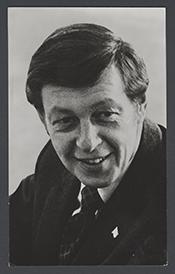
Historical · U.S. House · New York · District 14
Frederick Richmond
Former U.S. Representative · New York District 14 · 1975–1983 · Democratic
Frederick Richmond represented New York's District 14 in the United States House of Representatives (1975–1983) for the Democratic party. The page below collects sourced biographical facts, term history, committee roles, and provenance for Richmond.
Bioguide ID: R000232
Key facts
- Full name
- Frederick Richmond
- State
- New York
- District
- District 14
- Party
- Democratic
- House service
- 1975–1983
- First House term
- 1975
- Status
- Left office
- Current term ends
- —
- Born
- 1923
- Bioguide ID
- R000232
- Committee assignments
- —
- Dataset version
- 1.20260605
Biographical narrative
845 words · sourced from the Wikipedia REST extract
Frederick W. Richmond was an American politician who served as a Democratic member of the United States House of Representatives, representing New York's 14th congressional district from 1975 until 1982. His tenure in Congress was marked by his involvement in urban gardening initiatives and his subsequent legal troubles, which culminated in his resignation and conviction on federal corruption charges. Richmond's political career and personal life were characterized by both his contributions to urban policy and significant controversies.
Early life and career
Frederick William Richmond was born on November 15, 1923, in Boston, Massachusetts. He was the son of Frances and George Richmond, the latter being a lawyer and the former a homemaker. Richmond completed his secondary education at Roxbury Memorial High School in 1940 before pursuing higher education. Initially enrolling at Boston University, he later transferred to Harvard University, where he majored in history. During his time at Harvard, he took on the role of advertising manager for The Harvard Lampoon, a well-known humor magazine.
Richmond's education was interrupted by World War II, during which he served in the United States Navy from 1943 to 1945. He held the rank of petty officer third class and worked as a radioman. After his military service, he returned to Boston University, where he completed his undergraduate degree in 1946. To support himself during his college years, he played the piano and formed a musical group known as the Freddie Richmond Swing Band.
Following his education, Richmond entered the political arena, becoming involved with the Democratic National Committee as deputy finance chairman from 1958 to 1960. He was also a delegate to the 1964 Democratic National Convention. His local political career began when he was elected to the New York City Council, where he served from 1973 until 1974. This experience laid the groundwork for his subsequent election to the U.S. Congress.
House tenure
Richmond was elected to the United States House of Representatives in 1974, officially taking office on January 3, 1975. He represented New York's 14th congressional district, which includes parts of Brooklyn and Queens. Over the course of his four terms in Congress, Richmond became known for his work on various issues, particularly those related to urban agriculture and community development.
Upon joining the House, Richmond was appointed to the House Agriculture Committee. He dedicated a significant portion of his efforts to advocating for urban gardening initiatives, aiming to establish federally funded inner-city gardens that could benefit urban communities across the nation. His work in this area was supported by established members of Congress, including Jamie Whitten. Richmond's advocacy contributed to the creation of the Urban Gardening Program (UGP), which sought to promote gardening in urban settings as a means of improving food access and community engagement.
Richmond's tenure in Congress was not without its challenges. He faced scrutiny and controversy, particularly regarding his business dealings and ethical conduct. Despite these issues, he remained an active participant in legislative discussions and initiatives aimed at improving the lives of his constituents.
Legislative focus and committees
During his time in the House of Representatives, Richmond's legislative focus was primarily on urban agriculture and community development. His role on the House Agriculture Committee allowed him to influence policies that supported urban gardening and related initiatives. Richmond believed that urban gardens could play a crucial role in enhancing food security and providing green spaces in densely populated areas.
Richmond's commitment to urban gardening was part of a broader vision to address the needs of urban communities. He worked to secure federal funding for programs that would enable cities to develop and maintain gardens, which he viewed as essential for fostering community spirit and improving public health. His efforts in this area were seen as innovative at the time, as they sought to integrate agricultural practices into urban environments.
In addition to his work on agriculture, Richmond's business background informed his approach to legislative matters. He had built a conglomerate, Walco National, which he incorporated in 1960. His business career was marked by both successes and controversies, including accusations of unethical practices. These issues would later come to a head during his congressional tenure, as they raised questions about his integrity and fitness for office.
Richmond's time in Congress came to an abrupt end in 1982 when he faced legal challenges that overshadowed his legislative accomplishments. He was convicted on federal corruption charges, which included illegal payments to a government employee and possession of marijuana. Following his conviction, Richmond resigned from his position, marking a significant decline in his political career.
Despite the controversies that marred his later years, Richmond's contributions to urban gardening and community development during his time in Congress remain a notable aspect of his legacy. His efforts to promote urban agriculture reflected a growing awareness of the importance of food access and community engagement in urban settings.
Frederick W. Richmond passed away on December 28, 2019, at the age of 96. His life and career serve as a complex narrative of political service, innovation in urban policy, and the challenges of ethical governance.
Notable legislation
Sponsored and co-sponsored legislation for Frederick Richmond is pending operator curation. The biographical narrative above carries the same provenance trail until per-bill rows are written.
Sources
- [1]https://en.wikipedia.org/wiki/Fred_RichmondWikipedia · retrieved 2026-06-05
Notable quotes
Sourced quotes for Frederick Richmond are pending operator curation. Narrative-scope provenance remains attached below.
Sources
- [1]https://en.wikipedia.org/wiki/Fred_RichmondWikipedia · retrieved 2026-06-05
Key positions
Curated policy positions for Frederick Richmond are pending operator review. The biographical narrative above carries the same provenance trail until per-topic positions are written.
Sources
- [1]https://en.wikipedia.org/wiki/Fred_RichmondWikipedia · retrieved 2026-06-05
Terms served
- 1975–1977U.S. House · Term 1 · Democratic
- 1977–1979U.S. House · Term 2 · Democratic
- 1979–1981U.S. House · Term 3 · Democratic
- 1981–1983U.S. House · Term 4 · Democratic
Sources & provenance
Every attributable claim above carries a per-section [N] marker that resolves to the corresponding URL below. Each entry records the upstream provider, the canonical URL, and the timestamp at which the source was retrieved by the ingest pipeline.
Key facts
- https://bioguide.congress.gov/search/bio/R000232bioguide · retrieved 2026-06-05
- https://www.govtrack.us/congress/members/409208govtrack · retrieved 2026-06-05
Biographical narrative
- https://en.wikipedia.org/wiki/Fred_Richmondwikipedia · retrieved 2026-06-05
Find your representative
Every U.S. state elects representatives by district. Browse New York’s delegation, the full former-representative roster, or explore the role and term length.
Related on The Candidate
- Preceded by John RooneyEarlier holder of the New York District 14 House seat · Democratic.Open
- Succeeded by Joe CrowleyLater holder of the New York District 14 House seat · Democratic.Open
- Abel HuntingtonFormer U.S. Representative · New York District 1 · JacksonOpen
- Alfred ChapinFormer U.S. Representative · New York District 1 · DemocraticOpen
- Cadwallader ColdenFormer U.S. Representative · New York District 1 · FederalistOpen
- Charles FloydFormer U.S. Representative · New York District 1 · DemocraticOpen