
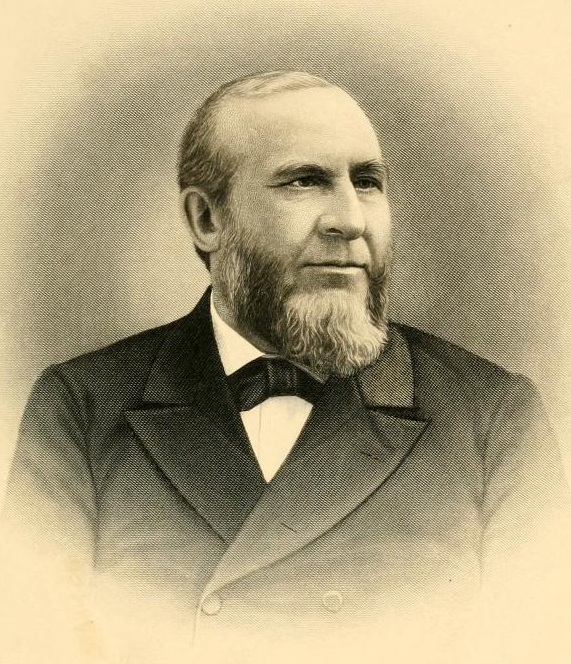
Historical · U.S. House · New York · District 14
John Ferdon
Former U.S. Representative · New York District 14 · 1879–1881 · Republican
John Ferdon represented New York's District 14 in the United States House of Representatives (1879–1881) for the Republican party. The page below collects sourced biographical facts, term history, committee roles, and provenance for Ferdon.
Bioguide ID: F000079
Key facts
- Full name
- John Ferdon
- State
- New York
- District
- District 14
- Party
- Republican
- House service
- 1879–1881
- First House term
- 1879
- Status
- Left office
- Current term ends
- —
- Born
- 1826
- Bioguide ID
- F000079
- Committee assignments
- —
- Dataset version
- 1.20260606
Biographical narrative
938 words · sourced from the Wikipedia REST extract
John Ferdon was a U.S. Representative from New York, serving as a member of the Republican Party in the late 19th century. His political career included a term in the United States House of Representatives, where he represented New York's 14th congressional district. Born in 1826, Ferdon had a diverse career that spanned law, state politics, and national representation. His contributions to the political landscape of his time were marked by his involvement in various legislative bodies and national conventions.
Early life and career
John Ferdon was born on December 13, 1826, in Piermont, New York. He was the son of William Ferdon and Elizabeth Ferdon, whose family lineage in the area contributed to his local prominence. Growing up in a family with a strong educational background, Ferdon pursued higher education and graduated from Rutgers College in 1847. Following his graduation, he studied law and successfully gained admission to the bar, which allowed him to practice as an attorney. This legal background would later inform his work in public office.
Ferdon's early political career began at the state level. He was a member of the Know Nothing Party, which was known for its anti-immigrant and anti-Catholic sentiments during the mid-19th century. In 1855, he served in the New York State Assembly representing Rockland County. His political involvement continued as he was elected to the New York State Senate, where he served the 7th District in both 1856 and 1857. These early experiences in state politics provided Ferdon with a foundation in legislative processes and governance, which would be beneficial in his later congressional career.
In addition to his state legislative roles, Ferdon was active in national politics as a delegate to the Republican National Conventions in 1864 and 1876. At the 1864 convention, he participated in the renomination of President Abraham Lincoln, a significant event in American history. The 1876 convention was equally important, as it was during this gathering that Rutherford B. Hayes was nominated for the presidency. These experiences not only solidified Ferdon's political affiliations but also expanded his network within the Republican Party.
House tenure
Ferdon's tenure in the United States House of Representatives began on March 4, 1879, when he was elected to the 46th Congress. He represented New York's 14th congressional district, a position that allowed him to influence national legislation and contribute to the governance of the country during a transformative period in American history. His term lasted until March 3, 1881, marking a significant chapter in his political career.
During his time in Congress, Ferdon was part of a legislative body that was addressing various pressing issues of the era, including economic recovery following the Civil War, the expansion of civil rights, and the challenges of industrialization. Although specific details regarding his legislative initiatives and voting record are not provided, it is understood that representatives of his time were often involved in debates over tariffs, infrastructure development, and social policies aimed at improving the lives of their constituents.
Ferdon's political alignment with the Republican Party during this period was crucial, as the party was focused on promoting economic growth and supporting the interests of businesses and industries. His role as a congressman would have involved collaboration with fellow Republicans and negotiations with members of opposing parties to advance legislative goals.
Legislative focus and committees
While specific information about the committees on which Ferdon served is not detailed, it can be inferred that, like many of his contemporaries, he would have been involved in committees that aligned with the interests of his constituents and the broader goals of the Republican Party. Congressional committees play a vital role in shaping legislation, conducting hearings, and overseeing the implementation of laws, and Ferdon’s participation in such committees would have been essential to his effectiveness as a legislator.
Ferdon's legislative focus likely reflected the concerns of his district and the national priorities of the Republican Party during his time in office. Issues such as economic development, infrastructure improvements, and social welfare programs were prominent in the political discourse of the late 19th century. As a representative from New York, Ferdon would have been particularly attuned to the needs of urban constituents, including matters related to trade, transportation, and labor.
In addition to his legislative work, Ferdon's participation in national conventions and his earlier roles in state politics would have provided him with a broader perspective on the political landscape. This experience would have informed his approach to governance and his interactions with other lawmakers, both in the House and in the Senate.
Ferdon's congressional career was relatively brief, concluding in 1881. Following his time in office, he returned to private life, where he continued to engage with his community and family. His contributions to public service, however, left a lasting impact on the political fabric of his district and the state of New York.
In his personal life, Ferdon was married to Harriet Strong, the daughter of a noted mathematician and professor. Together, they had five children, contributing to the legacy of the Ferdon family in the region. John Ferdon passed away on August 5, 1884, in Monmouth Beach, New Jersey, after suffering from kidney disease. He was buried in a private cemetery on his estate in Piermont, New York, which is recognized for its historical significance.
Ferdon’s home, known as Ferdon Hall, was later listed on the National Register of Historic Places in 2011, ensuring that his contributions to the community and the state are remembered. His life and career reflect the complexities of American politics in the 19th century, marked by significant social and economic changes that shaped the nation’s trajectory.
Notable legislation
Sponsored and co-sponsored legislation for John Ferdon is pending operator curation. The biographical narrative above carries the same provenance trail until per-bill rows are written.
Sources
- [1]https://en.wikipedia.org/wiki/John_W._FerdonWikipedia · retrieved 2026-06-06
Notable quotes
Sourced quotes for John Ferdon are pending operator curation. Narrative-scope provenance remains attached below.
Sources
- [1]https://en.wikipedia.org/wiki/John_W._FerdonWikipedia · retrieved 2026-06-06
Key positions
Curated policy positions for John Ferdon are pending operator review. The biographical narrative above carries the same provenance trail until per-topic positions are written.
Sources
- [1]https://en.wikipedia.org/wiki/John_W._FerdonWikipedia · retrieved 2026-06-06
Terms served
- 1879–1881U.S. House · Term 1 · Republican
Sources & provenance
Every attributable claim above carries a per-section [N] marker that resolves to the corresponding URL below. Each entry records the upstream provider, the canonical URL, and the timestamp at which the source was retrieved by the ingest pipeline.
Key facts
- https://bioguide.congress.gov/search/bio/F000079bioguide · retrieved 2026-06-06
- https://www.govtrack.us/congress/members/404037govtrack · retrieved 2026-06-06
Biographical narrative
- https://en.wikipedia.org/wiki/John_W._Ferdonwikipedia · retrieved 2026-06-06
Find your representative
Every U.S. state elects representatives by district. Browse New York’s delegation, the full former-representative roster, or explore the role and term length.
Related on The Candidate
- Preceded by George BeebeEarlier holder of the New York District 14 House seat · Democratic.Open
- Succeeded by William StahlneckerLater holder of the New York District 14 House seat · Democratic.Open
- Abel HuntingtonFormer U.S. Representative · New York District 1 · JacksonOpen
- Alfred ChapinFormer U.S. Representative · New York District 1 · DemocraticOpen
- Cadwallader ColdenFormer U.S. Representative · New York District 1 · FederalistOpen
- Charles FloydFormer U.S. Representative · New York District 1 · DemocraticOpen