
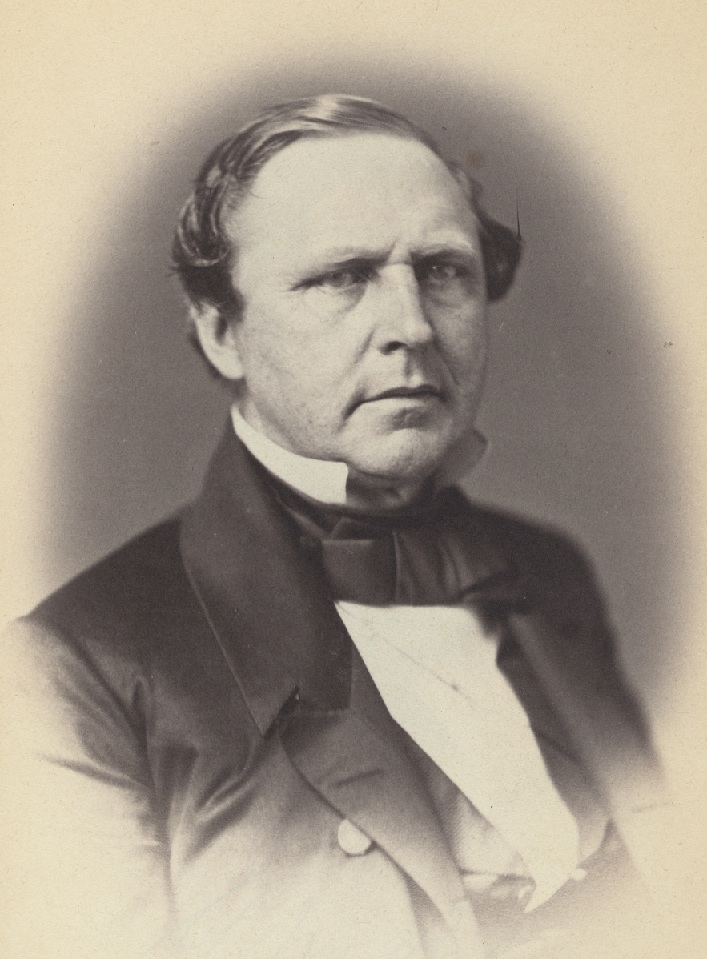
Historical · U.S. House · New York · District 15
Edward Dodd
Former U.S. Representative · New York District 15 · 1855–1859 · Republican
Edward Dodd represented New York's District 15 in the United States House of Representatives (1855–1859) for the Republican party. The page below collects sourced biographical facts, term history, committee roles, and provenance for Dodd.
Bioguide ID: D000389
Key facts
- Full name
- Edward Dodd
- State
- New York
- District
- District 15
- Party
- Republican
- House service
- 1855–1859
- First House term
- 1855
- Status
- Left office
- Current term ends
- —
- Born
- 1805
- Bioguide ID
- D000389
- Committee assignments
- —
- Dataset version
- 1.20260606
Biographical narrative
978 words · sourced from the Wikipedia REST extract
Edward Dodd was a prominent political figure in the mid-19th century, serving as a U.S. Representative from New York. A member of the Republican Party, Dodd's congressional career spanned two terms from 1855 to 1859. His political journey began as a member of the Whig Party, and he transitioned to the Republican Party during his time in office. Dodd's contributions extended beyond his legislative duties, as he was actively involved in local governance and community service throughout his life.
Early life and career
Edward Dodd was born on August 25, 1805, in Salem, New York. His early education took place in the public schools of his hometown, which laid the foundation for his future endeavors. After completing his education, Dodd engaged in mercantile pursuits, which provided him with valuable experience in business and commerce. In 1835, he relocated to Argyle, New York, a move that would significantly influence his later political career and community involvement.
Upon settling in Argyle, Dodd became an active member of the local community. He served as the county clerk of Washington County from 1835 to 1844, a role that involved managing public records and supporting the administrative functions of the county government. His tenure as county clerk allowed him to gain insight into the workings of local governance and build relationships within the community. Dodd's commitment to public service was further demonstrated when he was elected as a delegate to the New York State Constitutional Convention in 1846. This experience provided him with a deeper understanding of state-level governance and the legislative process.
Dodd's political career began in earnest when he was elected as a member of the Whig Party to the Thirty-fourth Congress. His election marked the beginning of his formal involvement in national politics, where he represented the interests of his constituents in New York. Following his initial term, he was re-elected as a Republican to the Thirty-fifth Congress, serving from March 4, 1855, to March 3, 1859. This transition from the Whig Party to the Republican Party reflected the shifting political landscape of the time, as the Republican Party emerged as a significant force in American politics during the 1850s.
House tenure
During his time in the U.S. House of Representatives, Edward Dodd was involved in various legislative activities and served on important committees. Notably, he held the position of chairman of the Committee on the District of Columbia during the Thirty-fourth Congress. This committee was responsible for overseeing matters related to the federal district, including legislation that affected the governance and administration of Washington, D.C. Dodd's role as chairman allowed him to influence key decisions and advocate for policies that aligned with his constituents' interests.
Dodd's congressional career was marked by a commitment to addressing the needs of his district and contributing to national discussions on pressing issues of the day. His legislative focus likely included matters pertinent to his constituents in New York, reflecting the concerns and priorities of the region. While specific details regarding his votes or legislative initiatives are not provided, his involvement in Congress during a transformative period in American history positioned him to engage with significant national debates.
After completing his terms in the House of Representatives, Dodd continued to serve his community and the state of New York in various capacities. His political career did not end with his departure from Congress; instead, he took on additional roles that further demonstrated his dedication to public service.
Legislative focus and committees
Edward Dodd's legislative focus during his time in Congress was shaped by the political climate of the 1850s, a period characterized by significant social and political upheaval in the United States. As a member of the Republican Party, his legislative priorities likely aligned with the party's platform, which included opposition to the expansion of slavery and support for economic development and infrastructure improvements.
In addition to his role as chairman of the Committee on the District of Columbia, Dodd's involvement in Congress would have required him to engage with various issues affecting his constituents and the nation. While specific legislative achievements are not documented, his participation in debates and discussions on key issues would have contributed to the broader legislative agenda of the time.
Beyond his congressional duties, Dodd's commitment to public service extended into local governance. He served as the United States Marshal for the Northern District of New York from April 1863 to April 1869, a role that involved overseeing law enforcement and federal judicial matters in the region. This position further solidified his reputation as a dedicated public servant and allowed him to contribute to the enforcement of federal laws during a tumultuous period in American history.
Dodd's community involvement also included a long tenure as the editor of the County Post, a local newspaper, where he likely played a role in shaping public opinion and informing residents about local and national issues. His engagement with the media provided him with a platform to communicate with constituents and advocate for policies that aligned with his vision for the community.
In addition to his editorial work, Dodd was a Trustee of the Argyle Academy for fifty-one years, reflecting his commitment to education and the development of future generations. His leadership in this capacity demonstrated his belief in the importance of education as a foundation for a thriving community. Furthermore, he served as president of the village of Argyle for eight years, further solidifying his role as a key figure in local governance.
Edward Dodd passed away on March 1, 1891, in Argyle, New York. His contributions to his community and the state of New York were significant, and he was interred in Prospect Hill Cemetery, where he remains a part of the local history. Dodd's life and career exemplify the dedication of public servants in the 19th century, reflecting the complexities and challenges of a rapidly changing nation.
Notable legislation
Sponsored and co-sponsored legislation for Edward Dodd is pending operator curation. The biographical narrative above carries the same provenance trail until per-bill rows are written.
Sources
- [1]https://en.wikipedia.org/wiki/Edward_DoddWikipedia · retrieved 2026-06-06
Notable quotes
Sourced quotes for Edward Dodd are pending operator curation. Narrative-scope provenance remains attached below.
Sources
- [1]https://en.wikipedia.org/wiki/Edward_DoddWikipedia · retrieved 2026-06-06
Key positions
Curated policy positions for Edward Dodd are pending operator review. The biographical narrative above carries the same provenance trail until per-topic positions are written.
Sources
- [1]https://en.wikipedia.org/wiki/Edward_DoddWikipedia · retrieved 2026-06-06
Terms served
- 1855–1857U.S. House · Term 1 · Ind. Republican-Democrat
- 1857–1859U.S. House · Term 2 · Republican
Sources & provenance
Every attributable claim above carries a per-section [N] marker that resolves to the corresponding URL below. Each entry records the upstream provider, the canonical URL, and the timestamp at which the source was retrieved by the ingest pipeline.
Key facts
- https://bioguide.congress.gov/search/bio/D000389bioguide · retrieved 2026-06-06
- https://www.govtrack.us/congress/members/403504govtrack · retrieved 2026-06-06
Biographical narrative
- https://en.wikipedia.org/wiki/Edward_Doddwikipedia · retrieved 2026-06-06
Find your representative
Every U.S. state elects representatives by district. Browse New York’s delegation, the full former-representative roster, or explore the role and term length.
Related on The Candidate
- Preceded by Charles HughesEarlier holder of the New York District 15 House seat · Democratic.Open
- Succeeded by James McKeanLater holder of the New York District 15 House seat · Republican.Open
- Abel HuntingtonFormer U.S. Representative · New York District 1 · JacksonOpen
- Alfred ChapinFormer U.S. Representative · New York District 1 · DemocraticOpen
- Cadwallader ColdenFormer U.S. Representative · New York District 1 · FederalistOpen
- Charles FloydFormer U.S. Representative · New York District 1 · DemocraticOpen