
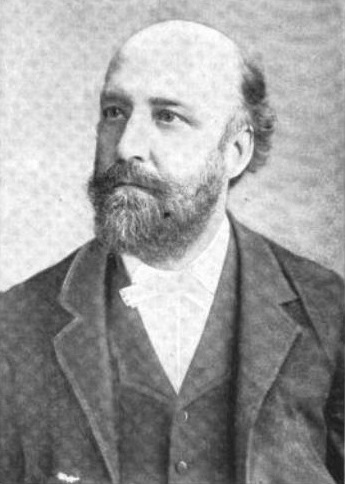
Historical · U.S. House · New York · District 15
Henry Bacon
Former U.S. Representative · New York District 15 · 1885–1893 · Democratic
Henry Bacon represented New York's District 15 in the United States House of Representatives (1885–1893) for the Democratic party. The page below collects sourced biographical facts, term history, committee roles, and provenance for Bacon.
Bioguide ID: B000016
Key facts
- Full name
- Henry Bacon
- State
- New York
- District
- District 15
- Party
- Democratic
- House service
- 1885–1893
- First House term
- 1885
- Status
- Left office
- Current term ends
- —
- Born
- 1846
- Bioguide ID
- B000016
- Committee assignments
- —
- Dataset version
- 1.20260606
Biographical narrative
842 words · sourced from the Wikipedia REST extract
Henry Bacon was an American lawyer and politician who served as a U.S. Representative for New York's 15th congressional district during the late 19th century. A member of the Democratic Party, Bacon's congressional career spanned three terms from 1885 to 1893. Known for his involvement in legislative committees, he played significant roles in the areas of manufacturing and banking during his time in office. After leaving Congress, he returned to his legal practice and continued to engage in local politics until his death in 1915.
Early life and career
Henry Bacon was born on March 14, 1846, in Brooklyn, New York. He was the son of Daniel P. Bacon and received his early education at the Mount Pleasant Academy located in Sing Sing, New York, and the Episcopal Academy in Cheshire, Connecticut. Following his academic pursuits, Bacon graduated from Union College in 1865. After completing his education, he studied law and was admitted to the bar in 1866. He began his legal career in Goshen, New York, where he established a practice that would serve as the foundation for his future political endeavors.
Bacon's entry into politics was marked by his alignment with the Democratic Party, which would shape his legislative priorities and affiliations throughout his career. His legal background provided him with a strong foundation for understanding the complexities of governance and lawmaking, which would later influence his work as a U.S. Representative.
House tenure
Bacon's congressional career began when he was elected to the Forty-ninth Congress to fill a vacancy created by the death of Lewis Beach. He took office as a U.S. Representative for New York's 15th congressional district in 1885. His initial term was characterized by his active participation in legislative discussions and committee work. He was re-elected to the Fiftieth Congress, serving from December 6, 1886, until March 3, 1889. During this term, he held the position of chairman of the Committee on Manufactures, where he focused on issues related to the manufacturing sector, which was a significant component of the American economy at the time.
Despite his efforts and contributions, Bacon faced challenges in his political career. He was an unsuccessful candidate for re-election in 1888 to the Fifty-first Congress, which marked a temporary setback in his legislative pursuits. However, he returned to Congress by winning election to the Fifty-second Congress, serving from March 4, 1891, to March 3, 1893. In this capacity, he again took on a leadership role as chairman of the Committee on Banking and Currency, where he dealt with matters concerning financial institutions and monetary policy.
Bacon's tenure in the House of Representatives was marked by his commitment to addressing the economic concerns of his constituents and the nation. His involvement in key committees allowed him to influence legislation that would have lasting impacts on the manufacturing and banking sectors. However, after his term ended in 1893, he was not renominated for office in 1892, which concluded his direct involvement in national politics.
Legislative focus and committees
Throughout his time in Congress, Henry Bacon's legislative focus was primarily on issues related to manufacturing and banking. As chairman of the Committee on Manufactures during his second term, he worked on legislation that aimed to support and regulate the manufacturing industry, which was crucial for economic growth during the late 19th century. His leadership in this committee reflected his understanding of the importance of manufacturing to the American economy and the need for policies that would foster its development.
In his subsequent term, as chairman of the Committee on Banking and Currency, Bacon engaged with critical financial issues that were pertinent to the economic landscape of the United States. This committee was responsible for overseeing legislation related to banking practices, currency regulation, and financial stability. Bacon's work in this area was significant, as the nation was navigating various economic challenges, including the effects of industrialization and the need for a stable banking system.
Bacon's legislative contributions were shaped by the broader political and economic context of his time. The late 19th century was a period of rapid industrial growth, and the policies developed during this era had long-term implications for the American economy. His involvement in these committees demonstrated his commitment to addressing the needs of his constituents and the nation as a whole.
After leaving Congress, Bacon returned to his legal practice in Goshen, New York. He remained active in local politics and served as a delegate to the Democratic National Convention in 1892. Additionally, he held the position of Corporation Counsel for Goshen from 1909 until his death. Bacon passed away on March 25, 1915, in Goshen, New York, due to pneumonia. He was interred in Slate Hill Cemetery in Goshen.
In his personal life, Bacon married Helen Brandreth in 1867, and they had one daughter, Florence. After Helen's death in 1905, he married Susan Randall in 1906, and they remained together until his passing. Bacon's family life and professional career were intertwined, reflecting the values and commitments that shaped his public service and legal work throughout his life.
Notable legislation
Sponsored and co-sponsored legislation for Henry Bacon is pending operator curation. The biographical narrative above carries the same provenance trail until per-bill rows are written.
Sources
- [1]https://en.wikipedia.org/wiki/Henry_Bacon_(New_York_politician)Wikipedia · retrieved 2026-06-06
Notable quotes
Sourced quotes for Henry Bacon are pending operator curation. Narrative-scope provenance remains attached below.
Sources
- [1]https://en.wikipedia.org/wiki/Henry_Bacon_(New_York_politician)Wikipedia · retrieved 2026-06-06
Key positions
Curated policy positions for Henry Bacon are pending operator review. The biographical narrative above carries the same provenance trail until per-topic positions are written.
Sources
- [1]https://en.wikipedia.org/wiki/Henry_Bacon_(New_York_politician)Wikipedia · retrieved 2026-06-06
Terms served
- 1885–1887U.S. House · Term 1 · Democratic
- 1887–1889U.S. House · Term 2 · Democratic
- 1891–1893U.S. House · Term 3 · Democratic
Sources & provenance
Every attributable claim above carries a per-section [N] marker that resolves to the corresponding URL below. Each entry records the upstream provider, the canonical URL, and the timestamp at which the source was retrieved by the ingest pipeline.
Key facts
- https://bioguide.congress.gov/search/bio/B000016bioguide · retrieved 2026-06-06
- https://www.govtrack.us/congress/members/401021govtrack · retrieved 2026-06-06
Biographical narrative
- https://en.wikipedia.org/wiki/Henry_Bacon_(New_York_politician)wikipedia · retrieved 2026-06-06
Find your representative
Every U.S. state elects representatives by district. Browse New York’s delegation, the full former-representative roster, or explore the role and term length.
Related on The Candidate
- Preceded by John Bagley Jr.Earlier holder of the New York District 15 House seat · Democratic.Open
- Succeeded by Isidor StrausLater holder of the New York District 15 House seat · Democratic.Open
- Abel HuntingtonFormer U.S. Representative · New York District 1 · JacksonOpen
- Alfred ChapinFormer U.S. Representative · New York District 1 · DemocraticOpen
- Cadwallader ColdenFormer U.S. Representative · New York District 1 · FederalistOpen
- Charles FloydFormer U.S. Representative · New York District 1 · DemocraticOpen