
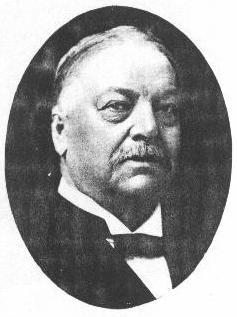
Historical · U.S. House · New York · District 16
John Bailey
Former U.S. Representative · New York District 16 · 1877–1881 · Republican
John Bailey represented New York's District 16 in the United States House of Representatives (1877–1881) for the Republican party. The page below collects sourced biographical facts, term history, committee roles, and provenance for Bailey.
Bioguide ID: B000042
Key facts
- Full name
- John Bailey
- State
- New York
- District
- District 16
- Party
- Republican
- House service
- 1877–1881
- First House term
- 1877
- Status
- Left office
- Current term ends
- —
- Born
- 1838
- Bioguide ID
- B000042
- Committee assignments
- —
- Dataset version
- 1.20260606
Biographical narrative
904 words · sourced from the Wikipedia REST extract
John Bailey was an American lawyer and politician who served as a U.S. Representative for New York's sixteenth congressional district from 1878 to 1881. A member of the Republican Party, Bailey's political career was preceded by his service as a first lieutenant in the Union Army during the American Civil War. His legal career included various roles in Albany County, New York, where he held positions such as assistant district attorney and district attorney. After his congressional tenure, Bailey continued to serve the public in various capacities, including as a consul in Germany and as a customs official in Albany.
Early life and career
John Bailey was born on August 24, 1838, in Bethlehem, New York. He received his early education in the public schools of his hometown before attending the Hudson River Institute located in Claverack, New York. His academic pursuits culminated in his graduation from Union College in Schenectady, New York, in 1861. Following his graduation, Bailey married Dell L. Hooker on September 21, 1864. The couple had two children, a son named Judson Hooker Bailey and a daughter named Jennie Bailey Bradley.
Bailey's life took a significant turn when the American Civil War broke out. He enlisted in the Union Army, where he served as a first lieutenant and adjutant in the One Hundred and Seventy-seventh Regiment of the New York Volunteer Infantry. His military service included deployment in the Department of the Gulf in 1862, where he contributed to the Union's efforts during a pivotal time in American history.
After the war, Bailey returned to his academic pursuits and graduated from Albany Law School in 1864. He was admitted to the bar the same year and began his legal practice in Albany, New York. His early career in law was marked by a series of public service roles. From 1865 to 1867, he served as the assistant district attorney for Albany County, where he gained valuable experience in the legal system. He later held the position of collector of internal revenue from 1871 to 1874, a role that involved overseeing tax collection in the region. Bailey's legal career continued to advance when he was elected district attorney of Albany County, serving from 1874 until 1877. These positions not only enhanced his legal expertise but also established his reputation as a dedicated public servant.
House tenure
Bailey's political career reached a new height when he was elected to the United States House of Representatives. He was chosen as a Republican to fill the vacancy left by the death of Terence J. Quinn, representing New York's sixteenth congressional district. His election to the Forty-fifth Congress marked the beginning of his congressional service, which commenced on November 5, 1878. Bailey was subsequently re-elected to the Forty-sixth Congress, serving until March 3, 1881. During his time in Congress, he participated in the legislative process and contributed to discussions and decisions that shaped national policy.
Bailey's decision not to seek renomination in 1880 marked the end of his congressional career. While specific details about his legislative accomplishments during his tenure are not extensively documented, his election and re-election indicate a level of support from his constituents and a recognition of his contributions to the political landscape of the time.
Legislative focus and committees
While the specific legislative initiatives and committee assignments during Bailey's time in Congress are not detailed, it is known that he served as a member of the Republican Party, which was a dominant political force in the post-Civil War era. The Republican Party at that time was primarily associated with issues such as Reconstruction, economic development, and civil rights for formerly enslaved individuals. Bailey's alignment with the party suggests that he may have engaged with these pressing issues during his congressional service.
After concluding his time in the House of Representatives, Bailey continued to serve the public in various capacities. He was appointed by President James Garfield as the United States consul to Hamburg, Germany, a position he held from 1881 to 1885. This role involved representing American interests abroad and facilitating trade relations between the United States and Germany.
In addition to his diplomatic service, Bailey remained active in the Republican Party. He served as a delegate to the Republican National Convention in 1888, where party leaders and representatives gathered to discuss and shape the party's platform and nominate candidates for the upcoming presidential election. His involvement in the convention reflects his continued engagement with national politics and his commitment to the Republican Party.
Bailey's public service did not end with his diplomatic role. He was appointed by President Benjamin Harrison as the surveyor of customs at Albany, New York, serving in this capacity from 1889 to 1894. This position involved overseeing customs operations and ensuring compliance with federal regulations, further demonstrating Bailey's dedication to public service and his expertise in legal and regulatory matters.
After his various public service roles, Bailey returned to the practice of law, where he continued to contribute to the legal profession and the community. His career spanned several decades and included significant contributions to both local and national governance.
John Bailey passed away on February 21, 1916, in Albany, New York, at the age of 77. He is interred at Elmwood Cemetery in Bethlehem, New York. His life and career reflect a commitment to public service, law, and the political landscape of the United States during a transformative period in its history.
Notable legislation
Sponsored and co-sponsored legislation for John Bailey is pending operator curation. The biographical narrative above carries the same provenance trail until per-bill rows are written.
Sources
- [1]https://en.wikipedia.org/wiki/John_Mosher_BaileyWikipedia · retrieved 2026-06-06
Notable quotes
Sourced quotes for John Bailey are pending operator curation. Narrative-scope provenance remains attached below.
Sources
- [1]https://en.wikipedia.org/wiki/John_Mosher_BaileyWikipedia · retrieved 2026-06-06
Key positions
Curated policy positions for John Bailey are pending operator review. The biographical narrative above carries the same provenance trail until per-topic positions are written.
Sources
- [1]https://en.wikipedia.org/wiki/John_Mosher_BaileyWikipedia · retrieved 2026-06-06
Terms served
- 1877–1879U.S. House · Term 1 · Republican
- 1879–1881U.S. House · Term 2 · Republican
Sources & provenance
Every attributable claim above carries a per-section [N] marker that resolves to the corresponding URL below. Each entry records the upstream provider, the canonical URL, and the timestamp at which the source was retrieved by the ingest pipeline.
Key facts
- https://bioguide.congress.gov/search/bio/B000042bioguide · retrieved 2026-06-06
- https://www.govtrack.us/congress/members/401047govtrack · retrieved 2026-06-06
Biographical narrative
- https://en.wikipedia.org/wiki/John_Mosher_Baileywikipedia · retrieved 2026-06-06
Find your representative
Every U.S. state elects representatives by district. Browse New York’s delegation, the full former-representative roster, or explore the role and term length.
Related on The Candidate
- Preceded by Charles AdamsEarlier holder of the New York District 16 House seat · Republican.Open
- Succeeded by Michael NolanLater holder of the New York District 16 House seat · Democratic.Open
- Abel HuntingtonFormer U.S. Representative · New York District 1 · JacksonOpen
- Alfred ChapinFormer U.S. Representative · New York District 1 · DemocraticOpen
- Cadwallader ColdenFormer U.S. Representative · New York District 1 · FederalistOpen
- Charles FloydFormer U.S. Representative · New York District 1 · DemocraticOpen