
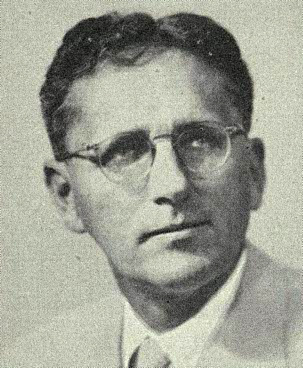
Historical · U.S. House · New York · District 17
Frederic Coudert Jr.
Former U.S. Representative · New York District 17 · 1947–1959 · Republican
Frederic Coudert Jr. represented New York's District 17 in the United States House of Representatives (1947–1959) for the Republican party. The page below collects sourced biographical facts, term history, committee roles, and provenance for Jr..
Bioguide ID: C000804
Key facts
- Full name
- Frederic Coudert Jr.
- State
- New York
- District
- District 17
- Party
- Republican
- House service
- 1947–1959
- First House term
- 1947
- Status
- Left office
- Current term ends
- —
- Born
- 1898
- Bioguide ID
- C000804
- Committee assignments
- —
- Dataset version
- 1.20260605
Biographical narrative
939 words · sourced from the Wikipedia REST extract
Frederic Coudert Jr. was a prominent American politician who served as a U.S. Representative for New York's 17th congressional district from 1947 to 1959. A member of the Republican Party, Coudert's political career was marked by his involvement in various legislative committees, particularly the Appropriations Committee, and his participation in significant political events during a transformative period in American history. His earlier political activities included a tenure in the New York State Senate and involvement in efforts to address perceived communist influences in public education.
Early life and career
Frederic René Coudert Jr. was born on May 7, 1898, in New York City. He was the son of Frederic René Coudert II and Alice T. Wilmerding Coudert. His educational journey began at the Browning and Morristown Schools in New York City, after which he enrolled at Harvard College in 1916. However, his studies were interrupted by the United States' entry into World War I. Coudert joined the Army and served as a first lieutenant in the 105th Infantry Regiment, part of the 27th Division, during the war. In 1918, he completed his Bachelor of Arts degree from Columbia College through a program designed for military personnel that combined academic study with military service.
After his discharge from the Army in 1919, Coudert pursued legal studies at Columbia Law School, where he earned his LL.B. degree in 1922. He was admitted to the bar in 1923 and began practicing law in New York City. His legal career included a position as an assistant United States attorney for the Southern District of New York from 1924 to 1925. Coudert's early political engagement was evident as he became involved with The New York Young Republican Club and ran unsuccessfully for the position of New York County District Attorney in 1929. His political career continued to develop as he participated in the Republican state conventions every two years from 1930 to 1948 and attended the Republican National Conventions every four years from 1936 to 1948.
From 1939 to 1946, Coudert served in the New York State Senate, participating in the 162nd through 165th New York State Legislatures. His political activities during this time included involvement with the Rapp-Coudert Committee, which sought to investigate and address alleged communist influences within New York's public education system. This committee's actions resulted in the dismissal of numerous educators, a move that sparked significant controversy and criticism.
House tenure
Frederic Coudert was elected to the United States House of Representatives in 1946, representing New York's 17th congressional district as a Republican. He began his first term on January 3, 1947, and was re-elected for five additional terms, serving until January 3, 1959. His initial election was marked by a decisive victory over a three-term liberal Republican incumbent in the primary, indicating a shift in the political landscape of the district.
During his time in Congress, Coudert gained a notable appointment to the Appropriations Committee, a position typically reserved for more senior members. This appointment was significant for a freshman congressman and allowed him to play a role in shaping federal budgetary decisions. By the 85th Congress, which spanned from 1957 to 1959, he had risen to the position of ranking Republican on the Appropriations Subcommittee that oversaw the Departments of State and Justice, the Judiciary, and related agencies. His legislative record includes a vote in favor of the Civil Rights Act of 1957, reflecting his engagement with key civil rights issues of the era.
Coudert's electoral success varied over the years. In both 1954 and 1956, he won re-election with less than 51% of the vote, indicating a competitive political environment. In 1958, he faced a challenge from a rising young Republican liberal, John V. Lindsay. Ultimately, Coudert chose to cede the Republican nomination and did not seek re-election, marking the end of his congressional career.
Legislative focus and committees
Throughout his tenure in the House of Representatives, Frederic Coudert's legislative focus was primarily on appropriations and budgetary matters. His role on the Appropriations Committee allowed him to influence funding decisions for various federal departments and agencies, particularly those related to justice and state affairs. This position placed him at the center of discussions surrounding government spending and resource allocation during a period marked by both domestic challenges and international tensions.
Coudert's involvement with the Appropriations Committee was significant not only for his district but also for the broader legislative agenda of the Republican Party during the late 1940s and 1950s. His ranking position on the subcommittee overseeing the Departments of State and Justice, the Judiciary, and related agencies positioned him as a key player in shaping policies that addressed both domestic and foreign issues.
In addition to his work on appropriations, Coudert's political career was characterized by his conservative stance on various issues. He was an outspoken advocate for conservative principles and policies, which was evident in his endorsement of William F. Buckley's Conservative campaign for the New York City mayoralty in 1965. This endorsement highlighted his alignment with the conservative movement that gained momentum during the mid-20th century.
After leaving Congress, Coudert continued his legal practice in New York City and served on the State Commission on Governmental Operations of New York City from 1959 to 1961. His post-congressional career reflected his ongoing engagement with public service and governance.
Frederic Coudert Jr. passed away on May 21, 1972, in New York City. He was buried at Memorial Cemetery in Cold Spring Harbor, New York. His legacy includes a notable career in both state and federal government, marked by his contributions to legislative processes and his involvement in significant political movements of his time.
Notable legislation
Sponsored and co-sponsored legislation for Frederic Coudert Jr. is pending operator curation. The biographical narrative above carries the same provenance trail until per-bill rows are written.
Sources
- [1]https://en.wikipedia.org/wiki/Frederic_Coudert_Jr.Wikipedia · retrieved 2026-06-05
Notable quotes
Sourced quotes for Frederic Coudert Jr. are pending operator curation. Narrative-scope provenance remains attached below.
Sources
- [1]https://en.wikipedia.org/wiki/Frederic_Coudert_Jr.Wikipedia · retrieved 2026-06-05
Key positions
Curated policy positions for Frederic Coudert Jr. are pending operator review. The biographical narrative above carries the same provenance trail until per-topic positions are written.
Sources
- [1]https://en.wikipedia.org/wiki/Frederic_Coudert_Jr.Wikipedia · retrieved 2026-06-05
Terms served
- 1947–1949U.S. House · Term 1 · Republican
- 1949–1951U.S. House · Term 2 · Republican
- 1951–1953U.S. House · Term 3 · Republican
- 1953–1955U.S. House · Term 4 · Republican
- 1955–1957U.S. House · Term 5 · Republican
- 1957–1959U.S. House · Term 6 · Republican
Sources & provenance
Every attributable claim above carries a per-section [N] marker that resolves to the corresponding URL below. Each entry records the upstream provider, the canonical URL, and the timestamp at which the source was retrieved by the ingest pipeline.
Key facts
- https://bioguide.congress.gov/search/bio/C000804bioguide · retrieved 2026-06-05
- https://www.govtrack.us/congress/members/402923govtrack · retrieved 2026-06-05
Biographical narrative
- https://en.wikipedia.org/wiki/Frederic_Coudert_Jr.wikipedia · retrieved 2026-06-05
Find your representative
Every U.S. state elects representatives by district. Browse New York’s delegation, the full former-representative roster, or explore the role and term length.
Related on The Candidate
- Preceded by Joseph BaldwinEarlier holder of the New York District 17 House seat · Republican.Open
- Succeeded by John LindsayLater holder of the New York District 17 House seat · Republican.Open
- Abel HuntingtonFormer U.S. Representative · New York District 1 · JacksonOpen
- Alfred ChapinFormer U.S. Representative · New York District 1 · DemocraticOpen
- Cadwallader ColdenFormer U.S. Representative · New York District 1 · FederalistOpen
- Charles FloydFormer U.S. Representative · New York District 1 · DemocraticOpen