
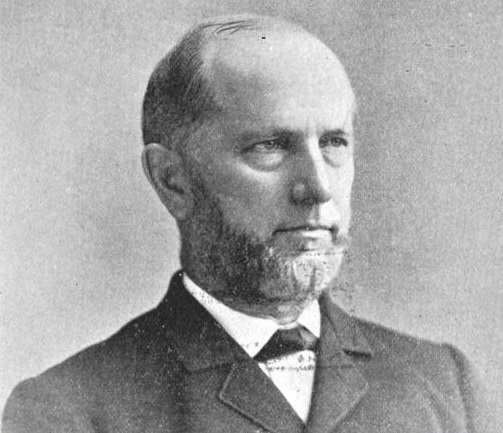
Historical · U.S. House · New York · District 18
Henry Burleigh
Former U.S. Representative · New York District 18 · 1883–1887 · Republican
Henry Burleigh represented New York's District 18 in the United States House of Representatives (1883–1887) for the Republican party. The page below collects sourced biographical facts, term history, committee roles, and provenance for Burleigh.
Bioguide ID: B001106
Key facts
- Full name
- Henry Burleigh
- State
- New York
- District
- District 18
- Party
- Republican
- House service
- 1883–1887
- First House term
- 1883
- Status
- Left office
- Current term ends
- —
- Born
- 1832
- Bioguide ID
- B001106
- Committee assignments
- —
- Dataset version
- 1.20260606
Biographical narrative
963 words · sourced from the Wikipedia REST extract
Henry Burleigh was an American businessman and politician who served as a United States Representative from New York. A member of the Republican Party, he held office during the 48th and 49th Congresses from 1883 to 1887. In addition to his congressional service, Burleigh was active in local politics and the banking industry, contributing to various sectors including transportation and real estate. His life spanned from 1832 to 1900, during which he played a significant role in the development of his community and the Republican Party in New York.
Early life and career
Henry Burleigh was born on June 2, 1832, in Canaan, New Hampshire. He was the son of Gordon Burleigh and spent his formative years in Concord, New Hampshire, where he attended local common schools. In 1846, Burleigh and his family relocated to New York, settling in Ticonderoga. This move marked the beginning of his long-standing connection to the region, where he would later engage in various business ventures.
Burleigh's early career was marked by his involvement in the mining of iron ore, as well as in the lumber, coal, and transportation industries. His entrepreneurial spirit led him to become a significant player in the transportation sector, where he owned numerous canalboats and steamers that facilitated the movement of freight across Canada and the United States. This experience in transportation would later inform his legislative priorities during his time in Congress.
In addition to his business pursuits, Burleigh was active in local government. He served as the supervisor of the town of Ticonderoga in 1864 and 1865, demonstrating his commitment to public service. In 1867, he moved to Whitehall, New York, to further expand his transportation business, which continued to thrive under his leadership. His involvement in the banking sector was also notable; he served as the president of both the National Bank at Whitehall and the First National Bank of Ticonderoga. Furthermore, Burleigh held directorships in several companies, including the International Paper Company, the Ticonderoga Pulp and Paper Company, and the St. Maurice Lumber Company. His diverse business interests extended to real estate, where he owned substantial properties in both the United States and Canada.
House tenure
Burleigh's political career began to take shape in the mid-19th century when he became involved with the Republican Party. In 1855, he served as the secretary of the first Republican convention in New York, a role that underscored his early commitment to the party. His political aspirations led him to the New York State Assembly, where he represented Washington County's 2nd District in 1876. This position provided him with valuable legislative experience and a platform to advocate for his constituents.
In 1882, Burleigh was elected as a Republican candidate to the United States House of Representatives, marking the beginning of his congressional career. He served in the 48th and 49th Congresses, holding office from March 4, 1883, until March 3, 1887. During his time in Congress, Burleigh was a member of the United States House Committee on Rivers and Harbors, a committee that focused on issues related to the nation's waterways and infrastructure. His background in transportation likely influenced his work on this committee, as he sought to improve and maintain the vital waterways that facilitated commerce and trade.
Burleigh's tenure in the House was characterized by his engagement with various legislative matters, particularly those related to infrastructure and economic development. His experience as a businessman and his understanding of the transportation industry provided him with insights that he brought to his legislative work. While specific details regarding his voting record and legislative achievements are not available, his role on the Rivers and Harbors Committee suggests a focus on enhancing the nation's transportation networks.
Legislative focus and committees
Throughout his congressional career, Burleigh's legislative focus was likely influenced by his extensive background in business and local governance. His role on the House Committee on Rivers and Harbors positioned him to address critical issues related to the nation's waterways, which were essential for trade and transportation during the late 19th century. The committee's work involved oversight of projects aimed at improving navigation, flood control, and the overall management of the nation's rivers and harbors.
Burleigh's business acumen and understanding of the transportation sector likely informed his contributions to discussions surrounding infrastructure development. As a businessman who had successfully navigated the complexities of transportation and freight movement, he would have been well-equipped to advocate for policies that promoted economic growth and improved access to markets. His involvement in the banking industry may have also provided him with insights into the financial aspects of infrastructure projects, further enhancing his ability to contribute to legislative debates.
In addition to his committee work, Burleigh's participation in multiple Republican National Conventions from 1880 to 1896 reflects his ongoing commitment to the party and its platform. These conventions served as important gatherings for party leaders and activists, allowing Burleigh to engage with key issues facing the Republican Party and to influence its direction.
After completing his congressional service in 1887, Burleigh continued to be active in his community and in business. He passed away on August 10, 1900, in Whitehall, New York, due to appendicitis. His contributions to the local economy and his involvement in politics left a lasting impact on the region. Burleigh was interred at Mount Hope Cemetery in Ticonderoga, New York, where he is remembered as a significant figure in both business and politics in the late 19th century. His legacy includes his home in Ticonderoga, the H. G. Burleigh House, which was built in 1894 and is recognized for its architectural significance as a Queen Anne style building. It has been listed on the National Register of Historic Places since 1988, serving as a testament to his life and contributions to the community.
Notable legislation
Sponsored and co-sponsored legislation for Henry Burleigh is pending operator curation. The biographical narrative above carries the same provenance trail until per-bill rows are written.
Sources
- [1]https://en.wikipedia.org/wiki/Henry_G._BurleighWikipedia · retrieved 2026-06-06
Notable quotes
Sourced quotes for Henry Burleigh are pending operator curation. Narrative-scope provenance remains attached below.
Sources
- [1]https://en.wikipedia.org/wiki/Henry_G._BurleighWikipedia · retrieved 2026-06-06
Key positions
Curated policy positions for Henry Burleigh are pending operator review. The biographical narrative above carries the same provenance trail until per-topic positions are written.
Sources
- [1]https://en.wikipedia.org/wiki/Henry_G._BurleighWikipedia · retrieved 2026-06-06
Terms served
- 1883–1885U.S. House · Term 1 · Republican
- 1885–1887U.S. House · Term 2 · Republican
Sources & provenance
Every attributable claim above carries a per-section [N] marker that resolves to the corresponding URL below. Each entry records the upstream provider, the canonical URL, and the timestamp at which the source was retrieved by the ingest pipeline.
Key facts
- https://bioguide.congress.gov/search/bio/B001106bioguide · retrieved 2026-06-06
- https://www.govtrack.us/congress/members/402051govtrack · retrieved 2026-06-06
Biographical narrative
- https://en.wikipedia.org/wiki/Henry_G._Burleighwikipedia · retrieved 2026-06-06
Find your representative
Every U.S. state elects representatives by district. Browse New York’s delegation, the full former-representative roster, or explore the role and term length.
Related on The Candidate
- Preceded by John HammondEarlier holder of the New York District 18 House seat · Republican.Open
- Succeeded by Edward GreenmanLater holder of the New York District 18 House seat · Democratic.Open
- Abel HuntingtonFormer U.S. Representative · New York District 1 · JacksonOpen
- Alfred ChapinFormer U.S. Representative · New York District 1 · DemocraticOpen
- Cadwallader ColdenFormer U.S. Representative · New York District 1 · FederalistOpen
- Charles FloydFormer U.S. Representative · New York District 1 · DemocraticOpen