
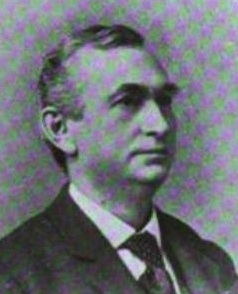
Historical · U.S. House · New York · District 18
Jacob Le Fever
Former U.S. Representative · New York District 18 · 1893–1897 · Republican
Jacob Le Fever represented New York's District 18 in the United States House of Representatives (1893–1897) for the Republican party. The page below collects sourced biographical facts, term history, committee roles, and provenance for Fever.
Bioguide ID: L000158
Key facts
- Full name
- Jacob Le Fever
- State
- New York
- District
- District 18
- Party
- Republican
- House service
- 1893–1897
- First House term
- 1893
- Status
- Left office
- Current term ends
- —
- Born
- 1830
- Bioguide ID
- L000158
- Committee assignments
- —
- Dataset version
- 1.20260606
Biographical narrative
925 words · sourced from the Wikipedia REST extract
Jacob Le Fever was an American politician who served as a U.S. Representative for New York's 18th congressional district from 1893 to 1897. A member of the Republican Party, he was involved in various local and state political roles prior to his election to Congress. His career also included significant contributions to the banking sector and local governance, reflecting a blend of agricultural, business, and political experience.
Early life and career
Jacob Le Fever was born on April 20, 1830, in New Paltz, New York. His early education took place at New Paltz Academy and Amenia Seminary, institutions that provided him with a foundation for his future endeavors. Following his education, Le Fever engaged in farming, which became a successful venture for him. His agricultural background was complemented by a burgeoning career in business and finance, where he established himself as a prominent figure in the local economy.
Le Fever's involvement in banking began with his role as an officer at the Huguenot National Bank, where he served as president from 1875 until his death in 1905. His leadership at the bank underscored his influence in the financial sector of New Paltz. Additionally, he was a member of the board of directors for the New Paltz Savings Bank and the Wallkill Valley Railroad, further illustrating his active participation in the economic development of the region.
In terms of public service, Le Fever held several key positions in local government. He served as Town Supervisor of New Paltz in 1861 and 1862, which also granted him a seat on the Ulster County Board of Supervisors. This role allowed him to engage directly with the governance of his community and address local issues. His political career continued to evolve as he was elected to the New York State Assembly, representing Ulster County's 2nd District in the years 1863, 1864, 1865, and 1867. His tenure in the Assembly provided him with valuable legislative experience and a deeper understanding of state-level governance.
Le Fever was an active participant in the Republican Party, attending numerous state conventions and serving as a delegate to the 1888 Republican National Convention. His involvement in these events highlighted his commitment to the party and its principles, as well as his desire to influence the political landscape of New York.
House tenure
Jacob Le Fever's congressional career began when he was elected to the Fifty-third Congress, serving from March 4, 1893, to March 3, 1897. He was re-elected for a second term in the Fifty-fourth Congress, during which he continued to represent New York's 18th congressional district. His time in Congress was marked by his alignment with Republican policies and initiatives, reflecting the party's platform during the 1890s.
During his tenure, Le Fever participated in the legislative process, contributing to discussions and decisions that shaped national policy. However, he did not seek renomination for the Fifty-fifth Congress in 1896, concluding his time in the House after two terms. His decision not to run again may have been influenced by various factors, including personal considerations or shifts in the political landscape.
Le Fever's congressional service was part of a broader narrative of Republican representation in New York during a period of significant political and social change in the United States. His work in Congress contributed to the legislative efforts of the time, although specific details regarding the bills he supported or the committees he served on are not documented in the available records.
Legislative focus and committees
While specific details about Jacob Le Fever's legislative focus and committee assignments during his time in Congress are not extensively documented, it is known that he aligned himself with the Republican Party's priorities of the era. The 1890s were characterized by issues such as economic reform, tariffs, and the expansion of infrastructure, all of which were central to the Republican agenda.
As a member of the House of Representatives, Le Fever would have been involved in discussions surrounding these topics, contributing to the shaping of policies that addressed the needs and concerns of his constituents in New York. His background in banking and local governance likely informed his perspectives on economic issues, particularly those affecting his district.
Le Fever's experience as a businessman and banker may have also influenced his approach to legislation related to finance and commerce. His roles in local banking institutions provided him with insights into the economic challenges faced by individuals and businesses, which could have translated into his legislative priorities.
Despite the lack of specific records detailing his committee assignments, it is common for members of Congress to serve on committees that align with their expertise and interests. Given Le Fever's background, it is plausible that he participated in committees related to finance, agriculture, or local governance, where he could leverage his experience to advocate for policies beneficial to his constituents.
In summary, Jacob Le Fever's career as a U.S. Representative was marked by his commitment to his constituents and the Republican Party. His background in farming, banking, and local governance provided him with a unique perspective on the issues of his time. Although his congressional tenure was relatively brief, it was a continuation of a life dedicated to public service and community involvement. After leaving Congress, he continued his work in banking until his death on February 4, 1905, in New Paltz, where he was interred in the local cemetery. His legacy includes not only his own political contributions but also the influence of his family, as his son Frank Jacob Le Fevre would later serve in Congress as well.
Notable legislation
Sponsored and co-sponsored legislation for Jacob Le Fever is pending operator curation. The biographical narrative above carries the same provenance trail until per-bill rows are written.
Sources
- [1]https://en.wikipedia.org/wiki/Jacob_LeFeverWikipedia · retrieved 2026-06-06
Notable quotes
Sourced quotes for Jacob Le Fever are pending operator curation. Narrative-scope provenance remains attached below.
Sources
- [1]https://en.wikipedia.org/wiki/Jacob_LeFeverWikipedia · retrieved 2026-06-06
Key positions
Curated policy positions for Jacob Le Fever are pending operator review. The biographical narrative above carries the same provenance trail until per-topic positions are written.
Sources
- [1]https://en.wikipedia.org/wiki/Jacob_LeFeverWikipedia · retrieved 2026-06-06
Terms served
- 1893–1895U.S. House · Term 1 · Republican
- 1895–1897U.S. House · Term 2 · Republican
Sources & provenance
Every attributable claim above carries a per-section [N] marker that resolves to the corresponding URL below. Each entry records the upstream provider, the canonical URL, and the timestamp at which the source was retrieved by the ingest pipeline.
Key facts
- https://bioguide.congress.gov/search/bio/L000158bioguide · retrieved 2026-06-06
- https://www.govtrack.us/congress/members/406662govtrack · retrieved 2026-06-06
Biographical narrative
- https://en.wikipedia.org/wiki/Jacob_LeFeverwikipedia · retrieved 2026-06-06
Find your representative
Every U.S. state elects representatives by district. Browse New York’s delegation, the full former-representative roster, or explore the role and term length.
Related on The Candidate
- Preceded by John QuackenbushEarlier holder of the New York District 18 House seat · Republican.Open
- Succeeded by Steven AyresLater holder of the New York District 18 House seat · Democratic.Open
- Abel HuntingtonFormer U.S. Representative · New York District 1 · JacksonOpen
- Alfred ChapinFormer U.S. Representative · New York District 1 · DemocraticOpen
- Cadwallader ColdenFormer U.S. Representative · New York District 1 · FederalistOpen
- Charles FloydFormer U.S. Representative · New York District 1 · DemocraticOpen