
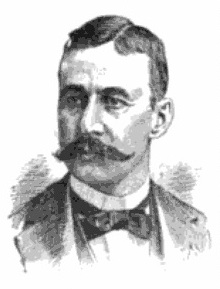
Historical · U.S. House · New York · District 19
Charles Haines
Former U.S. Representative · New York District 19 · 1893–1895 · Democratic
Charles Haines represented New York's District 19 in the United States House of Representatives (1893–1895) for the Democratic party. The page below collects sourced biographical facts, term history, committee roles, and provenance for Haines.
Bioguide ID: H000025
Key facts
- Full name
- Charles Haines
- State
- New York
- District
- District 19
- Party
- Democratic
- House service
- 1893–1895
- First House term
- 1893
- Status
- Left office
- Current term ends
- —
- Born
- 1856
- Bioguide ID
- H000025
- Committee assignments
- —
- Dataset version
- 1.20260606
Biographical narrative
1,006 words · sourced from the Wikipedia REST extract
Charles Haines was an American businessman and politician who served as a U.S. Representative for New York's 19th congressional district. A member of the Democratic Party, Haines held office for a single term from 1893 to 1895. Born in 1856 in Albany County, New York, he had a diverse career that spanned various sectors, including railroads and agriculture. After his congressional tenure, he continued to engage in business ventures, notably in the fern industry in Florida, where he became a significant figure in local economic development.
Early life and career
Charles Haines was born on June 9, 1856, in Medusa, a community in Albany County, New York. He was the son of David Tompkins Haines and Emma De Maugh Haines, both of whom were well-known figures in their community. His family had historical ties to prominent political figures, including Governor Daniel Tompkins, which may have influenced his later political aspirations. Haines spent his formative years in Coxsackie, New York, where he attended local common schools, laying the groundwork for his future endeavors.
At the age of 16, Haines began his professional career as a telegrapher, a role that marked the start of his involvement in the railroad industry. His early experiences in this field allowed him to quickly ascend through the ranks. He transitioned from telegraphy to become a train dispatcher, and subsequently, he held positions as assistant superintendent and superintendent. Eventually, he became the owner of railroads, showcasing his entrepreneurial spirit and business acumen.
In 1888, Haines relocated to Kinderhook, New York, where he established the Kinderhook & Hudson Railroad. This venture was part of a broader trend during the late 19th century, as railroads were crucial to economic development and connectivity in the United States. Haines's involvement in the railroad industry was not limited to a single line; he later collaborated with his brothers to build and operate numerous railroad lines across the country. By the early 20th century, they had constructed and managed a total of eighteen steam railroads and sixteen street railways, extending their operations into Canada and Mexico. This extensive network underscored Haines's significant role in the transportation sector during a transformative period in American history.
House tenure
Haines's political career began to take shape as he transitioned from his business pursuits to public service. He was elected as a Democrat to the 53rd United States Congress, serving from March 4, 1893, to March 3, 1895. His election to Congress marked a notable achievement, as he represented New York's 19th congressional district during a time of significant political and social change in the United States.
During his term in the House of Representatives, Haines engaged in the legislative process, contributing to discussions and decisions that would shape the nation. However, his time in Congress was relatively brief, as he was unsuccessful in his bid for reelection in 1894. Following his departure from the House, Haines returned to his previous business activities, indicating a shift back to the private sector after his foray into politics. His single term in Congress reflects the challenges and dynamics of political life during the late 19th century, a period marked by rapid industrialization and shifting political allegiances.
Legislative focus and committees
While specific details regarding Haines's legislative focus and committee assignments during his congressional term are not provided, it is important to contextualize his role within the broader framework of the 53rd Congress. This period was characterized by significant legislative activity, including discussions on economic policies, infrastructure development, and social issues. Given Haines's extensive background in the railroad industry, it is plausible that he may have had an interest in transportation-related legislation, which was a critical area of focus for many lawmakers at the time.
After leaving Congress, Haines continued to pursue various business ventures, demonstrating his adaptability and entrepreneurial spirit. In 1913, he moved to Altamonte Springs, Florida, initially seeking to improve his health. This relocation marked a new chapter in his life, as he began to explore agricultural opportunities. Haines purchased property on the west side of Lake Orienta and began cultivating asparagus plumosa ferns shortly after World War I. His agricultural endeavors quickly expanded, and by the early 1920s, he was shipping ferns across the United States via the Atlantic Coast Line Railroad.
In 1922, Haines established the Royal Fern Corporation, which became a significant enterprise in the fern industry. The corporation was chartered with an authorized capital of $450,000, and Haines emerged as the primary stockholder. The Royal Fern Corporation played a pivotal role in the local economy, cultivating a substantial area of land for fern production. At the time of its incorporation, the company managed thirty-three acres, which expanded to sixty-five acres by 1925. The scale of operations was impressive, with extensive irrigation systems and facilities that included a pre-cooling plant and its own electric light and water systems.
The Royal Fern Corporation not only contributed to the agricultural landscape of Altamonte Springs but also fostered community development. Haines's vision included creating a complete company town that provided housing for employees, as well as amenities such as a commissary, a church, a school, a park, and even a moving picture theater. This comprehensive approach to business and community development made Altamonte Springs a notable center for fern cultivation for many years.
Throughout his life, Haines maintained connections with various national dignitaries, reflecting his extensive network developed during his business and political career. His interactions with figures such as William Jennings Bryan, who was living in Miami during the early 1920s, highlight the relationships he cultivated over the years. These connections may have influenced his ideas and initiatives, including his attempts to establish the National Newspapermen's Home in Altamonte Springs.
Charles Haines passed away on April 11, 1929, in Altamonte Springs, Florida. He was laid to rest in Hudson Falls Cemetery, located in Hudson Falls, New York. His legacy encompasses both his contributions to the railroad industry and his impact on the agricultural sector in Florida, as well as his brief but notable tenure in the United States Congress.
Notable legislation
Sponsored and co-sponsored legislation for Charles Haines is pending operator curation. The biographical narrative above carries the same provenance trail until per-bill rows are written.
Sources
- [1]https://en.wikipedia.org/wiki/Charles_Delemere_HainesWikipedia · retrieved 2026-06-06
Notable quotes
Sourced quotes for Charles Haines are pending operator curation. Narrative-scope provenance remains attached below.
Sources
- [1]https://en.wikipedia.org/wiki/Charles_Delemere_HainesWikipedia · retrieved 2026-06-06
Key positions
Curated policy positions for Charles Haines are pending operator review. The biographical narrative above carries the same provenance trail until per-topic positions are written.
Sources
- [1]https://en.wikipedia.org/wiki/Charles_Delemere_HainesWikipedia · retrieved 2026-06-06
Terms served
- 1893–1895U.S. House · Term 1 · Democratic
Sources & provenance
Every attributable claim above carries a per-section [N] marker that resolves to the corresponding URL below. Each entry records the upstream provider, the canonical URL, and the timestamp at which the source was retrieved by the ingest pipeline.
Key facts
- https://bioguide.congress.gov/search/bio/H000025bioguide · retrieved 2026-06-06
- https://www.govtrack.us/congress/members/404910govtrack · retrieved 2026-06-06
Biographical narrative
- https://en.wikipedia.org/wiki/Charles_Delemere_Haineswikipedia · retrieved 2026-06-06
Find your representative
Every U.S. state elects representatives by district. Browse New York’s delegation, the full former-representative roster, or explore the role and term length.
Related on The Candidate
- Preceded by Nicholas KaneEarlier holder of the New York District 19 House seat · Democratic.Open
- Succeeded by Frank BlackLater holder of the New York District 19 House seat · Republican.Open
- Abel HuntingtonFormer U.S. Representative · New York District 1 · JacksonOpen
- Alfred ChapinFormer U.S. Representative · New York District 1 · DemocraticOpen
- Cadwallader ColdenFormer U.S. Representative · New York District 1 · FederalistOpen
- Charles FloydFormer U.S. Representative · New York District 1 · DemocraticOpen