
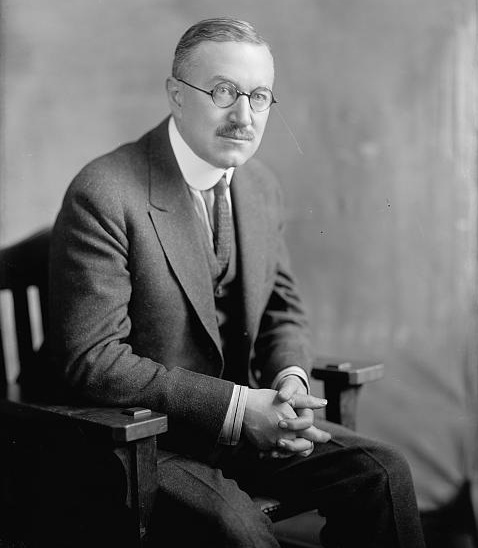
Historical · U.S. House · New York · District 19
Joseph Rowan
Former U.S. Representative · New York District 19 · 1919–1921 · Democratic
Joseph Rowan represented New York's District 19 in the United States House of Representatives (1919–1921) for the Democratic party. The page below collects sourced biographical facts, term history, committee roles, and provenance for Rowan.
Bioguide ID: R000472
Key facts
- Full name
- Joseph Rowan
- State
- New York
- District
- District 19
- Party
- Democratic
- House service
- 1919–1921
- First House term
- 1919
- Status
- Left office
- Current term ends
- —
- Born
- 1870
- Bioguide ID
- R000472
- Committee assignments
- —
- Dataset version
- 1.20260606
Biographical narrative
974 words · sourced from the Wikipedia REST extract
Joseph Rowan was an American lawyer, banker, and politician who served as a U.S. Representative for New York's 19th congressional district from 1919 to 1921. A member of the Democratic Party, he was affiliated with Tammany Hall, a political organization known for its influence in New York City politics. Rowan's tenure in Congress was marked by his commitment to public service and his involvement in various business ventures, including banking. After completing his term, he returned to his legal practice and continued to contribute to his community until his passing in 1930.
Early life and career
Joseph Charles Rowan was born on September 8, 1870, in New York City. Growing up in a bustling urban environment, he attended the public schools in the city, where he received a foundational education that would serve him well in his future endeavors. Following his primary education, Rowan pursued higher education at Columbia Law School, one of the prestigious institutions in the United States. He graduated in 1891, demonstrating his commitment to the legal profession.
After completing his studies, Rowan was admitted to the bar in 1892, allowing him to practice law in New York City. His legal career began in a time when the city was undergoing significant changes, driven by rapid industrialization and urbanization. As a practicing attorney, he gained experience in various aspects of law, which would later inform his work as a legislator.
In addition to his legal career, Rowan was involved in banking and other business ventures. He served as a trustee of the West Side Savings Bank, where he contributed to the financial stability of the institution and the community it served. His dual roles as a lawyer and banker provided him with a unique perspective on the intersection of law, finance, and public policy. In 1905, he married Cora Cook, who was the daughter of Dr. Stephen Cook, the chief surgeon of the New York City Police Department. This marriage further entrenched him in the social and professional networks of New York City.
House tenure
Rowan's political career took a significant turn in 1918 when he ran for a seat in the U.S. House of Representatives. He was a candidate for New York's 19th congressional district, a position that had previously been held by incumbent Walter M. Chandler. Rowan's campaign was successful, and he won the election, marking the beginning of his term in the 66th United States Congress, which lasted from March 4, 1919, to March 4, 1921.
During his time in Congress, Rowan was part of a legislative body that was navigating the complexities of post-World War I America. This period was characterized by significant social and economic changes, as the nation grappled with the consequences of the war and the transition to peacetime. As a member of the Democratic Party and an ally of Tammany Hall, Rowan was part of a political machine that wielded considerable influence in New York City and beyond.
Rowan's congressional term was notable for its alignment with the Democratic Party's broader goals during the early 20th century. The party was focused on issues such as labor rights, economic recovery, and social welfare, which were particularly relevant in the aftermath of the war. However, specific details regarding the legislation he supported or the committees he served on during his time in office are not extensively documented.
After serving a single term in the House, Rowan chose not to seek renomination in 1920. This decision marked the end of his congressional career, and he returned to the practice of law, where he continued to apply his legal expertise in the private sector. His departure from Congress did not diminish his involvement in public affairs, as he remained engaged in various community activities and professional endeavors.
Legislative focus and committees
While specific details about Joseph Rowan's legislative focus and committee assignments during his time in Congress are not provided, it is important to contextualize his role within the larger framework of the U.S. House of Representatives during the early 20th century. The 66th Congress, in which he served, was a time of significant transition for the United States, as the nation was adjusting to the realities of a post-war world.
As a member of the Democratic Party and an ally of Tammany Hall, Rowan likely aligned himself with the party's priorities, which included addressing the needs of working-class citizens and advocating for social reforms. The Democratic Party during this period was increasingly focused on issues such as labor rights, economic recovery, and social welfare programs, reflecting the concerns of constituents in urban areas like New York City.
Rowan's background as a lawyer and banker may have influenced his perspectives on economic issues, particularly those related to finance and banking. His experience in these fields could have provided him with insights into the challenges faced by businesses and individuals in a rapidly changing economic landscape. However, without specific records of his committee assignments or legislative initiatives, it is difficult to ascertain the precise nature of his contributions to the legislative process.
After concluding his term in the House, Rowan returned to his legal practice, where he continued to engage with the community and contribute to public discourse. His decision not to seek re-election allowed him to focus on his professional career, which he pursued until his death.
Joseph Rowan passed away on August 3, 1930, in New York City. He was interred in Woodlawn Cemetery, a resting place for many notable figures in the city. His life and career reflect the complexities of early 20th-century American politics, particularly in the context of New York City, where local political machines played a significant role in shaping public policy and governance. Through his work as a lawyer, banker, and politician, Rowan contributed to the fabric of his community and the broader political landscape of his time.
Notable legislation
Sponsored and co-sponsored legislation for Joseph Rowan is pending operator curation. The biographical narrative above carries the same provenance trail until per-bill rows are written.
Sources
- [1]https://en.wikipedia.org/wiki/Joseph_RowanWikipedia · retrieved 2026-06-06
Notable quotes
Sourced quotes for Joseph Rowan are pending operator curation. Narrative-scope provenance remains attached below.
Sources
- [1]https://en.wikipedia.org/wiki/Joseph_RowanWikipedia · retrieved 2026-06-06
Key positions
Curated policy positions for Joseph Rowan are pending operator review. The biographical narrative above carries the same provenance trail until per-topic positions are written.
Sources
- [1]https://en.wikipedia.org/wiki/Joseph_RowanWikipedia · retrieved 2026-06-06
Terms served
- 1919–1921U.S. House · Term 1 · Democratic
Sources & provenance
Every attributable claim above carries a per-section [N] marker that resolves to the corresponding URL below. Each entry records the upstream provider, the canonical URL, and the timestamp at which the source was retrieved by the ingest pipeline.
Key facts
- https://bioguide.congress.gov/search/bio/R000472bioguide · retrieved 2026-06-06
- https://www.govtrack.us/congress/members/409433govtrack · retrieved 2026-06-06
Biographical narrative
- https://en.wikipedia.org/wiki/Joseph_Rowanwikipedia · retrieved 2026-06-06
Find your representative
Every U.S. state elects representatives by district. Browse New York’s delegation, the full former-representative roster, or explore the role and term length.
Related on The Candidate
- Preceded by John AndrusEarlier holder of the New York District 19 House seat · Republican.Open
- Succeeded by Samuel DicksteinLater holder of the New York District 19 House seat · Democratic.Open
- Abel HuntingtonFormer U.S. Representative · New York District 1 · JacksonOpen
- Alfred ChapinFormer U.S. Representative · New York District 1 · DemocraticOpen
- Cadwallader ColdenFormer U.S. Representative · New York District 1 · FederalistOpen
- Charles FloydFormer U.S. Representative · New York District 1 · DemocraticOpen