
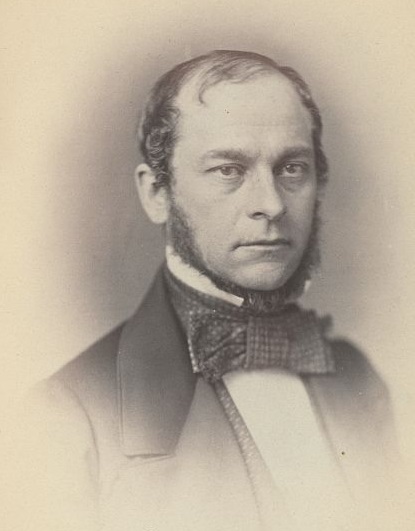
Historical · U.S. House · New York · District 19
Oliver Morse
Former U.S. Representative · New York District 19 · 1857–1859 · Republican
Oliver Morse represented New York's District 19 in the United States House of Representatives (1857–1859) for the Republican party. The page below collects sourced biographical facts, term history, committee roles, and provenance for Morse.
Bioguide ID: M001013
Key facts
- Full name
- Oliver Morse
- State
- New York
- District
- District 19
- Party
- Republican
- House service
- 1857–1859
- First House term
- 1857
- Status
- Left office
- Current term ends
- —
- Born
- 1815
- Bioguide ID
- M001013
- Committee assignments
- —
- Dataset version
- 1.20260606
Biographical narrative
807 words · sourced from the Wikipedia REST extract
Oliver Morse was an American politician and attorney who served as a U.S. Representative for New York's 19th congressional district during the 35th Congress. A member of the Republican Party, Morse's congressional term lasted from 1857 to 1859. He was born in 1815 in Cherry Valley, New York, and had a background in law and real estate before entering politics. His tenure in the House was marked by his opposition to slavery, and he did not seek re-election after his first term.
Early life and career
Oliver Morse was born on March 26, 1815, in Cherry Valley, New York. He was the son of Mary G. Morse and James O. Morse, who was both an attorney and a judge. This legal background likely influenced Morse's own career path. Additionally, he had a familial connection to politics through his uncle, William M. Oliver, who served as a congressman and acted as lieutenant governor of New York.
Morse pursued higher education at Hamilton College in Clinton, New York, where he graduated in 1833. During his time at Hamilton, he was notably a founding member of the Alpha Delta Phi Literary Society in 1832, an organization that fostered literary and social engagement among its members. Following his graduation, Morse studied law, a decision that would lead him to a career in the legal field.
After being admitted to the bar, Morse began his legal practice in Perryville, Ohio. However, his time there was brief, and he soon returned to his hometown of Cherry Valley, where he continued to practice law. His legal career provided him with a foundation for his later political pursuits.
In addition to his legal work, Morse engaged in various real estate ventures across several states, including Ohio, Michigan, and Wisconsin. However, his business dealings were not without challenges; he reported being swindled out of $3,000 by a partner and New York attorney named Samuel Campbell. This experience may have influenced his perspectives on business and ethics in public service.
House tenure
Morse's political career began in earnest when he was elected as a Republican to the 35th United States Congress, serving New York's 19th congressional district. His term in the House commenced on March 4, 1857, and concluded on March 3, 1859. During his time in Congress, Morse was known for his opposition to slavery, aligning with the Republican Party's platform, which was increasingly focused on anti-slavery sentiments during this period.
Morse's congressional term was characterized by the political tensions of the late 1850s, a time when the nation was grappling with issues surrounding slavery and states' rights. Although he served only one term, his contributions to the debates and discussions in Congress were part of the broader national discourse on these critical issues.
Despite his active participation in the House, Morse chose not to seek re-election in 1858, which marked the end of his formal political career. The reasons for his decision to step away from politics are not detailed in the available records, but it was not uncommon for politicians of the era to move on to other pursuits after a single term in office.
Legislative focus and committees
During his time in the House of Representatives, Oliver Morse focused on issues pertinent to his constituents and the national landscape. His opposition to slavery was a significant aspect of his legislative stance, reflecting the growing divide in the United States over this contentious issue. The Republican Party, which was relatively new at the time, was founded on principles that included opposition to the expansion of slavery into new territories and states.
While specific details regarding the committees he served on or the exact nature of his legislative initiatives are not documented, it can be inferred that his legal background and his views on slavery informed his contributions to the legislative process. Members of Congress during this period often engaged in discussions that shaped the future of the nation, particularly in relation to civil rights and governance.
Morse's decision not to pursue re-election after his first term suggests a possible shift in focus or a desire to return to his legal and business interests. His involvement in real estate and law may have provided him with alternative avenues for influence and engagement outside of the political arena.
In summary, Oliver Morse's life and career reflect the complexities of American politics in the mid-19th century. His background in law, his opposition to slavery, and his brief tenure in the U.S. House of Representatives illustrate the challenges and opportunities faced by politicians of his time. After leaving Congress, he returned to private life, where he continued to engage in business and legal practice until his death in 1870. Morse's legacy is marked by his contributions to the political discourse of his era and his connections to a family with a history of public service.
Notable legislation
Sponsored and co-sponsored legislation for Oliver Morse is pending operator curation. The biographical narrative above carries the same provenance trail until per-bill rows are written.
Sources
- [1]https://en.wikipedia.org/wiki/Oliver_A._MorseWikipedia · retrieved 2026-06-06
Notable quotes
Sourced quotes for Oliver Morse are pending operator curation. Narrative-scope provenance remains attached below.
Sources
- [1]https://en.wikipedia.org/wiki/Oliver_A._MorseWikipedia · retrieved 2026-06-06
Key positions
Curated policy positions for Oliver Morse are pending operator review. The biographical narrative above carries the same provenance trail until per-topic positions are written.
Sources
- [1]https://en.wikipedia.org/wiki/Oliver_A._MorseWikipedia · retrieved 2026-06-06
Terms served
- 1857–1859U.S. House · Term 1 · Republican
Sources & provenance
Every attributable claim above carries a per-section [N] marker that resolves to the corresponding URL below. Each entry records the upstream provider, the canonical URL, and the timestamp at which the source was retrieved by the ingest pipeline.
Key facts
- https://bioguide.congress.gov/search/bio/M001013bioguide · retrieved 2026-06-06
- https://www.govtrack.us/congress/members/407980govtrack · retrieved 2026-06-06
Biographical narrative
- https://en.wikipedia.org/wiki/Oliver_A._Morsewikipedia · retrieved 2026-06-06
Find your representative
Every U.S. state elects representatives by district. Browse New York’s delegation, the full former-representative roster, or explore the role and term length.
Related on The Candidate
- Preceded by Jonas HughstonEarlier holder of the New York District 19 House seat · Ind. Republican-Democrat.Open
- Succeeded by James GrahamLater holder of the New York District 19 House seat · Republican.Open
- Abel HuntingtonFormer U.S. Representative · New York District 1 · JacksonOpen
- Alfred ChapinFormer U.S. Representative · New York District 1 · DemocraticOpen
- Cadwallader ColdenFormer U.S. Representative · New York District 1 · FederalistOpen
- Charles FloydFormer U.S. Representative · New York District 1 · DemocraticOpen