
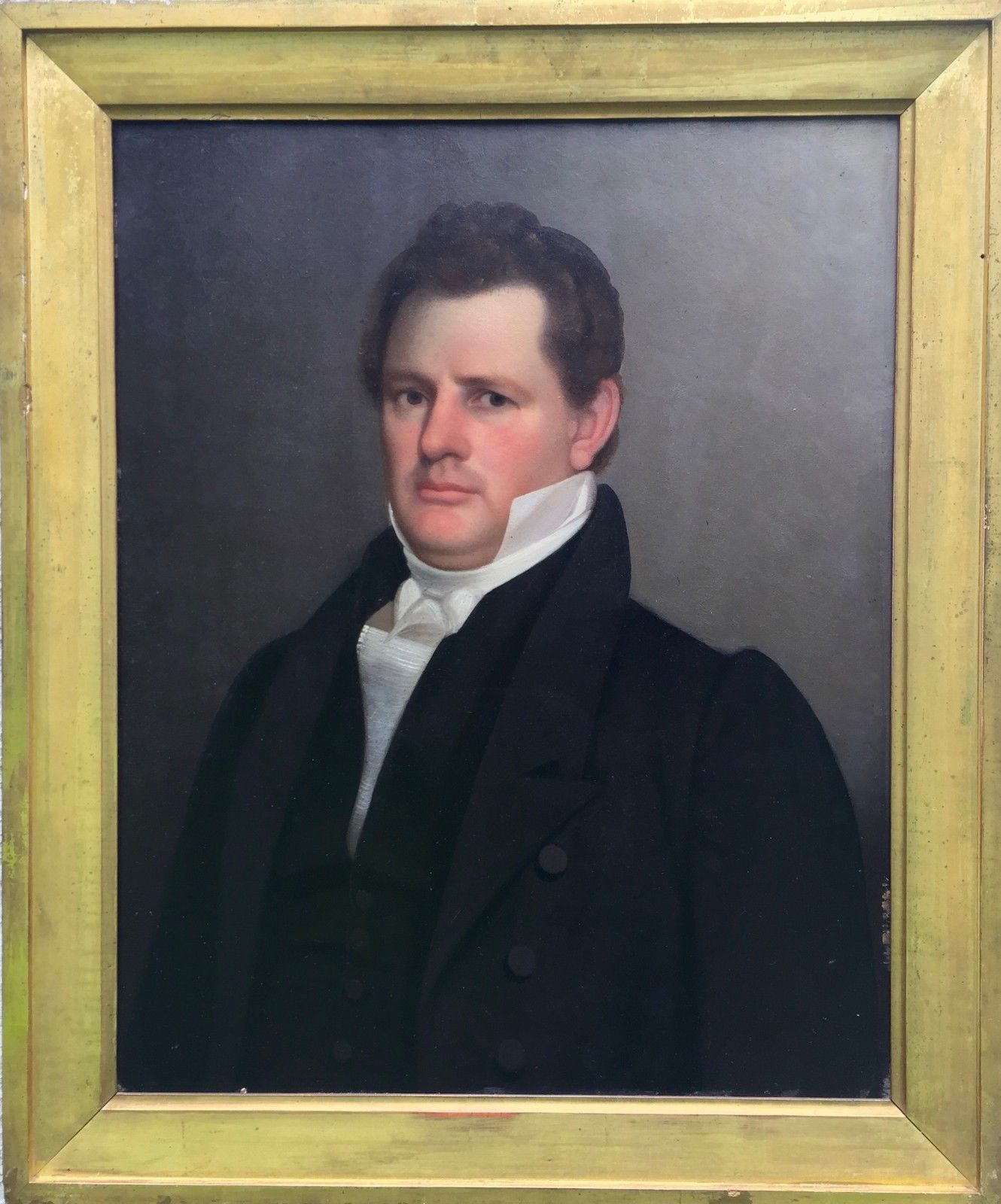
Historical · U.S. House · New York · District 19
Orville Hungerford
Former U.S. Representative · New York District 19 · 1843–1847 · Democratic
Orville Hungerford represented New York's District 19 in the United States House of Representatives (1843–1847) for the Democratic party. The page below collects sourced biographical facts, term history, committee roles, and provenance for Hungerford.
Bioguide ID: H000968
Key facts
- Full name
- Orville Hungerford
- State
- New York
- District
- District 19
- Party
- Democratic
- House service
- 1843–1847
- First House term
- 1843
- Status
- Left office
- Current term ends
- —
- Born
- 1790
- Bioguide ID
- H000968
- Committee assignments
- —
- Dataset version
- 1.20260606
Biographical narrative
939 words · sourced from the Wikipedia REST extract
Orville Hungerford was a U.S. Representative from New York, serving the 19th congressional district during the mid-19th century. A member of the Democratic Party, Hungerford held office for two terms in the House of Representatives, with his last term concluding in 1847. In addition to his political career, he was a notable merchant, banker, industrialist, and philanthropist in the Watertown area of New York, where he played a significant role in local commerce and community development.
Early life and career
Orville Hungerford was born on October 29, 1790, in Farmington, Connecticut, which is now part of Bristol. He was the youngest of seven children in his family, which claimed descent from Thomas Hungerford, an early settler in Hartford, Connecticut. In 1801, when Orville was about eleven years old, his father, Timothy Hungerford, relocated the family to Watertown Center in western New York, an area that would become integral to Orville's later business and political endeavors.
Hungerford's early education was limited, as he attended only the common schools in his neighborhood. Despite this, he demonstrated a strong work ethic and a commitment to self-education. He engaged in private study and developed a broad knowledge base that would later serve him well in his various pursuits. At the age of fourteen, he began working as a clerk in a general store owned by his brother-in-law, Jabez Foster, in Burrs Mills, New York. His responsibilities included a range of tasks, from sweeping and dusting to managing the store in Foster's absence. This experience laid the groundwork for his future success in business.
In the late 1800s, Foster and Hungerford relocated the store to Watertown, where it became a thriving enterprise. Their partnership, known as Foster & Hungerford, capitalized on the demand for supplies from the U.S. Army during the War of 1812. The firm established a transportation network to deliver goods, which proved essential during wartime. Hungerford's role in the business expanded, and he eventually became Foster's partner. The partnership was notably profitable, as they sold supplies to the military and developed a reputation as a leading mercantile business in the region.
In 1815, Hungerford and Foster dissolved their partnership, and Hungerford established his own store. He continued to engage in commerce, making frequent trips to New York City to sell products like potash and to procure goods for his store. His entrepreneurial spirit was evident as he embraced modern conveniences and promoted innovative products, such as the "Air-Tight Rotary Cook Stove," which was designed to be more efficient in fuel use.
Hungerford's commercial ventures were not without challenges. A significant fire in May 1849 devastated Watertown, destroying numerous buildings and impacting local businesses. However, Hungerford's store survived this disaster, although it would later succumb to another fire in 1852. Throughout these trials, he remained a prominent figure in the local business community.
House tenure
Orville Hungerford's political career began when he was elected to the U.S. House of Representatives, representing New York's 19th congressional district. His first term commenced in 1843, during a period marked by significant political and social changes in the United States. Hungerford served as a Democratic member of Congress, aligning with the party's principles and policies of the time.
During his tenure, Hungerford participated in various legislative discussions and contributed to the shaping of policies that affected his constituents and the nation. His time in office coincided with a growing national discourse on issues such as westward expansion, economic development, and social reform. Although specific details of his legislative actions and the bills he supported are not documented, his role as a representative would have involved addressing the concerns and needs of his district.
Hungerford served two terms in the House, concluding his service on March 3, 1847. The political landscape during his time was characterized by intense debates over issues such as slavery, territorial expansion, and economic policy, which would have influenced his work as a legislator. After leaving office, Hungerford returned to his business pursuits and community involvement.
Legislative focus and committees
While specific details regarding Orville Hungerford's committee assignments and legislative focus are not extensively documented, it can be inferred that his background as a merchant and businessman likely informed his approach to economic issues. Representatives during this period often engaged with matters related to commerce, trade, and infrastructure development, especially given the growing importance of railroads and transportation networks in the United States.
Hungerford's experience in the mercantile sector would have provided him with insights into the needs of businesses and the challenges they faced, particularly in a rapidly changing economic environment. His involvement in local commerce and community development may have influenced his priorities as a legislator, emphasizing the importance of supporting economic growth and infrastructure improvements.
In addition to his business interests, Hungerford's philanthropic activities and community engagement suggest that he may have also been concerned with social issues affecting his constituents. While the specifics of his legislative initiatives are not detailed, it is reasonable to assume that his commitment to his community would have extended to advocating for policies that benefited the residents of his district.
Orville Hungerford's legacy as a U.S. Representative is intertwined with his contributions to the economic and social fabric of his community in Watertown, New York. His dual roles as a businessman and politician exemplify the interconnectedness of commerce and governance during a transformative period in American history. After concluding his congressional service, Hungerford continued to be active in his local community until his passing on April 6, 1851. His life reflects the complexities of 19th-century American society, where individuals often navigated multiple roles in pursuit of both personal and communal advancement.
Notable legislation
Sponsored and co-sponsored legislation for Orville Hungerford is pending operator curation. The biographical narrative above carries the same provenance trail until per-bill rows are written.
Sources
- [1]https://en.wikipedia.org/wiki/Orville_HungerfordWikipedia · retrieved 2026-06-06
Notable quotes
Sourced quotes for Orville Hungerford are pending operator curation. Narrative-scope provenance remains attached below.
Sources
- [1]https://en.wikipedia.org/wiki/Orville_HungerfordWikipedia · retrieved 2026-06-06
Key positions
Curated policy positions for Orville Hungerford are pending operator review. The biographical narrative above carries the same provenance trail until per-topic positions are written.
Sources
- [1]https://en.wikipedia.org/wiki/Orville_HungerfordWikipedia · retrieved 2026-06-06
Terms served
- 1843–1845U.S. House · Term 1 · Democratic
- 1845–1847U.S. House · Term 2 · Democratic
Sources & provenance
Every attributable claim above carries a per-section [N] marker that resolves to the corresponding URL below. Each entry records the upstream provider, the canonical URL, and the timestamp at which the source was retrieved by the ingest pipeline.
Key facts
- https://bioguide.congress.gov/search/bio/H000968bioguide · retrieved 2026-06-06
- https://www.govtrack.us/congress/members/405812govtrack · retrieved 2026-06-06
Biographical narrative
- https://en.wikipedia.org/wiki/Orville_Hungerfordwikipedia · retrieved 2026-06-06
Find your representative
Every U.S. state elects representatives by district. Browse New York’s delegation, the full former-representative roster, or explore the role and term length.
Related on The Candidate
- Preceded by Samuel BowneEarlier holder of the New York District 19 House seat · Democratic.Open
- Succeeded by Joseph MullinLater holder of the New York District 19 House seat · Whig.Open
- Abel HuntingtonFormer U.S. Representative · New York District 1 · JacksonOpen
- Alfred ChapinFormer U.S. Representative · New York District 1 · DemocraticOpen
- Cadwallader ColdenFormer U.S. Representative · New York District 1 · FederalistOpen
- Charles FloydFormer U.S. Representative · New York District 1 · DemocraticOpen