
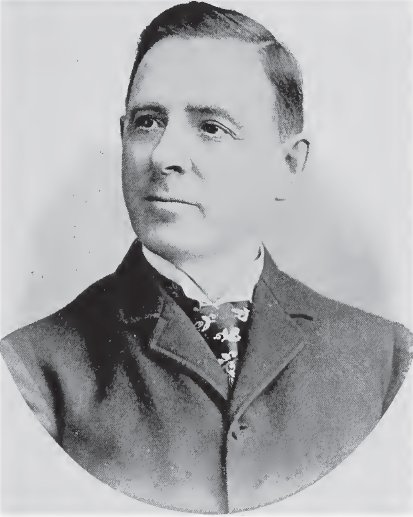
Historical · U.S. House · New York · District 2
David Boody
Former U.S. Representative · New York District 2 · 1891–1893 · Democratic
David Boody represented New York's District 2 in the United States House of Representatives (1891–1893) for the Democratic party. The page below collects sourced biographical facts, term history, committee roles, and provenance for Boody.
Bioguide ID: B000625
Key facts
- Full name
- David Boody
- State
- New York
- District
- District 2
- Party
- Democratic
- House service
- 1891–1893
- First House term
- 1891
- Status
- Left office
- Current term ends
- —
- Born
- 1837
- Bioguide ID
- B000625
- Committee assignments
- —
- Dataset version
- 1.20260606
Biographical narrative
863 words · sourced from the Wikipedia REST extract
David Boody was an American lawyer, businessman, and politician who served as a United States Representative for New York's second congressional district. A member of the Democratic Party, Boody's congressional tenure was brief, spanning from 1891 until his resignation later that same year. Born in 1837 in Maine, he later moved to Brooklyn, where he became involved in various business ventures and public service roles, including serving as the Mayor of Brooklyn. His contributions to the community extended beyond his political career, as he was actively engaged in educational and financial institutions until his death in 1930.
Early life and career
David Augustus Boody was born on August 13, 1837, in a log cabin in Jackson, Maine. He was the son of David and Lucretia Boody. His early education took place in local common schools, and he furthered his studies at Phillips Academy in Andover, Massachusetts. Following his academic pursuits, Boody studied law under the guidance of Charles M. Brown in Bangor, Maine. He successfully gained admission to the bar in 1860 in Belfast, Maine, and began his legal practice in Camden, Maine.
In 1862, Boody relocated to Brooklyn, New York, where he transitioned from law to the banking and brokerage business. His career in finance marked a significant shift in his professional life, allowing him to engage with the burgeoning economic landscape of the late 19th century. Despite his business endeavors, Boody also sought a political career. He made an unsuccessful bid for election to the Forty-eighth Congress in 1882. His political involvement included participation as a delegate to the Democratic National Conventions in both 1884 and 1892.
In addition to his business and political activities, Boody played a significant role in education. He served as the president of the Berkeley Institute in Brooklyn from 1886 until 1922, contributing to the development of educational opportunities in the community. His commitment to education reflected his belief in the importance of learning and civic engagement.
House tenure
David Boody's political career reached a notable point when he was elected as a Democrat to the Fifty-second Congress. He served as the United States Representative for New York's second congressional district, beginning his term on March 4, 1891. His time in Congress was relatively short-lived, as he resigned from his position on October 13, 1891, after just a few months in office. The reasons for his resignation are not detailed, but it marked a transition in his career as he moved away from federal legislative responsibilities.
Despite the brevity of his congressional tenure, Boody's election to the House of Representatives was a significant achievement, reflecting his active engagement in the political landscape of New York during that era. His service in Congress was part of a broader narrative of Democratic representation in the region, which was characterized by various political shifts and challenges during the late 19th century.
Legislative focus and committees
While specific details regarding Boody's legislative focus and committee assignments during his time in Congress are not extensively documented, his background in law and business likely influenced his perspectives on economic and legal issues. As a member of the Democratic Party, he would have been aligned with the party's platform, which during that period often emphasized issues such as labor rights, economic reform, and social justice.
After his congressional service, Boody continued to engage in public life. He was elected as the Mayor of Brooklyn in 1892 and served in that role until 1893. Following his mayoral term, he returned to his banking and brokerage business, where he continued to exert influence in the financial sector. He held prominent positions, including serving as President of the Louisiana and Northwestern Railway and Vice-President of the Sprague National Bank.
Boody's commitment to public service extended beyond his political roles. He was actively involved in the Brooklyn Public Library, serving as president of the board of trustees from 1897 until his death in 1930. His leadership in this capacity underscored his dedication to promoting literacy and access to information within the community.
In addition to his contributions to education and finance, Boody was a member of the New York Stock Exchange, where he remained active until his retirement in 1926. His long-standing involvement in various sectors of public and private life highlighted his multifaceted career and the impact he had on the community.
David Boody passed away on January 20, 1930, in Brooklyn, New York, at the age of 92. His legacy is commemorated in various ways, including the naming of David A. Boody Junior High School in Brooklyn, which reflects his contributions to education and the community. Additionally, the Brooklyn Fire Department honored him by naming a fireboat after him in 1892, which served until 1914.
Boody's life and career encapsulate the experiences of a 19th-century American who navigated the complexities of law, business, and politics. His journey from a log cabin in Maine to positions of influence in New York illustrates the opportunities and challenges faced by individuals during this transformative period in American history. His interment at Green-Wood Cemetery in Brooklyn marks the final resting place of a figure who played a notable role in the civic life of his community.
Notable legislation
Sponsored and co-sponsored legislation for David Boody is pending operator curation. The biographical narrative above carries the same provenance trail until per-bill rows are written.
Sources
- [1]https://en.wikipedia.org/wiki/David_A._BoodyWikipedia · retrieved 2026-06-06
Notable quotes
Sourced quotes for David Boody are pending operator curation. Narrative-scope provenance remains attached below.
Sources
- [1]https://en.wikipedia.org/wiki/David_A._BoodyWikipedia · retrieved 2026-06-06
Key positions
Curated policy positions for David Boody are pending operator review. The biographical narrative above carries the same provenance trail until per-topic positions are written.
Sources
- [1]https://en.wikipedia.org/wiki/David_A._BoodyWikipedia · retrieved 2026-06-06
Terms served
- 1891–1893U.S. House · Term 1 · Democratic
Sources & provenance
Every attributable claim above carries a per-section [N] marker that resolves to the corresponding URL below. Each entry records the upstream provider, the canonical URL, and the timestamp at which the source was retrieved by the ingest pipeline.
Key facts
- https://bioguide.congress.gov/search/bio/B000625bioguide · retrieved 2026-06-06
- https://www.govtrack.us/congress/members/401590govtrack · retrieved 2026-06-06
Biographical narrative
- https://en.wikipedia.org/wiki/David_A._Boodywikipedia · retrieved 2026-06-06
Find your representative
Every U.S. state elects representatives by district. Browse New York’s delegation, the full former-representative roster, or explore the role and term length.
Related on The Candidate
- Preceded by Felix CampbellEarlier holder of the New York District 2 House seat · Democratic.Open
- Succeeded by Denis HurleyLater holder of the New York District 2 House seat · Republican.Open
- Abel HuntingtonFormer U.S. Representative · New York District 1 · JacksonOpen
- Alfred ChapinFormer U.S. Representative · New York District 1 · DemocraticOpen
- Cadwallader ColdenFormer U.S. Representative · New York District 1 · FederalistOpen
- Charles FloydFormer U.S. Representative · New York District 1 · DemocraticOpen