
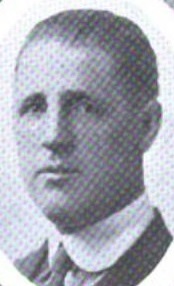
Historical · U.S. House · New York · District 2
William Brunner
Former U.S. Representative · New York District 2 · 1929–1937 · Democratic
William Brunner represented New York's District 2 in the United States House of Representatives (1929–1937) for the Democratic party. The page below collects sourced biographical facts, term history, committee roles, and provenance for Brunner.
Bioguide ID: B000981
Key facts
- Full name
- William Brunner
- State
- New York
- District
- District 2
- Party
- Democratic
- House service
- 1929–1937
- First House term
- 1929
- Status
- Left office
- Current term ends
- —
- Born
- 1887
- Bioguide ID
- B000981
- Committee assignments
- —
- Dataset version
- 1.20260605
Biographical narrative
943 words · sourced from the Wikipedia REST extract
William Brunner was an American businessman and politician who served as a U.S. Representative for New York's 2nd congressional district. A member of the Democratic Party, Brunner's congressional career spanned from 1929 to 1935, during which he was elected to four consecutive terms. After his time in Congress, he continued to engage in public service and business until his death in 1965.
Early life and career
William Brunner was born on September 15, 1887, in Woodhaven, Queens, New York. He grew up in a time when the area was rapidly developing, and he attended local public schools, which provided him with a foundational education. He furthered his studies at Far Rockaway High School, located in Far Rockaway, Queens, and later attended Packard Commercial School in New York City. These educational experiences equipped him with the skills necessary for his future endeavors in business and public service.
In 1901, Brunner moved to Rockaway Park, Queens, a coastal neighborhood that would play a significant role in his life. He became involved in the insurance and real estate business, sectors that were integral to the economic development of the area. His work in these fields likely provided him with insights into the needs and concerns of his community, which would later inform his political career.
Brunner's commitment to public service was also evident during World War I, when he served in the United States Navy. He held the rank of yeoman first class from 1917 to 1919, contributing to the war effort during a pivotal time in American history. This military experience may have further shaped his understanding of leadership and civic responsibility.
Following the war, Brunner returned to his business pursuits while also becoming increasingly involved in local politics. His political career began in earnest when he was elected to the New York State Assembly, representing Queens County's 5th District. He served in this capacity for multiple terms from 1922 to 1928, gaining valuable legislative experience and establishing a reputation within the Democratic Party.
House tenure
Brunner's tenure in the U.S. House of Representatives began on March 4, 1929, when he was elected as a Democrat to the Seventy-first Congress. He was subsequently re-elected to three additional terms, serving until his resignation on September 27, 1935. His decision to resign was influenced by his election as sheriff of Queens County, a position he assumed after his congressional service.
During his time in the House, Brunner participated in various legislative activities and contributed to discussions on issues pertinent to his constituents and the nation. While specific details about the legislation he supported or opposed are not provided, it is known that he was part of a Congress that dealt with significant events, including the onset of the Great Depression. The economic challenges of the time likely influenced his legislative priorities and actions.
Brunner's congressional career was marked by his commitment to representing the interests of his district, which included parts of Queens, a diverse area with a growing population. His background in business and local governance may have informed his approach to addressing the needs of his constituents, particularly in areas such as housing, employment, and public services.
After resigning from Congress, Brunner transitioned to the role of sheriff of Queens County, where he served from 1935 until his resignation in 1936. This position allowed him to continue his public service at the local level, overseeing law enforcement and public safety in the county. Following his tenure as sheriff, he took on the role of president of the Board of Aldermen of New York City for the entirety of 1937, further solidifying his involvement in municipal governance.
Legislative focus and committees
While specific details about the committees on which Brunner served during his time in the House are not documented, it can be inferred that his background in business and local government likely influenced his legislative focus. Representatives often align their committee assignments with their expertise and the needs of their constituents. Given Brunner's experience in the insurance and real estate sectors, he may have had an interest in issues related to economic development, housing, and public infrastructure.
Brunner's legislative priorities would have been shaped by the pressing issues of the time, particularly the economic challenges posed by the Great Depression. As a member of Congress during this period, he would have been involved in discussions surrounding economic recovery, social welfare programs, and government intervention in the economy. His role as a local politician prior to his congressional service may have also informed his understanding of the importance of community engagement and the need for responsive governance.
After leaving Congress, Brunner continued to engage in public service and business. He resumed his work in the insurance and real estate sectors, demonstrating a commitment to the industries that had defined much of his career. In 1941, he served as Queens County commissioner of borough works for a brief period, further contributing to local governance.
Brunner's later years included a significant role in healthcare as he became the president of Rockaway Beach Hospital, which underwent several name changes over the years, eventually becoming known as Peninsula General Hospital and later Peninsula Hospital Center. His leadership in this capacity from 1946 until his passing in 1965 highlights his ongoing dedication to community service and public health.
William Brunner passed away on April 23, 1965, in Far Rockaway, New York. He was interred at St. John's Cemetery in Middle Village, leaving behind a legacy of public service and commitment to his community. His career reflects the trajectory of a local businessman who transitioned into politics, navigating the complexities of governance during a transformative period in American history.
Notable legislation
Sponsored and co-sponsored legislation for William Brunner is pending operator curation. The biographical narrative above carries the same provenance trail until per-bill rows are written.
Sources
- [1]https://en.wikipedia.org/wiki/William_F._BrunnerWikipedia · retrieved 2026-06-05
Notable quotes
Sourced quotes for William Brunner are pending operator curation. Narrative-scope provenance remains attached below.
Sources
- [1]https://en.wikipedia.org/wiki/William_F._BrunnerWikipedia · retrieved 2026-06-05
Key positions
Curated policy positions for William Brunner are pending operator review. The biographical narrative above carries the same provenance trail until per-topic positions are written.
Sources
- [1]https://en.wikipedia.org/wiki/William_F._BrunnerWikipedia · retrieved 2026-06-05
Terms served
- 1929–1931U.S. House · Term 1 · Democratic
- 1931–1933U.S. House · Term 2 · Democratic
- 1933–1935U.S. House · Term 3 · Democratic
- 1935–1937U.S. House · Term 4 · Democratic
Sources & provenance
Every attributable claim above carries a per-section [N] marker that resolves to the corresponding URL below. Each entry records the upstream provider, the canonical URL, and the timestamp at which the source was retrieved by the ingest pipeline.
Key facts
- https://bioguide.congress.gov/search/bio/B000981bioguide · retrieved 2026-06-05
- https://www.govtrack.us/congress/members/401933govtrack · retrieved 2026-06-05
Biographical narrative
- https://en.wikipedia.org/wiki/William_F._Brunnerwikipedia · retrieved 2026-06-05
Find your representative
Every U.S. state elects representatives by district. Browse New York’s delegation, the full former-representative roster, or explore the role and term length.
Related on The Candidate
- Preceded by John KindredEarlier holder of the New York District 2 House seat · Democratic.Open
- Succeeded by Leonard HallLater holder of the New York District 2 House seat · Republican.Open
- Abel HuntingtonFormer U.S. Representative · New York District 1 · JacksonOpen
- Alfred ChapinFormer U.S. Representative · New York District 1 · DemocraticOpen
- Cadwallader ColdenFormer U.S. Representative · New York District 1 · FederalistOpen
- Charles FloydFormer U.S. Representative · New York District 1 · DemocraticOpen