
Historical · U.S. House · New York · District 20
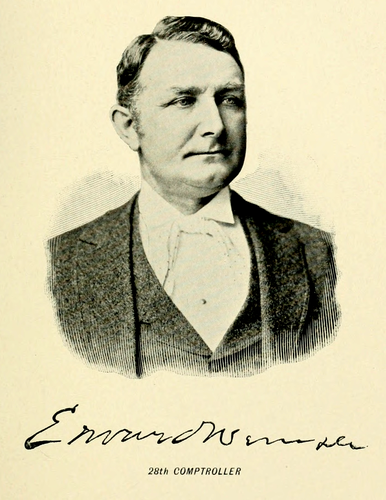
Edward Wemple
Former U.S. Representative · New York District 20 · 1883–1885 · Democratic
Edward Wemple represented New York's District 20 in the United States House of Representatives (1883–1885) for the Democratic party. The page below collects sourced biographical facts, term history, committee roles, and provenance for Wemple.
Bioguide ID: W000292
Key facts
- Full name
- Edward Wemple
- State
- New York
- District
- District 20
- Party
- Democratic
- House service
- 1883–1885
- First House term
- 1883
- Status
- Left office
- Current term ends
- —
- Born
- 1843
- Bioguide ID
- W000292
- Committee assignments
- —
- Dataset version
- 1.20260606
Biographical narrative
932 words · sourced from the Wikipedia REST extract
Edward Wemple was an American businessman and politician who served as a U.S. Representative for New York's 20th congressional district from 1883 to 1885. A member of the Democratic Party, Wemple's political career was marked by his involvement in local governance and state politics, as well as his brief tenure in the U.S. Congress. His life journey began in Fultonville, New York, where he was born in 1843, and he remained a significant figure in his community until his death in 1920.
Early life and career
Edward Wemple was born on October 23, 1843, in Fultonville, Montgomery County, New York. He received his early education in the public schools of Fultonville and furthered his studies at Ashland Academy. Wemple's academic pursuits culminated in his graduation from Union College in 1866, where he likely developed a foundation in critical thinking and civic engagement that would later inform his political career. Following his graduation, he briefly studied law, although he ultimately chose to pursue a career in business. Wemple entered the foundry industry, establishing a partnership with his two brothers, which marked the beginning of his professional life in manufacturing.
In 1868, Wemple married Adelaide F. Groat, and together they had six children. His family life was intertwined with his professional and public service endeavors, reflecting the common practice of the time where family and business were often closely linked. Wemple's commitment to his community became evident early in his career when he took on various local leadership roles. He served as President of the Village of Fultonville in 1873, demonstrating his emerging interest in public service. Following this, he was elected as Supervisor of the Town of Glen from 1874 to 1876, further solidifying his reputation as a local leader.
Wemple's political career continued to evolve as he became a member of the New York State Assembly, representing Montgomery County in 1877 and 1878. His tenure in the Assembly allowed him to engage with state-level issues and develop a deeper understanding of legislative processes. This experience would later serve him well when he transitioned to national politics.
House tenure
Edward Wemple's congressional career began when he was elected as a Democrat to the 48th United States Congress, serving from March 4, 1883, to March 3, 1885. His election to the House of Representatives marked a significant step in his political journey, allowing him to represent the interests of his constituents on a national stage. During his time in Congress, Wemple focused on various issues, one of which included securing funding for the Saratoga Monument. This monument commemorates the Battles of Saratoga, a pivotal event in American history, and Wemple's efforts to support its funding reflect his commitment to preserving local heritage and history.
Wemple's congressional term was relatively brief, and he did not seek re-election after his first term ended in 1885. The reasons for this decision are not detailed in the available records, but it was not uncommon for politicians of the era to serve only a single term in Congress. After leaving the House, Wemple continued his public service career by returning to state politics. In 1886 and 1887, he served as a member of the New York State Senate, representing the 18th District. His experience in the Senate allowed him to further influence state legislation and contribute to the governance of New York.
In 1888, Wemple was elected as New York State Comptroller, a position he held until 1891. As Comptroller, he was responsible for overseeing the state's financial operations, which included managing public funds and ensuring fiscal accountability. This role was significant, as it placed him at the center of state financial management during a period of economic change and development in New York.
Legislative focus and committees
During his time in the U.S. House of Representatives, Edward Wemple's legislative focus included efforts to secure funding for important historical commemorations, such as the Saratoga Monument. This initiative highlighted his interest in promoting and preserving the historical significance of events that shaped the nation. While specific details regarding his committee assignments during his congressional tenure are not provided, it is typical for members of Congress to serve on various committees that align with their interests and the needs of their constituents.
Wemple's work in the New York State Assembly and later in the State Senate also contributed to his legislative experience. His roles in these bodies likely involved addressing a range of issues pertinent to his constituents, including local governance, economic development, and public welfare. His time as State Comptroller further enhanced his understanding of fiscal policy and state finance, equipping him with the knowledge necessary for effective governance.
Despite his contributions to public service, Wemple's later life was marked by a significant personal crisis. In November 1895, he was arrested on charges of arson after he set fire to his own foundry, which had been sold at an assignee's sale, along with several other buildings in Fultonville. Following his arrest, he was pronounced insane and was committed to the Utica Insane Asylum. This period of his life was a stark contrast to his earlier achievements and highlighted the complexities of his personal and professional journey.
Wemple was eventually released from the asylum in 1909 and returned to Fultonville, where he lived until his death on December 18, 1920. He was buried at the Maple Avenue Cemetery in Fultonville, leaving behind a legacy that included both his public service and the challenges he faced later in life. Edward Wemple's story reflects the multifaceted nature of political life in the 19th century, encompassing both achievements and personal struggles.
Notable legislation
Sponsored and co-sponsored legislation for Edward Wemple is pending operator curation. The biographical narrative above carries the same provenance trail until per-bill rows are written.
Sources
- [1]https://en.wikipedia.org/wiki/Edward_WempleWikipedia · retrieved 2026-06-06
Notable quotes
Sourced quotes for Edward Wemple are pending operator curation. Narrative-scope provenance remains attached below.
Sources
- [1]https://en.wikipedia.org/wiki/Edward_WempleWikipedia · retrieved 2026-06-06
Key positions
Curated policy positions for Edward Wemple are pending operator review. The biographical narrative above carries the same provenance trail until per-topic positions are written.
Sources
- [1]https://en.wikipedia.org/wiki/Edward_WempleWikipedia · retrieved 2026-06-06
Terms served
- 1883–1885U.S. House · Term 1 · Democratic
Sources & provenance
Every attributable claim above carries a per-section [N] marker that resolves to the corresponding URL below. Each entry records the upstream provider, the canonical URL, and the timestamp at which the source was retrieved by the ingest pipeline.
Key facts
- https://bioguide.congress.gov/search/bio/W000292bioguide · retrieved 2026-06-06
- https://www.govtrack.us/congress/members/411456govtrack · retrieved 2026-06-06
Biographical narrative
- https://en.wikipedia.org/wiki/Edward_Wemplewikipedia · retrieved 2026-06-06
Find your representative
Every U.S. state elects representatives by district. Browse New York’s delegation, the full former-representative roster, or explore the role and term length.
Related on The Candidate
- Preceded by John StarinEarlier holder of the New York District 20 House seat · Republican.Open
- Succeeded by Charles TraceyLater holder of the New York District 20 House seat · Democratic.Open
- Abel HuntingtonFormer U.S. Representative · New York District 1 · JacksonOpen
- Alfred ChapinFormer U.S. Representative · New York District 1 · DemocraticOpen
- Cadwallader ColdenFormer U.S. Representative · New York District 1 · FederalistOpen
- Charles FloydFormer U.S. Representative · New York District 1 · DemocraticOpen