
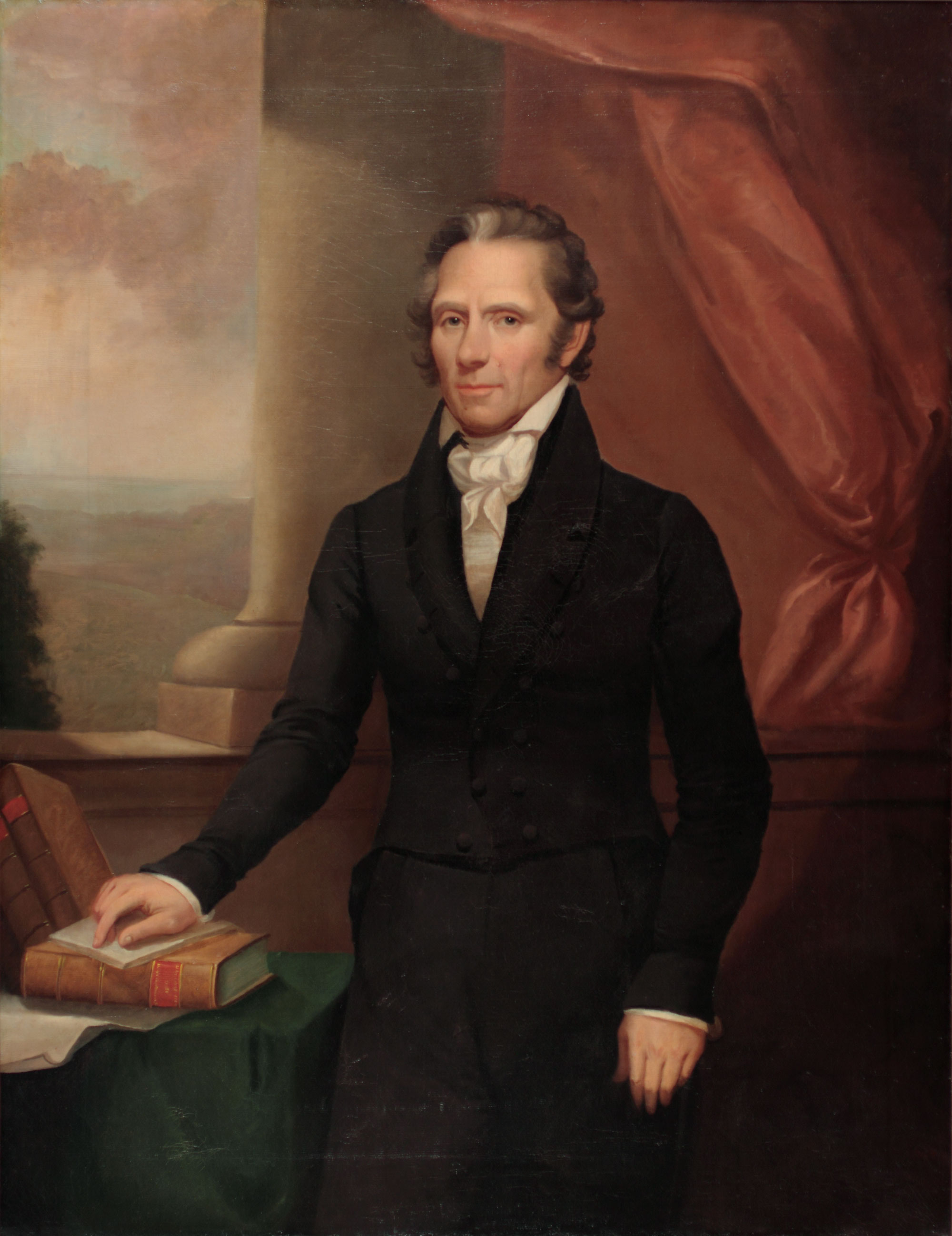
Historical · U.S. House · New York · District 20
Enos Throop
Former U.S. Representative · New York District 20 · 1815–1817 · Republican
Enos Throop represented New York's District 20 in the United States House of Representatives (1815–1817) for the Republican party. The page below collects sourced biographical facts, term history, committee roles, and provenance for Throop.
Bioguide ID: T000247
Key facts
- Full name
- Enos Throop
- State
- New York
- District
- District 20
- Party
- Republican
- House service
- 1815–1817
- First House term
- 1815
- Status
- Left office
- Current term ends
- —
- Born
- 1784
- Bioguide ID
- T000247
- Committee assignments
- —
- Dataset version
- 1.20260606
Biographical narrative
896 words · sourced from the Wikipedia REST extract
Enos Throop was a prominent American lawyer and politician who served as a U.S. Representative for New York's 20th congressional district. A member of the Republican Party, Throop's congressional career was marked by his involvement in significant legislative debates during a tumultuous period in American history. He was born on August 21, 1784, and his political career extended beyond his time in Congress, as he later became the tenth governor of New York. Throop's life and career reflect the complexities of early 19th-century American politics, particularly as the nation grappled with issues related to governance, war, and economic stability.
Early life and career
Enos Throop was born in Johnstown, New York, into a politically active family. His father, George Bliss Throop, and his mother, Abiah Thompson, provided a backdrop of civic engagement that would influence Throop's future pursuits. Two of his maternal uncles, Israel and Jesse Thompson, served in the New York Assembly, while his younger brother, George B. Throop, held a position in the state senate. Additionally, Throop's half-sister Eliza married two notable U.S. Representatives, Gershom Powers and William B. Rochester, further embedding the Throop family within the political landscape of New York.
Throop's education in law began in Albany, where he studied under attorney George Metcalfe. During his time there, he developed a friendship with fellow law student Martin Van Buren, who would later become a significant figure in American politics. After being admitted to the bar in 1806, Throop began practicing law in Auburn, New York. His early career was marked by a commitment to public service; he joined the Democratic-Republican Party and was appointed as the postmaster of Auburn. In 1811, he was elected as the county clerk of Cayuga County, further solidifying his role in local governance.
In 1814, Throop married Evelina Vredenburgh, the daughter of a prominent landholder and investor. Unfortunately, their marriage was marked by tragedy, as none of their children survived infancy. Throop's political career took a significant turn in 1814 when he was elected to the 14th United States Congress. He aligned himself with the administration's war measures during the War of 1812, participating in debates that addressed the economic challenges faced by the nation as the war concluded. His support for legislation that altered congressional compensation from a daily rate to an annual salary of $1,800 led to public dissatisfaction, contributing to his defeat in the elections of April 1816. He resigned from Congress in June of that year.
Following his congressional tenure, Throop continued his public service by being appointed as Judge of the Seventh Circuit in April 1823, a position he held until 1828. His judicial experience would later inform his political decisions as he transitioned into higher office.
House tenure
Enos Throop's time in the U.S. House of Representatives was relatively brief, spanning from 1815 to 1816. As a member of the 14th Congress, he was involved in critical discussions surrounding the aftermath of the War of 1812. His alignment with the administration's war measures reflected the political climate of the time, as the nation sought to recover from the economic disruptions caused by the conflict. Throop's participation in legislative debates addressed the pressing issues of public credit and the financial stability of the nation.
Despite his initial support for the administration, Throop's decision to vote for the compensation change for congressmen was met with backlash from constituents. This dissatisfaction ultimately led to his defeat in the subsequent election, marking a swift end to his congressional career. His resignation from the House in June 1816 concluded his single term, during which he had engaged in significant legislative discussions but faced challenges in maintaining public support.
Legislative focus and committees
During his time in Congress, Enos Throop's legislative focus was primarily centered on issues related to the War of 1812 and its aftermath. He actively participated in debates that addressed the economic challenges faced by the nation as it transitioned from wartime to peacetime. Throop's support for the administration's war measures demonstrated his commitment to national interests during a period of uncertainty.
One notable aspect of his congressional tenure was his involvement in discussions surrounding the compensation of congressmen. His vote to change the compensation structure from a daily rate to an annual salary was a significant decision that sparked public controversy. While intended to provide a more stable income for legislators, this move was met with criticism from constituents, contributing to his electoral defeat.
Although Throop's time in the House was limited to a single term, his experiences and the challenges he faced during this period would later inform his subsequent political endeavors. After leaving Congress, he continued to engage in public service, ultimately serving as a judge and later as the governor of New York. His legislative experiences provided a foundation for his later roles in state and national politics, highlighting the interconnectedness of his early career with his later achievements.
In summary, Enos Throop's tenure as a U.S. Representative was characterized by his involvement in key legislative debates during a critical period in American history. His early life, marked by a strong political lineage, set the stage for his subsequent roles in public service, including his later position as governor of New York. Despite the challenges he faced during his congressional career, Throop's contributions to the political landscape of his time remain a notable aspect of his legacy.
Notable legislation
Sponsored and co-sponsored legislation for Enos Throop is pending operator curation. The biographical narrative above carries the same provenance trail until per-bill rows are written.
Sources
- [1]https://en.wikipedia.org/wiki/Enos_T._ThroopWikipedia · retrieved 2026-06-06
Notable quotes
Sourced quotes for Enos Throop are pending operator curation. Narrative-scope provenance remains attached below.
Sources
- [1]https://en.wikipedia.org/wiki/Enos_T._ThroopWikipedia · retrieved 2026-06-06
Key positions
Curated policy positions for Enos Throop are pending operator review. The biographical narrative above carries the same provenance trail until per-topic positions are written.
Sources
- [1]https://en.wikipedia.org/wiki/Enos_T._ThroopWikipedia · retrieved 2026-06-06
Terms served
- 1815–1817U.S. House · Term 1 · Republican
Sources & provenance
Every attributable claim above carries a per-section [N] marker that resolves to the corresponding URL below. Each entry records the upstream provider, the canonical URL, and the timestamp at which the source was retrieved by the ingest pipeline.
Key facts
- https://bioguide.congress.gov/search/bio/T000247bioguide · retrieved 2026-06-06
- https://www.govtrack.us/congress/members/410825govtrack · retrieved 2026-06-06
Biographical narrative
- https://en.wikipedia.org/wiki/Enos_T._Throopwikipedia · retrieved 2026-06-06
Find your representative
Every U.S. state elects representatives by district. Browse New York’s delegation, the full former-representative roster, or explore the role and term length.
Related on The Candidate
- Succeeded by Daniel CrugerLater holder of the New York District 20 House seat · Republican.Open
- Abel HuntingtonFormer U.S. Representative · New York District 1 · JacksonOpen
- Alfred ChapinFormer U.S. Representative · New York District 1 · DemocraticOpen
- Cadwallader ColdenFormer U.S. Representative · New York District 1 · FederalistOpen
- Charles FloydFormer U.S. Representative · New York District 1 · DemocraticOpen
- Republican PartyFederal candidates and office holders on the Republican line.Open