
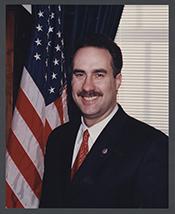
Historical · U.S. House · New York · District 20
John Sweeney
Former U.S. Representative · New York District 20 · 1999–2007 · Republican
John Sweeney represented New York's District 20 in the United States House of Representatives (1999–2007) for the Republican party. The page below collects sourced biographical facts, term history, committee roles, and provenance for Sweeney.
Bioguide ID: S001149
Key facts
- Full name
- John Sweeney
- State
- New York
- District
- District 20
- Party
- Republican
- House service
- 1999–2007
- First House term
- 1999
- Status
- Left office
- Current term ends
- —
- Born
- 1955
- Bioguide ID
- S001149
- Committee assignments
- —
- Dataset version
- 1.20260605
Biographical narrative
850 words · sourced from the Wikipedia REST extract
John E. Sweeney is a former American politician who served as a U.S. Representative for New York's 20th congressional district from 1999 until 2007. A member of the Republican Party, Sweeney's political career included significant roles at both the state and federal levels. Prior to his tenure in Congress, he was the Commissioner of the New York State Department of Labor under Governor George Pataki. Sweeney's legislative focus included issues related to labor, trade, and education, and he was known for his strong party alignment and occasional bipartisan actions.
Early life and career
John E. Sweeney was born on August 9, 1955, in Troy, New York. He completed his secondary education at Lansingburgh High School, graduating in 1973. Sweeney has Irish and Armenian heritage, which reflects the diverse cultural background of many American families. He pursued higher education at Hudson Valley Community College, where he earned an associate degree in 1978. He continued his studies at the Sage College of Albany, obtaining a bachelor's degree in Political Science and Criminal Justice in 1981. Sweeney later attended Western New England College School of Law, where he received his Juris Doctor degree in 1991.
Before entering politics, Sweeney held various roles in local government, including serving as Rensselaer County's STOP-DWI coordinator. His political career began to take shape when he was appointed as the Executive Director and Chief Counsel of the New York Republican Party from 1992 to 1995. During this period, the state GOP experienced significant electoral successes, including the election of Rudy Giuliani as mayor of New York City and George Pataki as governor. Following this role, Sweeney was appointed as the Commissioner of the New York State Department of Labor, a position he held from 1995 to 1997. In this capacity, he was instrumental in reforming the state's workers' compensation laws, which had been criticized for their high costs relative to other states.
House tenure
Sweeney's congressional career began when he was elected to the U.S. House of Representatives in 1998, succeeding retiring Republican Representative Gerald Solomon. His campaign was bolstered by endorsements from Solomon and other prominent Republican figures in the district. Sweeney won the election with a majority of the vote, despite the district's mixed political leanings, as it had previously supported Democratic candidates in national elections.
During his time in Congress, Sweeney was re-elected three times, demonstrating a solid base of support among his constituents. His electoral victories included significant margins, reflecting his ability to connect with voters. Throughout his tenure, Sweeney generally aligned with the Republican Party's positions on various issues, although he occasionally took stances that diverged from party lines. His political career in the House concluded in 2007 when he was defeated in his bid for re-election by Democrat Kirsten Gillibrand.
Legislative focus and committees
Sweeney's legislative focus encompassed a range of issues, particularly those related to labor, education, and trade. He was known for his opposition to same-sex marriage, advocating for a federal constitutional amendment to ban its recognition, although he later voted against such an amendment. His stance on labor issues was somewhat unique for a Republican, as he received endorsements from organized labor groups, including the Civil Service Employees Union and maintained good relations with the Teamsters.
Trade policy was another area of interest for Sweeney. He opposed the North American Free Trade Agreement (NAFTA) and was one of the few House Republicans to vote against the Oman–United States Free Trade Agreement in 2006, although he supported the Central American Free Trade Agreement (CAFTA). His positions on trade reflected a concern for the impacts of globalization on American workers.
Sweeney was a supporter of the George W. Bush administration's policies, particularly regarding the Iraq War, which became a focal point of criticism during his 2006 campaign. He also opposed gun control measures and voted in favor of prayer in public schools on multiple occasions, reflecting his alignment with conservative social values. His approval rating from the National Education Association indicated a more contentious relationship with educational organizations.
In the wake of the September 11, 2001, terrorist attacks, Sweeney demonstrated a willingness to collaborate across party lines, voting with Democrats on an initiative to provide emergency federal aid to New York City. Although this measure ultimately did not pass, it illustrated his capacity to work with members of the opposing party in times of crisis. Additionally, Sweeney was vocal in calling for the resignation of Homeland Security Secretary Michael Chertoff over proposed cuts to New York's homeland security funding.
Sweeney's legislative initiatives included the introduction of the "Anti-Drug Legalization Act," which sought to prohibit federal funding for research related to drug legalization. This legislation reflected his broader concerns about drug policy and its implications for public health and safety.
Overall, John E. Sweeney's tenure in the U.S. House of Representatives was marked by a commitment to Republican principles, a focus on labor and trade issues, and a willingness to engage in bipartisan efforts when necessary. His political career spanned several important years in American politics, and his actions in Congress contributed to the legislative landscape during that period.
Notable legislation
Sponsored and co-sponsored legislation for John Sweeney is pending operator curation. The biographical narrative above carries the same provenance trail until per-bill rows are written.
Sources
- [1]https://en.wikipedia.org/wiki/John_E._SweeneyWikipedia · retrieved 2026-06-05
Notable quotes
Sourced quotes for John Sweeney are pending operator curation. Narrative-scope provenance remains attached below.
Sources
- [1]https://en.wikipedia.org/wiki/John_E._SweeneyWikipedia · retrieved 2026-06-05
Key positions
Curated policy positions for John Sweeney are pending operator review. The biographical narrative above carries the same provenance trail until per-topic positions are written.
Sources
- [1]https://en.wikipedia.org/wiki/John_E._SweeneyWikipedia · retrieved 2026-06-05
Terms served
- 1999–2001U.S. House · Term 1 · Republican
- 2001–2003U.S. House · Term 2 · Republican
- 2003–2005U.S. House · Term 3 · Republican
- 2005–2007U.S. House · Term 4 · Republican
Sources & provenance
Every attributable claim above carries a per-section [N] marker that resolves to the corresponding URL below. Each entry records the upstream provider, the canonical URL, and the timestamp at which the source was retrieved by the ingest pipeline.
Key facts
- https://bioguide.congress.gov/search/bio/S001149bioguide · retrieved 2026-06-05
- http://www.house.gov/sweeneyhouse.gov · retrieved 2026-06-05
Biographical narrative
- https://en.wikipedia.org/wiki/John_E._Sweeneywikipedia · retrieved 2026-06-05
Find your representative
Every U.S. state elects representatives by district. Browse New York’s delegation, the full former-representative roster, or explore the role and term length.
Related on The Candidate
- Preceded by Joseph DioGuardiEarlier holder of the New York District 20 House seat · Republican.Open
- Succeeded by Scott MurphyLater holder of the New York District 20 House seat · Democratic.Open
- Abel HuntingtonFormer U.S. Representative · New York District 1 · JacksonOpen
- Alfred ChapinFormer U.S. Representative · New York District 1 · DemocraticOpen
- Cadwallader ColdenFormer U.S. Representative · New York District 1 · FederalistOpen
- Charles FloydFormer U.S. Representative · New York District 1 · DemocraticOpen