
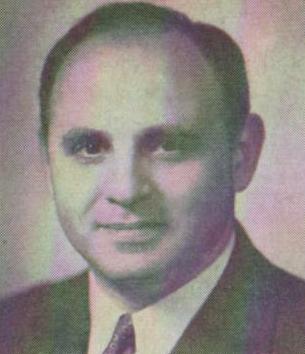
Historical · U.S. House · New York · District 20
Ludwig Teller
Former U.S. Representative · New York District 20 · 1957–1961 · Democratic
Ludwig Teller represented New York's District 20 in the United States House of Representatives (1957–1961) for the Democratic party. The page below collects sourced biographical facts, term history, committee roles, and provenance for Teller.
Bioguide ID: T000118
Key facts
- Full name
- Ludwig Teller
- State
- New York
- District
- District 20
- Party
- Democratic
- House service
- 1957–1961
- First House term
- 1957
- Status
- Left office
- Current term ends
- —
- Born
- 1911
- Bioguide ID
- T000118
- Committee assignments
- —
- Dataset version
- 1.20260605
Biographical narrative
944 words · sourced from the Wikipedia REST extract
Ludwig Teller was an American lawyer and politician who served as a U.S. Representative for New York's 20th congressional district from 1957 to 1961. A member of the Democratic Party, Teller's political career was marked by his commitment to public service and his active participation in legislative processes. Before his tenure in Congress, he had a background in law and military service during World War II, which shaped his perspectives and contributions as a legislator. His career in the House of Representatives was characterized by his engagement in various political issues of the time, reflecting the broader social and political landscape of mid-20th century America.
Early life and career
Ludwig Teller was born on June 22, 1911, in Manhattan, New York City. Growing up in a vibrant urban environment, he was exposed to a diverse array of cultural and social influences that would later inform his political views. He pursued higher education at New York University, where he graduated in 1936. This academic foundation provided him with the necessary skills and knowledge to embark on a career in law, a field he would enter shortly after completing his studies.
In addition to his legal career, Teller's life was significantly impacted by the events of World War II. He served as a Lieutenant in the United States Navy, where he contributed to the war effort during a critical period in American history. His military service not only instilled in him a sense of duty and patriotism but also provided him with firsthand experience of the challenges faced by servicemen and women. After the war, he returned to academia, taking a position on the faculty of New York University Law School from 1947 to 1950. This role allowed him to share his legal expertise with the next generation of lawyers and to remain engaged with the evolving legal landscape in the United States.
Teller's transition into politics began with his election to the New York State Assembly, where he represented the 5th District of New York County from 1951 to 1956. During his time in the Assembly, he participated in the 168th through 170th New York State Legislatures, where he was involved in various legislative initiatives and gained valuable experience in the workings of government at the state level. His tenure in the Assembly laid the groundwork for his subsequent election to the U.S. House of Representatives, as he developed a reputation as a dedicated public servant committed to addressing the needs of his constituents.
House tenure
Ludwig Teller was elected to the U.S. House of Representatives as a Democrat, beginning his first term on January 3, 1957. He served during the 85th and 86th Congresses, which were marked by significant political and social changes in the United States. His election came at a time when the country was grappling with issues such as civil rights, economic growth, and the Cold War. As a member of Congress, Teller was part of a larger legislative body that was tasked with addressing these pressing concerns.
During his time in the House, Teller was involved in various legislative discussions and decisions that reflected the priorities of his constituents and the Democratic Party. His work in Congress was characterized by a focus on issues that affected the lives of everyday Americans, including social welfare programs, education, and civil rights. Although specific details of his legislative achievements are not documented, his participation in the House during this transformative era suggests that he was engaged with the significant issues of the day.
Teller's congressional career, however, was relatively brief. He served two full terms before facing challenges in his bid for renomination in 1960. Ultimately, he was defeated in the Democratic primary by Reform Democrat William Fitts Ryan, marking the end of his tenure in the House. This transition reflected the dynamic nature of political representation during the period, as shifting voter preferences and emerging political movements influenced electoral outcomes.
Legislative focus and committees
While specific details regarding the committees on which Ludwig Teller served during his congressional tenure are not provided, it is common for members of the House of Representatives to engage with various committees that align with their interests and the needs of their constituents. Typically, legislators focus on committees that address key areas such as finance, education, health, and foreign affairs. Given Teller's background in law and his experience in the New York State Assembly, it is likely that he contributed to discussions and initiatives related to legal and social issues.
Teller's legislative focus would have been influenced by the political climate of the late 1950s and early 1960s, a time when civil rights movements were gaining momentum and social welfare programs were being expanded. As a member of the Democratic Party, he would have aligned with the party's platform, which emphasized social justice, economic opportunity, and civil rights for all Americans. His experiences as a World War II veteran may have also informed his perspectives on veterans' affairs and related legislation, as many lawmakers during this period sought to address the needs of returning servicemen and women.
After leaving Congress, Teller continued to be involved in public life until his death on October 4, 1965. He was buried at Union Field Cemetery in Ridgewood, Queens, New York. His legacy as a public servant is remembered within the context of the broader historical narrative of American politics during the mid-20th century, a time of significant change and development in the United States. His contributions to the legislative process and his commitment to his constituents reflect the enduring values of civic engagement and public service that characterize the role of elected officials in a democratic society.
Notable legislation
Sponsored and co-sponsored legislation for Ludwig Teller is pending operator curation. The biographical narrative above carries the same provenance trail until per-bill rows are written.
Sources
- [1]https://en.wikipedia.org/wiki/Ludwig_TellerWikipedia · retrieved 2026-06-05
Notable quotes
Sourced quotes for Ludwig Teller are pending operator curation. Narrative-scope provenance remains attached below.
Sources
- [1]https://en.wikipedia.org/wiki/Ludwig_TellerWikipedia · retrieved 2026-06-05
Key positions
Curated policy positions for Ludwig Teller are pending operator review. The biographical narrative above carries the same provenance trail until per-topic positions are written.
Sources
- [1]https://en.wikipedia.org/wiki/Ludwig_TellerWikipedia · retrieved 2026-06-05
Terms served
- 1957–1959U.S. House · Term 1 · Democratic
- 1959–1961U.S. House · Term 2 · Democratic
Sources & provenance
Every attributable claim above carries a per-section [N] marker that resolves to the corresponding URL below. Each entry records the upstream provider, the canonical URL, and the timestamp at which the source was retrieved by the ingest pipeline.
Key facts
- https://bioguide.congress.gov/search/bio/T000118bioguide · retrieved 2026-06-05
- https://www.govtrack.us/congress/members/410700govtrack · retrieved 2026-06-05
Biographical narrative
- https://en.wikipedia.org/wiki/Ludwig_Tellerwikipedia · retrieved 2026-06-05
Find your representative
Every U.S. state elects representatives by district. Browse New York’s delegation, the full former-representative roster, or explore the role and term length.
Related on The Candidate
- Preceded by Irwin DavidsonEarlier holder of the New York District 20 House seat · Democratic.Open
- Succeeded by William RyanLater holder of the New York District 20 House seat · Democratic.Open
- Abel HuntingtonFormer U.S. Representative · New York District 1 · JacksonOpen
- Alfred ChapinFormer U.S. Representative · New York District 1 · DemocraticOpen
- Cadwallader ColdenFormer U.S. Representative · New York District 1 · FederalistOpen
- Charles FloydFormer U.S. Representative · New York District 1 · DemocraticOpen