
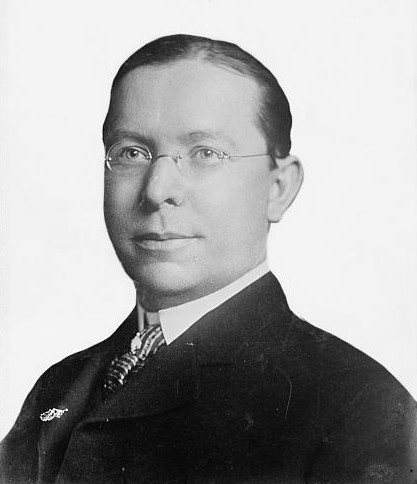
Historical · U.S. House · New York · District 20
Martin Glynn
Former U.S. Representative · New York District 20 · 1899–1901 · Democratic
Martin Glynn represented New York's District 20 in the United States House of Representatives (1899–1901) for the Democratic party. The page below collects sourced biographical facts, term history, committee roles, and provenance for Glynn.
Bioguide ID: G000247
Key facts
- Full name
- Martin Glynn
- State
- New York
- District
- District 20
- Party
- Democratic
- House service
- 1899–1901
- First House term
- 1899
- Status
- Left office
- Current term ends
- —
- Born
- 1871
- Bioguide ID
- G000247
- Committee assignments
- —
- Dataset version
- 1.20260606
Biographical narrative
842 words · sourced from the Wikipedia REST extract
Martin Glynn was an American politician who served as a U.S. Representative for New York's 20th congressional district from 1899 to 1901. A member of the Democratic Party, Glynn's political career extended beyond his time in the House of Representatives, as he later became the 40th governor of New York. He was notable for being the first Irish American Roman Catholic to hold the gubernatorial office in a state that was then the most populous in the United States. Glynn's tenure was marked by significant reforms, including advancements in labor laws and the implementation of direct primaries.
Early life and career
Martin Henry Glynn was born on September 27, 1871, in Kinderhook, New York. He spent his formative years in Valatie, a village within Kinderhook. Glynn was the son of Martin Glynn and Ann Scanlon, both of whom were immigrants from Ireland. His early life in a family with Irish roots would later influence his political identity and engagement with Irish-American issues.
Glynn pursued higher education at Fordham University, where he graduated in 1894. He furthered his studies at Albany Law School of Union University in New York, gaining admission to the bar in 1897. His career began in journalism, as he wrote for the Albany Times-Union starting in 1896. Over time, he ascended to the roles of editor, publisher, and owner of the newspaper. His contributions to journalism were recognized by Fordham University, which awarded him an honorary Master of Arts degree in 1898. Glynn's academic achievements continued throughout his life, as he received honorary LL.D. degrees from several institutions, including Syracuse, Georgetown, and Union Universities.
House tenure
Glynn's political career in the U.S. House of Representatives began when he was elected as a Democrat to the 56th Congress. He took office on March 4, 1899, at the age of 26, making him the youngest member of the House at that time. His tenure in Congress lasted until March 3, 1901, when he completed his term. During this period, he participated in various legislative activities and contributed to the discussions and decisions that shaped national policy.
After his time in the House, Glynn continued his public service in New York state politics. He was elected as the New York State Comptroller in 1906, serving from 1907 to 1908. However, his bid for re-election in 1908 was unsuccessful, as he was defeated by Republican candidate Charles H. Gaus. Despite this setback, Glynn remained active in the political landscape of New York.
In the 1912 New York state election, Glynn was selected as the running mate of the Democratic candidate for Governor, William Sulzer. Following the election, he was sworn in as Lieutenant Governor of New York on January 1, 1913. His time in this role was marked by significant political challenges, particularly in relation to the powerful Tammany Hall faction within the Democratic Party.
Legislative focus and committees
During his congressional tenure, Glynn's legislative focus aligned with the broader goals of the Democratic Party, which included advocating for reforms that addressed social and economic issues. His later role as governor further solidified his commitment to progressive policies. As governor, Glynn was involved in the implementation of various reforms, including labor laws and the establishment of direct primaries, which aimed to enhance democratic participation and improve the political process.
Glynn's governorship was characterized by his efforts to navigate the complexities of party politics, especially the tensions between Tammany Hall and reform-minded factions. His administration faced scrutiny and challenges, particularly after the impeachment of Governor Sulzer, which led to Glynn assuming the role of Acting Governor and later being formally sworn in as Governor. His administration was marked by efforts to balance the interests of different political groups while pursuing progressive reforms.
In addition to his legislative work, Glynn was active in national politics, serving as a delegate to the Democratic National Conventions in 1916 and 1924. He gained recognition as a keynote speaker at the 1916 convention, where he praised the accomplishments of President Woodrow Wilson and articulated the Democratic Party's platform.
Glynn's engagement with social issues extended beyond domestic policy. He expressed concern for the plight of European Jews following World War I, highlighting the dire conditions they faced in an article published in The American Hebrew. This piece reflected his awareness of international humanitarian issues and his willingness to address them publicly.
Despite his political achievements, Glynn's life was marked by personal struggles. He suffered from chronic back pain due to a spinal injury, which affected him throughout his adult life. His health challenges ultimately contributed to his tragic death by suicide on December 14, 1924. Although his death certificate listed heart trouble as the cause, the true circumstances surrounding his passing were later revealed in a biography published in 1994.
Glynn was buried at St. Agnes Cemetery in Menands, New York. His legacy as a politician who navigated the complexities of early 20th-century American politics continues to be recognized, particularly for his role in advancing progressive reforms and representing the interests of Irish Americans in New York.
Notable legislation
Sponsored and co-sponsored legislation for Martin Glynn is pending operator curation. The biographical narrative above carries the same provenance trail until per-bill rows are written.
Sources
- [1]https://en.wikipedia.org/wiki/Martin_H._GlynnWikipedia · retrieved 2026-06-06
Notable quotes
Sourced quotes for Martin Glynn are pending operator curation. Narrative-scope provenance remains attached below.
Sources
- [1]https://en.wikipedia.org/wiki/Martin_H._GlynnWikipedia · retrieved 2026-06-06
Key positions
Curated policy positions for Martin Glynn are pending operator review. The biographical narrative above carries the same provenance trail until per-topic positions are written.
Sources
- [1]https://en.wikipedia.org/wiki/Martin_H._GlynnWikipedia · retrieved 2026-06-06
Terms served
- 1899–1901U.S. House · Term 1 · Democratic
Sources & provenance
Every attributable claim above carries a per-section [N] marker that resolves to the corresponding URL below. Each entry records the upstream provider, the canonical URL, and the timestamp at which the source was retrieved by the ingest pipeline.
Key facts
- https://bioguide.congress.gov/search/bio/G000247bioguide · retrieved 2026-06-06
- https://www.govtrack.us/congress/members/404609govtrack · retrieved 2026-06-06
Biographical narrative
- https://en.wikipedia.org/wiki/Martin_H._Glynnwikipedia · retrieved 2026-06-06
Find your representative
Every U.S. state elects representatives by district. Browse New York’s delegation, the full former-representative roster, or explore the role and term length.
Related on The Candidate
- Preceded by Charles TraceyEarlier holder of the New York District 20 House seat · Democratic.Open
- Succeeded by Francis HarrisonLater holder of the New York District 20 House seat · Democratic.Open
- Abel HuntingtonFormer U.S. Representative · New York District 1 · JacksonOpen
- Alfred ChapinFormer U.S. Representative · New York District 1 · DemocraticOpen
- Cadwallader ColdenFormer U.S. Representative · New York District 1 · FederalistOpen
- Charles FloydFormer U.S. Representative · New York District 1 · DemocraticOpen