
Historical · U.S. House · New York · District 20
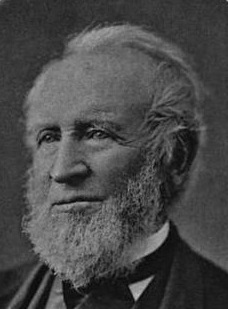
Oliver Comstock
Former U.S. Representative · New York District 20 · 1813–1819 · Republican
Oliver Comstock represented New York's District 20 in the United States House of Representatives (1813–1819) for the Republican party. The page below collects sourced biographical facts, term history, committee roles, and provenance for Comstock.
Bioguide ID: C000664
Key facts
- Full name
- Oliver Comstock
- State
- New York
- District
- District 20
- Party
- Republican
- House service
- 1813–1819
- First House term
- 1813
- Status
- Left office
- Current term ends
- —
- Born
- 1780
- Bioguide ID
- C000664
- Committee assignments
- —
- Dataset version
- 1.20260606
Biographical narrative
933 words · sourced from the Wikipedia REST extract
Oliver Comstock was a prominent figure in early 19th-century American politics, serving as a U.S. Representative from New York's 20th congressional district. A member of the Republican Party, Comstock's political career spanned three terms in the House of Representatives from 1813 to 1819. In addition to his legislative work, he had a diverse career that included roles in medicine, law, and ministry, reflecting the multifaceted nature of public service during this period in American history.
Early life and career
Oliver Comstock was born on March 1, 1780, in Warwick, Rhode Island. His early life was marked by a significant move when his family relocated to Schenectady, New York, during his childhood. This transition likely influenced his later involvement in New York's political and social landscape. Comstock received a liberal education, which was typical for individuals of his background during that era, providing him with the foundational knowledge necessary for his future endeavors.
After completing his education, Comstock pursued a career in medicine. He practiced as a physician in Trumansburg, New York, where he likely gained firsthand experience with the health challenges facing his community. His medical practice, however, was not his only pursuit. Comstock also engaged in public service, beginning with his election to the New York State Assembly, where he served from 1810 to 1812. This role allowed him to gain valuable insights into the legislative process and the needs of his constituents.
In addition to his work in the State Assembly, Comstock held the position of the first judge of the New York Court of Common Pleas for Seneca County from 1812 to 1815. This judicial role further solidified his reputation as a public servant and provided him with a deeper understanding of the law and governance. His experiences in both medicine and law would later inform his legislative priorities and approach to public service.
House tenure
Oliver Comstock's congressional career began when he was elected as a Democratic-Republican to the Thirteenth Congress, which convened on March 4, 1813. He served in this capacity for three consecutive terms, including the Thirteenth, Fourteenth, and Fifteenth Congresses, concluding his service on March 3, 1819. During this period, Comstock was part of a legislative body that was navigating the complexities of a young nation, including issues related to governance, expansion, and the economy.
As a member of the House of Representatives, Comstock participated in the development of policies and legislation that would shape the future of the United States. His tenure coincided with a time of significant change, including the War of 1812, which had profound implications for national security and foreign relations. While specific details regarding his voting record or the legislation he supported are not provided, it can be inferred that his experiences in the State Assembly and as a judge informed his contributions to the House.
After completing his third term, Comstock chose not to seek renomination in 1818. This decision marked a transition in his career, as he shifted his focus away from politics and toward other pursuits. Following his time in Congress, he returned to the judiciary, serving as the first judge of the Court of Common Pleas for Tompkins County in 1817 and 1818. This role allowed him to continue his involvement in the legal system, albeit in a different capacity than during his congressional tenure.
Legislative focus and committees
While specific details regarding Oliver Comstock's legislative focus and committee assignments during his time in Congress are not documented, his background in medicine, law, and public service likely influenced his priorities as a legislator. Given the era in which he served, it is reasonable to assume that he was engaged in discussions related to health care, legal reform, and education, reflecting the pressing issues of the time.
After leaving Congress, Comstock's career took a significant turn as he abandoned his medical practice to pursue a path in theology. His studies in this field culminated in his ordination as a Baptist minister, and he became the pastor of the First Baptist Church in Rochester, New York, serving from 1825 to 1834. This transition illustrates the diverse paths that public figures could take during this period, as many sought to contribute to their communities in various capacities.
In addition to his pastoral duties, Comstock was elected as Chaplain of the House of Representatives on December 20, 1836, serving until March 3, 1837. This role allowed him to return to the national stage, albeit in a spiritual capacity, and to continue his service to the nation in a different form. His involvement in the House as Chaplain reflects the intertwining of religion and politics during this era, as many lawmakers sought moral guidance in their legislative work.
Comstock's later years saw him move to Michigan, where he resumed his ministerial duties in Detroit in 1839. His commitment to education continued as he served as a regent of the University of Michigan at Ann Arbor from 1841 to 1843. This role further exemplified his dedication to public service and the importance of education in the development of society. Additionally, he served as the State Superintendent of Public Instruction from 1843 to 1845, a position that underscored his focus on educational reform and access to quality education for all.
Oliver Comstock passed away on January 11, 1860, in Marshall, Calhoun County, Michigan. He was interred in Oakridge Cemetery, leaving behind a legacy of public service that spanned multiple fields, including medicine, law, politics, and ministry. His life and career reflect the complexities and challenges of early American governance and the diverse roles that individuals played in shaping the nation's future.
Notable legislation
Sponsored and co-sponsored legislation for Oliver Comstock is pending operator curation. The biographical narrative above carries the same provenance trail until per-bill rows are written.
Sources
- [1]https://en.wikipedia.org/wiki/Oliver_C._ComstockWikipedia · retrieved 2026-06-06
Notable quotes
Sourced quotes for Oliver Comstock are pending operator curation. Narrative-scope provenance remains attached below.
Sources
- [1]https://en.wikipedia.org/wiki/Oliver_C._ComstockWikipedia · retrieved 2026-06-06
Key positions
Curated policy positions for Oliver Comstock are pending operator review. The biographical narrative above carries the same provenance trail until per-topic positions are written.
Sources
- [1]https://en.wikipedia.org/wiki/Oliver_C._ComstockWikipedia · retrieved 2026-06-06
Terms served
- 1813–1815U.S. House · Term 1 · Republican
- 1815–1817U.S. House · Term 2 · Republican
- 1817–1819U.S. House · Term 3 · Republican
Sources & provenance
Every attributable claim above carries a per-section [N] marker that resolves to the corresponding URL below. Each entry records the upstream provider, the canonical URL, and the timestamp at which the source was retrieved by the ingest pipeline.
Key facts
- https://bioguide.congress.gov/search/bio/C000664bioguide · retrieved 2026-06-06
- https://www.govtrack.us/congress/members/402791govtrack · retrieved 2026-06-06
Biographical narrative
- https://en.wikipedia.org/wiki/Oliver_C._Comstockwikipedia · retrieved 2026-06-06
Find your representative
Every U.S. state elects representatives by district. Browse New York’s delegation, the full former-representative roster, or explore the role and term length.
Related on The Candidate
- Succeeded by Caleb BakerLater holder of the New York District 20 House seat · Republican.Open
- Abel HuntingtonFormer U.S. Representative · New York District 1 · JacksonOpen
- Alfred ChapinFormer U.S. Representative · New York District 1 · DemocraticOpen
- Cadwallader ColdenFormer U.S. Representative · New York District 1 · FederalistOpen
- Charles FloydFormer U.S. Representative · New York District 1 · DemocraticOpen
- Republican PartyFederal candidates and office holders on the Republican line.Open