
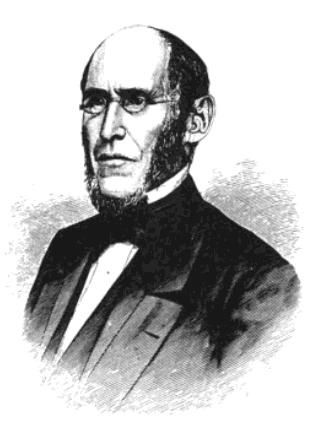
Historical · U.S. House · New York · District 20
Timothy Jenkins
Former U.S. Representative · New York District 20 · 1845–1853 · Democratic
Timothy Jenkins represented New York's District 20 in the United States House of Representatives (1845–1853) for the Democratic party. The page below collects sourced biographical facts, term history, committee roles, and provenance for Jenkins.
Bioguide ID: J000089
Key facts
- Full name
- Timothy Jenkins
- State
- New York
- District
- District 20
- Party
- Democratic
- House service
- 1845–1853
- First House term
- 1845
- Status
- Left office
- Current term ends
- —
- Born
- 1799
- Bioguide ID
- J000089
- Committee assignments
- —
- Dataset version
- 1.20260606
Biographical narrative
866 words · sourced from the Wikipedia REST extract
Timothy Jenkins was an American lawyer and politician who served as a U.S. Representative for New York's 20th congressional district during the mid-19th century. A member of the Democratic Party, Jenkins held office for three terms in the U.S. House of Representatives from 1845 to 1853. He was known for his legal career, particularly his advocacy for the Oneida Indians, and for his opposition to slavery, which later led him to align with the Republican Party.
Early life and career
Timothy Jenkins was born on January 29, 1799, in Barre, Massachusetts. He faced personal hardship early in life when his father passed away when he was just 16 years old. This loss prompted Jenkins to relocate to Washington County, New York, in 1817. In his new environment, he pursued education at local academies in Salem and White Creek. Alongside his studies, Jenkins took on the role of a schoolteacher, which provided him with the means to support his legal education.
Jenkins began his formal legal training under the guidance of established attorneys such as Samuel Beardsley and William H. Maynard in Utica, as well as Lauren Ford in Herkimer. He successfully passed the bar examination in 1824, marking the beginning of his legal career. Jenkins initially settled in Vernon and later moved to Oneida Castle, where he continued to practice law. His legal acumen allowed him to mentor several young attorneys, including Breese J. Stevens.
In addition to his legal practice, Jenkins engaged in local governance. He held various positions, including clerk of the village board of trustees in Vernon and postmaster and fire warden in Oneida Castle. His commitment to public service was evident in his role as the attorney for the Oneida Indians from 1838 to 1845. During this period, he played a crucial role in negotiating land claims and establishing reservations for the Oneida people in New York. Furthermore, Jenkins served as the district attorney for Oneida County from 1840 to 1845, solidifying his influence in the region.
House tenure
Timothy Jenkins entered the U.S. House of Representatives as a Democrat, having been elected to the Twenty-ninth Congress, which began on March 4, 1845. He served in this capacity until March 3, 1849, during which time he was re-elected to the Thirtieth Congress. However, Jenkins faced a setback in 1848 when he was not successful in his bid for re-election to the Thirty-first Congress.
Despite this defeat, Jenkins returned to Congress after a brief hiatus, winning election to the Thirty-second Congress, which lasted from March 4, 1851, to March 3, 1853. During his tenure, he served as the chairman of the Committee on Private Land Claims, a position that underscored his legal expertise and his interest in land-related issues.
Jenkins was known for his strong opposition to slavery, a stance that became increasingly significant in the political landscape of the time. He was a supporter of the Wilmot Proviso, which aimed to ban slavery in territories acquired from Mexico, and he opposed the Kansas-Nebraska Act, which allowed for the possibility of slavery in those territories. Some accounts suggest that Jenkins may have been the actual author of the Wilmot Proviso, highlighting his active role in the anti-slavery movement.
After his time in the House, Jenkins continued to engage in politics. He became a member of the newly formed Republican Party, aligning himself with its anti-slavery platform. In 1856, he participated as a delegate at the first Republican National Convention. Jenkins also sought to extend his political career beyond Congress; in 1857, he ran unsuccessfully for a seat on the New York Court of Appeals and, in 1858, he pursued the Republican nomination for Governor of New York but lost to Edwin D. Morgan.
Legislative focus and committees
Throughout his congressional career, Timothy Jenkins focused on issues that reflected his legal background and personal convictions. His role as chairman of the Committee on Private Land Claims allowed him to address matters related to land ownership and rights, which were particularly pertinent during a time of westward expansion and territorial disputes in the United States.
Jenkins's opposition to slavery was a defining aspect of his legislative agenda. His support for the Wilmot Proviso and his resistance to the Kansas-Nebraska Act positioned him as a notable figure in the anti-slavery movement within Congress. This commitment to civil rights and social justice was a significant part of his legacy, as he sought to influence legislation that would shape the future of the nation.
After leaving Congress, Jenkins remained active in political circles, particularly within the Republican Party. His participation in the first Republican National Convention and his candidacy for various political offices underscored his ongoing commitment to the party's principles, particularly those related to the abolition of slavery and the promotion of civil rights.
Timothy Jenkins passed away on December 24, 1859, while attending a session of the New York Supreme Court in Martinsburg. He was interred at City Cemetery in Oneida Castle. His contributions to law, politics, and the anti-slavery movement have left a lasting impact, and his legacy continues to be recognized through collections of his letters and papers, which document his efforts and viewpoints during a pivotal time in American history.
Notable legislation
Sponsored and co-sponsored legislation for Timothy Jenkins is pending operator curation. The biographical narrative above carries the same provenance trail until per-bill rows are written.
Sources
- [1]https://en.wikipedia.org/wiki/Timothy_JenkinsWikipedia · retrieved 2026-06-06
Notable quotes
Sourced quotes for Timothy Jenkins are pending operator curation. Narrative-scope provenance remains attached below.
Sources
- [1]https://en.wikipedia.org/wiki/Timothy_JenkinsWikipedia · retrieved 2026-06-06
Key positions
Curated policy positions for Timothy Jenkins are pending operator review. The biographical narrative above carries the same provenance trail until per-topic positions are written.
Sources
- [1]https://en.wikipedia.org/wiki/Timothy_JenkinsWikipedia · retrieved 2026-06-06
Terms served
- 1845–1847U.S. House · Term 1 · Democratic
- 1847–1849U.S. House · Term 2 · Democratic
- 1851–1853U.S. House · Term 3 · Democratic
Sources & provenance
Every attributable claim above carries a per-section [N] marker that resolves to the corresponding URL below. Each entry records the upstream provider, the canonical URL, and the timestamp at which the source was retrieved by the ingest pipeline.
Key facts
- https://bioguide.congress.gov/search/bio/J000089bioguide · retrieved 2026-06-06
- https://www.govtrack.us/congress/members/405991govtrack · retrieved 2026-06-06
Biographical narrative
- https://en.wikipedia.org/wiki/Timothy_Jenkinswikipedia · retrieved 2026-06-06
Find your representative
Every U.S. state elects representatives by district. Browse New York’s delegation, the full former-representative roster, or explore the role and term length.
Related on The Candidate
- Preceded by Levi CarpenterEarlier holder of the New York District 20 House seat · Democratic.Open
- Succeeded by Ambrose ClarkLater holder of the New York District 20 House seat · Republican.Open
- Abel HuntingtonFormer U.S. Representative · New York District 1 · JacksonOpen
- Alfred ChapinFormer U.S. Representative · New York District 1 · DemocraticOpen
- Cadwallader ColdenFormer U.S. Representative · New York District 1 · FederalistOpen
- Charles FloydFormer U.S. Representative · New York District 1 · DemocraticOpen