
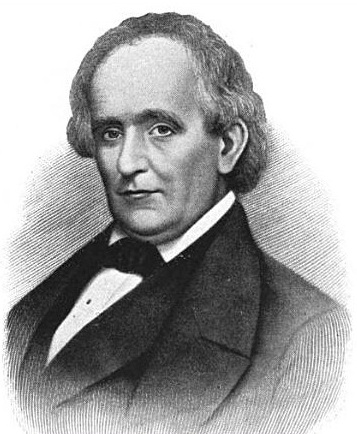
Historical · U.S. House · New York · District 21
John Collier
Former U.S. Representative · New York District 21 · 1831–1833 · Anti Masonic
John Collier represented New York's District 21 in the United States House of Representatives (1831–1833) for the Anti Masonic party. The page below collects sourced biographical facts, term history, committee roles, and provenance for Collier.
Bioguide ID: C000631
Key facts
- Full name
- John Collier
- State
- New York
- District
- District 21
- Party
- Anti Masonic
- House service
- 1831–1833
- First House term
- 1831
- Status
- Left office
- Current term ends
- —
- Born
- 1787
- Bioguide ID
- C000631
- Committee assignments
- —
- Dataset version
- 1.20260606
Biographical narrative
877 words · sourced from the Wikipedia REST extract
John Collier was a lawyer and politician from New York who served as a U.S. Representative for the 21st congressional district from 1831 to 1833. A member of the Anti-Masonic Party, he had a brief tenure in the House of Representatives and later held various positions in state government. His career was marked by his involvement in law, politics, and local development projects, as well as a series of personal and professional challenges.
Early life and career
John Collier was born on November 13, 1787, in Litchfield, Connecticut. He pursued higher education at Yale College, enrolling in 1803. Following his time at Yale, he attended Litchfield Law School, a prominent institution for legal education at the time. After completing his studies, Collier was admitted to the bar in Troy, New York, in 1809, marking the beginning of his legal career.
Collier established his law practice in Binghamton, New York, where he became an influential figure in the local legal community. His legal expertise led to his appointment as the District Attorney of Broome County, a position he held from June 11, 1818, until February 25, 1822. During this period, he was involved in various legal matters and gained a reputation for his work in the region.
In addition to his legal career, Collier partnered with Daniel Leroy on several development projects in Binghamton. Together, they worked on infrastructure improvements, including the construction of bridges and roads, as well as the development of land parcels. After Leroy moved westward, Collier continued these projects independently, contributing to the growth and development of the area.
House tenure
Collier's political career took a significant turn when he was elected to the 22nd United States Congress as a member of the Anti-Masonic Party. He served in the House of Representatives from March 4, 1831, to March 3, 1833. His election to Congress was part of a broader movement during the early 19th century that sought to challenge the influence of secret societies in American politics. The Anti-Masonic Party emerged as a response to concerns about the perceived lack of transparency and accountability among political elites.
During his time in Congress, Collier participated in legislative discussions and contributed to the work of the House. However, his tenure was relatively short-lived, as he was not re-elected in 1832. Following his departure from Congress, Collier returned to his legal practice and continued to engage in various professional and political activities.
Legislative focus and committees
While specific details about Collier's legislative focus and committee assignments during his time in Congress are not extensively documented, his affiliation with the Anti-Masonic Party suggests that he may have been involved in issues related to transparency in governance and the regulation of secret societies. The Anti-Masonic Party was known for advocating for reforms aimed at increasing accountability in politics and reducing the influence of organizations that operated outside the public eye.
After his congressional service, Collier continued to be active in state politics. He was appointed as New York State Comptroller, serving from January 27, 1841, to February 7, 1842. This role involved overseeing the financial operations of the state and ensuring proper management of public funds. His appointment came after he was elected by the New York State Legislature to fill the unexpired term of Bates Cooke.
In the years following his tenure as Comptroller, Collier remained engaged in various political endeavors. He was an unsuccessful candidate for election to the U.S. Congress in 1844 and was appointed as a commissioner to revise the state statutes in 1847. Additionally, he served as a presidential elector on the Whig ticket in 1848, participating in the electoral process during a pivotal time in American politics.
Collier's involvement in the Whig National Convention in 1848 is notable, as he delivered a speech that suggested Millard Fillmore as a potential vice presidential candidate on Zachary Taylor's ticket. This endorsement contributed to Fillmore's subsequent political rise, culminating in his presidency. Although Collier was reportedly considered for the position of collector of taxes in San Francisco during Fillmore's administration, his appointment was thwarted by personal controversies.
Throughout his life, Collier faced various personal challenges, including multiple marriages and a reputation for controversial behavior. He married Barbara Doty in 1810, and they had four children before her death in 1826. He remarried Lydia Shephard in 1829, but she died during childbirth the same year. Collier later married Elizabeth Morris, with whom he had one child. His personal life was marked by incidents that drew public attention, including an arrest for exposure at a hotel in Albany.
Collier's legacy includes his contributions to the legal and political landscape of New York, as well as his involvement in local development projects. He built a notable residence, Ingleside, in 1837, which was a Greek Revival house located on Chenango Street in Binghamton. This house was eventually demolished in 1967.
John Collier passed away on March 24, 1873, at his home in Binghamton, New York. He was buried at Spring Forest Cemetery in Binghamton. His life and career reflect the complexities of 19th-century American politics, as well as the evolving role of public service in the United States. A street in Binghamton is named in his honor, serving as a reminder of his contributions to the community.
Notable legislation
Sponsored and co-sponsored legislation for John Collier is pending operator curation. The biographical narrative above carries the same provenance trail until per-bill rows are written.
Sources
- [1]https://en.wikipedia.org/wiki/John_A._CollierWikipedia · retrieved 2026-06-06
Notable quotes
Sourced quotes for John Collier are pending operator curation. Narrative-scope provenance remains attached below.
Sources
- [1]https://en.wikipedia.org/wiki/John_A._CollierWikipedia · retrieved 2026-06-06
Key positions
Curated policy positions for John Collier are pending operator review. The biographical narrative above carries the same provenance trail until per-topic positions are written.
Sources
- [1]https://en.wikipedia.org/wiki/John_A._CollierWikipedia · retrieved 2026-06-06
Terms served
- 1831–1833U.S. House · Term 1 · Anti Masonic
Sources & provenance
Every attributable claim above carries a per-section [N] marker that resolves to the corresponding URL below. Each entry records the upstream provider, the canonical URL, and the timestamp at which the source was retrieved by the ingest pipeline.
Key facts
- https://bioguide.congress.gov/search/bio/C000631bioguide · retrieved 2026-06-06
- https://www.govtrack.us/congress/members/402760govtrack · retrieved 2026-06-06
Biographical narrative
- https://en.wikipedia.org/wiki/John_A._Collierwikipedia · retrieved 2026-06-06
Find your representative
Every U.S. state elects representatives by district. Browse New York’s delegation, the full former-representative roster, or explore the role and term length.
Related on The Candidate
- Preceded by Robert MonellEarlier holder of the New York District 21 House seat · Jackson.Open
- Succeeded by Henry MitchellLater holder of the New York District 21 House seat · Jackson.Open
- Abel HuntingtonFormer U.S. Representative · New York District 1 · JacksonOpen
- Alfred ChapinFormer U.S. Representative · New York District 1 · DemocraticOpen
- Cadwallader ColdenFormer U.S. Representative · New York District 1 · FederalistOpen
- Charles FloydFormer U.S. Representative · New York District 1 · DemocraticOpen