
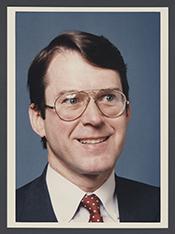
Historical · U.S. House · New York · District 21
Michael McNulty
Former U.S. Representative · New York District 21 · 1989–2009 · Democratic
Michael McNulty represented New York's District 21 in the United States House of Representatives (1989–2009) for the Democratic party. The page below collects sourced biographical facts, term history, committee roles, and provenance for McNulty.
Bioguide ID: M000590
Key facts
- Full name
- Michael McNulty
- State
- New York
- District
- District 21
- Party
- Democratic
- House service
- 1989–2009
- First House term
- 1989
- Status
- Left office
- Current term ends
- —
- Born
- 1947
- Bioguide ID
- M000590
- Committee assignments
- —
- Dataset version
- 1.20260605
Biographical narrative
910 words · sourced from the Wikipedia REST extract
Michael R. McNulty is a retired American politician who served as a U.S. Representative for New York's 21st congressional district from 1989 until 2009. A member of the Democratic Party, McNulty was known for his moderate stance within the party and held various leadership roles during his tenure, including chairing the House Subcommittee on Social Security in the 110th Congress. His political career spanned several decades, beginning at the local level before transitioning to state and then federal office.
Early life and career
Michael Robert McNulty was born on September 16, 1947, in Troy, New York. He received his early education in the public school system of Troy and later attended the La Salle Institute. In 1965, he graduated from St. Joseph's Institute. His educational pursuits continued internationally at the Loyola University Rome Center in Italy from 1967 to 1968. McNulty completed his undergraduate studies at the College of the Holy Cross in Worcester, Massachusetts, graduating in 1969.
McNulty comes from a politically active Irish-American family in the Capital District of New York. His grandfather, Jack McNulty Sr., was a prominent figure in local politics, serving as the chairman of the Green Island Democratic Party for fifty years and as Albany County Sheriff. Following in his father's footsteps, McNulty's father, Jack Jr., also held the position of chairman of the Green Island Democratic Party and served as sheriff.
Before embarking on his political career, McNulty worked as an insurance broker. His entry into public office began in November 1969 when he was elected as the town supervisor of Green Island, making him the youngest individual to hold that position in New York State at the age of 22. In 1976, he ran for a seat in the New York State Assembly representing the 106th Assembly District but was defeated by the Republican incumbent. The following year, he succeeded his father as chairman of the Green Island Democratic Party and was elected mayor of Green Island, a role he maintained until 1982.
In 1983, following a redistricting process, McNulty successfully ran for a seat in the New York State Assembly, representing the newly defined 106th Assembly District. He served in this capacity until 1988, participating in the 185th, 186th, and 187th New York State Legislatures.
House tenure
McNulty's transition to the U.S. House of Representatives began in 1988 when Congressman Samuel S. Stratton announced his withdrawal from the race due to health concerns. McNulty was selected to replace him on the ballot and was elected to represent New York's 23rd congressional district, which was known for being a reliably Democratic area in Upstate New York. Following the 1990 census, the district was renumbered as the 21st District, a designation McNulty continued to represent throughout his congressional career.
During his time in the House, McNulty was reelected nine additional times, facing minimal opposition in most elections. Notably, he encountered a challenge from Republican/Libertarian Warren Redlich in 2004, and again in 2006, during which he secured a significant victory with 78% of the vote, marking his largest margin of victory. He also faced a primary challenge in 1996 from Lee H. Wasserman, which he won by a narrow margin.
In October 2007, McNulty announced that he would not seek an 11th term in Congress. His decision paved the way for Paul Tonko, a former colleague from the New York State Assembly, to secure the Democratic nomination and subsequently win the general election in November 2008. The race for the open seat was not considered competitive, as the 21st District was regarded as one of the most Democratic districts in New York outside of New York City and Western New York.
Legislative focus and committees
Throughout his congressional tenure, McNulty was recognized as a moderate Democrat, particularly by New York standards. His voting record included support for the War in Iraq, although he later shifted his position and co-sponsored a resolution advocating for a phased withdrawal from the conflict.
McNulty's time in the House was not without controversy. In August 2007, he presided over a contentious vote regarding an agricultural appropriations bill aimed at preventing illegal immigrants from receiving food stamps. The vote was marked by disputes over its tally, leading to accusations of improper vote counting. Following the incident, McNulty and House Majority Leader Steny Hoyer issued apologies for the premature gaveling down of the vote. A bipartisan investigation was initiated to review the circumstances surrounding the vote, ultimately concluding that the vote had indeed been improperly tallied.
In terms of legislative focus, McNulty served on several key committees during his time in the House. He was a member of the Ways and Means Committee, which is responsible for taxation and revenue-related legislation. Within this committee, he chaired the Subcommittee on Social Security and was also a member of the Subcommittee on Income Security and Family Support. His leadership roles allowed him to influence significant social and economic policies during his tenure.
McNulty received endorsements from various political organizations, including both the Conservative Party and the Working Families Party, reflecting his moderate stance and appeal across party lines. His commitment to middle-class issues was recognized when he received an "A" rating on the Drum Major Institute's 2005 Scorecard.
After serving for two decades in the U.S. House of Representatives, McNulty concluded his congressional career on January 3, 2009. His extensive experience in local, state, and federal politics has left a lasting impact on the communities he represented in New York.
Notable legislation
Sponsored and co-sponsored legislation for Michael McNulty is pending operator curation. The biographical narrative above carries the same provenance trail until per-bill rows are written.
Sources
- [1]https://en.wikipedia.org/wiki/Michael_McNultyWikipedia · retrieved 2026-06-05
Notable quotes
Sourced quotes for Michael McNulty are pending operator curation. Narrative-scope provenance remains attached below.
Sources
- [1]https://en.wikipedia.org/wiki/Michael_McNultyWikipedia · retrieved 2026-06-05
Key positions
Curated policy positions for Michael McNulty are pending operator review. The biographical narrative above carries the same provenance trail until per-topic positions are written.
Sources
- [1]https://en.wikipedia.org/wiki/Michael_McNultyWikipedia · retrieved 2026-06-05
Terms served
- 1989–1991U.S. House · Term 1 · Democratic
- 1991–1993U.S. House · Term 2 · Democratic
- 1993–1995U.S. House · Term 3 · Democratic
- 1995–1997U.S. House · Term 4 · Democratic
- 1997–1999U.S. House · Term 5 · Democratic
- 1999–2001U.S. House · Term 6 · Democratic
- 2001–2003U.S. House · Term 7 · Democratic
- 2003–2005U.S. House · Term 8 · Democratic
- 2005–2007U.S. House · Term 9 · Democratic
- 2007–2009U.S. House · Term 10 · Democratic
Sources & provenance
Every attributable claim above carries a per-section [N] marker that resolves to the corresponding URL below. Each entry records the upstream provider, the canonical URL, and the timestamp at which the source was retrieved by the ingest pipeline.
Key facts
- https://bioguide.congress.gov/search/bio/M000590bioguide · retrieved 2026-06-05
- http://www.house.gov/mcnultyhouse.gov · retrieved 2026-06-05
Biographical narrative
- https://en.wikipedia.org/wiki/Michael_McNultywikipedia · retrieved 2026-06-05
Find your representative
Every U.S. state elects representatives by district. Browse New York’s delegation, the full former-representative roster, or explore the role and term length.
Related on The Candidate
- Preceded by Herman BadilloEarlier holder of the New York District 21 House seat · Democratic.Open
- Succeeded by William OwensLater holder of the New York District 21 House seat · Democratic.Open
- Abel HuntingtonFormer U.S. Representative · New York District 1 · JacksonOpen
- Alfred ChapinFormer U.S. Representative · New York District 1 · DemocraticOpen
- Cadwallader ColdenFormer U.S. Representative · New York District 1 · FederalistOpen
- Charles FloydFormer U.S. Representative · New York District 1 · DemocraticOpen