
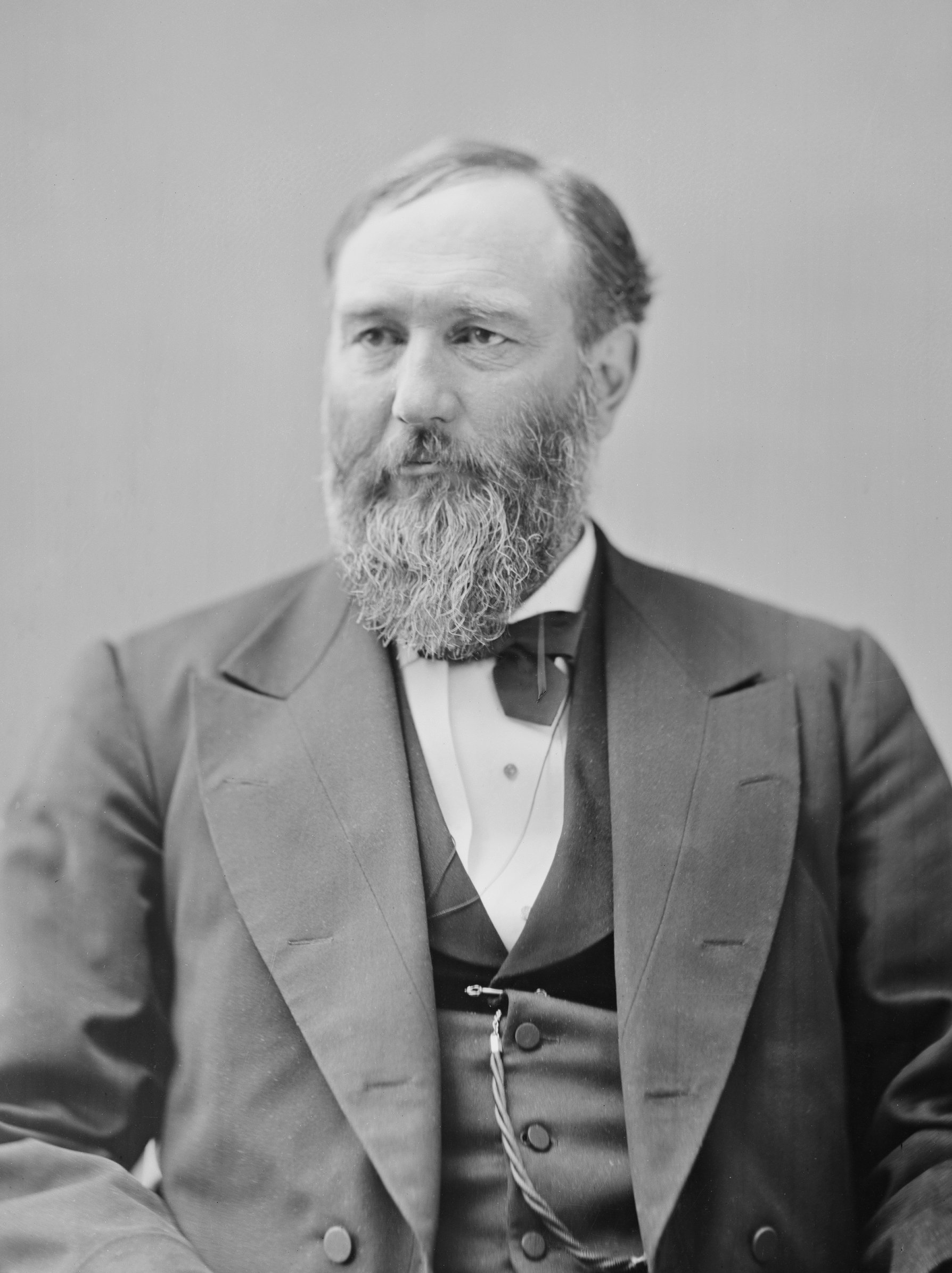
Historical · U.S. House · New York · District 21
Samuel Miller
Former U.S. Representative · New York District 21 · 1863–1877 · Republican
Samuel Miller represented New York's District 21 in the United States House of Representatives (1863–1877) for the Republican party. The page below collects sourced biographical facts, term history, committee roles, and provenance for Miller.
Bioguide ID: M000752
Key facts
- Full name
- Samuel Miller
- State
- New York
- District
- District 21
- Party
- Republican
- House service
- 1863–1877
- First House term
- 1863
- Status
- Left office
- Current term ends
- —
- Born
- 1827
- Bioguide ID
- M000752
- Committee assignments
- —
- Dataset version
- 1.20260606-1
Biographical narrative
957 words · sourced from the Wikipedia REST extract
Samuel Miller was a notable figure in American politics during the mid-19th century, serving as a U.S. Representative from New York. A member of the Republican Party, he held office during a tumultuous period in American history, which included the American Civil War. Miller's political career spanned two terms in the U.S. House of Representatives, where he contributed to legislative discussions and decisions that shaped the nation during and after the war. His life and career reflect a blend of public service, military involvement, and agricultural pursuits.
Early life and career
Samuel Miller was born on May 27, 1827, in Franklin, Delaware County, New York. His early education was rooted in local institutions, and he graduated from the Delaware Literary Institute, which provided him with a foundational education. Following this, Miller pursued higher education at Hamilton College in Clinton, New York, where he studied law. He completed his studies and graduated in 1852, subsequently being admitted to the bar in 1853. Despite his legal training, Miller chose not to practice law in a conventional sense. Instead, he turned his attention to farming and lumbering, industries that were significant in his home region and reflective of the economic activities prevalent in rural New York during that era.
Miller's entry into public service began in the political arena when he was elected to the New York State Assembly representing Delaware County's 1st District in 1854. This position marked the beginning of his involvement in governance and public affairs, allowing him to engage with the legislative process at the state level. His service in the Assembly provided him with valuable experience and insight into the workings of government, which would later inform his actions as a member of Congress.
In addition to his legislative role, Miller served as a colonel in the State militia, a position that underscored his commitment to public service and community safety during a time when the nation was embroiled in conflict. His military service coincided with the Civil War, a period that demanded strong leadership and civic responsibility from individuals in positions of authority.
House tenure
Miller's tenure in the U.S. House of Representatives began when he was elected as a Republican to the 38th Congress, serving from March 4, 1863, to March 3, 1865. This period was marked by significant national strife due to the ongoing Civil War. As a member of Congress during this time, Miller participated in discussions and decisions that were critical to the war effort and the future of the nation. His election to the House represented not only a personal achievement but also a reflection of the political climate in New York and the broader United States, where the Republican Party was gaining prominence as a force for change and unity.
After completing his first term, Miller continued to engage in public service at various levels. He was a member of the New York State constitutional convention in 1867, contributing to the development of state governance in the post-war context. His involvement in this convention was significant, as it allowed him to influence the legal and constitutional framework of New York during a time of reconstruction and reform.
Miller's political career continued with his election to the 44th Congress, where he served from March 4, 1875, to March 3, 1877. His second term in the House allowed him to further his legislative agenda and continue his work on behalf of his constituents in New York. Throughout his congressional service, Miller was involved in various legislative initiatives that addressed the pressing issues of the day, including those related to the aftermath of the Civil War and the challenges of reconstruction.
Legislative focus and committees
During his time in the House of Representatives, Samuel Miller's legislative focus was likely influenced by the significant events occurring in the nation. The Civil War had profound implications for American society, and legislators were tasked with addressing the myriad challenges that arose from the conflict. While specific details regarding Miller's committee assignments and legislative initiatives are not provided, it can be inferred that as a member of the Republican Party during this era, he would have been involved in discussions related to civil rights, economic recovery, and the reintegration of Southern states into the Union.
Miller's participation in the State constitutional convention and his role as district collector of internal revenue from 1869 to 1873 further indicate his engagement with issues of governance and fiscal policy. The position of district collector would have placed him at the forefront of tax collection and revenue generation, critical components of the federal government's efforts to stabilize the economy during the post-war period.
Additionally, Miller served on the New York State board of charities from 1869 to 1877, a role that likely involved oversight of social welfare programs and initiatives aimed at assisting those in need. This experience would have informed his perspective on legislative matters related to social policy and public assistance.
After concluding his congressional service in 1877, Miller returned to his agricultural roots, residing on his farm in North Franklin, New York. He continued to engage in farming and lumbering, reflecting a return to the economic activities that characterized his early career. His life after politics was marked by a commitment to the land and the community he had served throughout his public life.
Samuel Miller passed away on March 16, 1892, in Franklin, New York. His contributions to public service, both at the state and federal levels, are remembered as part of the broader narrative of American governance during a critical period in the nation's history. He was interred in Ouleout Valley Cemetery, where he rests alongside the legacy of his service to the people of New York and the United States.
Notable legislation
Sponsored and co-sponsored legislation for Samuel Miller is pending operator curation. The biographical narrative above carries the same provenance trail until per-bill rows are written.
Sources
- [1]https://en.wikipedia.org/wiki/Samuel_F._Miller_(U.S._politician)Wikipedia · retrieved 2026-06-06
Notable quotes
Sourced quotes for Samuel Miller are pending operator curation. Narrative-scope provenance remains attached below.
Sources
- [1]https://en.wikipedia.org/wiki/Samuel_F._Miller_(U.S._politician)Wikipedia · retrieved 2026-06-06
Key positions
Curated policy positions for Samuel Miller are pending operator review. The biographical narrative above carries the same provenance trail until per-topic positions are written.
Sources
- [1]https://en.wikipedia.org/wiki/Samuel_F._Miller_(U.S._politician)Wikipedia · retrieved 2026-06-06
Terms served
- 1863–1865U.S. House · Term 1 · Republican
- 1875–1877U.S. House · Term 2 · Republican
Sources & provenance
Every attributable claim above carries a per-section [N] marker that resolves to the corresponding URL below. Each entry records the upstream provider, the canonical URL, and the timestamp at which the source was retrieved by the ingest pipeline.
Key facts
- https://bioguide.congress.gov/search/bio/M000752bioguide · retrieved 2026-06-06
- https://www.govtrack.us/congress/members/407730govtrack · retrieved 2026-06-06
Biographical narrative
- https://en.wikipedia.org/wiki/Samuel_F._Miller_(U.S._politician)wikipedia · retrieved 2026-06-06
Find your representative
Every U.S. state elects representatives by district. Browse New York’s delegation, the full former-representative roster, or explore the role and term length.
Related on The Candidate
- Preceded by Henry BennettEarlier holder of the New York District 21 House seat · Republican.Open
- Succeeded by Solomon BundyLater holder of the New York District 21 House seat · Republican.Open
- Abel HuntingtonFormer U.S. Representative · New York District 1 · JacksonOpen
- Alfred ChapinFormer U.S. Representative · New York District 1 · DemocraticOpen
- Cadwallader ColdenFormer U.S. Representative · New York District 1 · FederalistOpen
- Charles FloydFormer U.S. Representative · New York District 1 · DemocraticOpen