
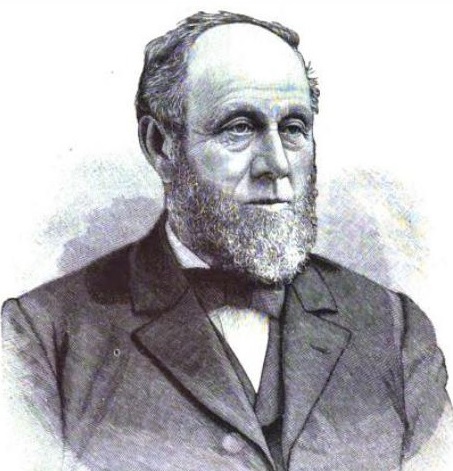
Historical · U.S. House · New York · District 21
Simon Schermerhorn
Former U.S. Representative · New York District 21 · 1893–1895 · Democratic
Simon Schermerhorn represented New York's District 21 in the United States House of Representatives (1893–1895) for the Democratic party. The page below collects sourced biographical facts, term history, committee roles, and provenance for Schermerhorn.
Bioguide ID: S000123
Key facts
- Full name
- Simon Schermerhorn
- State
- New York
- District
- District 21
- Party
- Democratic
- House service
- 1893–1895
- First House term
- 1893
- Status
- Left office
- Current term ends
- —
- Born
- 1827
- Bioguide ID
- S000123
- Committee assignments
- —
- Dataset version
- 1.20260606
Biographical narrative
841 words · sourced from the Wikipedia REST extract
Simon Schermerhorn was an American politician who served as a U.S. Representative from New York's 21st congressional district during the early 1890s. A member of the Democratic Party, Schermerhorn's congressional career was marked by a single term in the Fifty-third Congress, where he contributed to the legislative process during a transformative period in American history. His political journey began in local governance and culminated in his election to the House of Representatives, where he served from 1893 until 1895. Following his congressional tenure, Schermerhorn returned to his agricultural roots in Rotterdam, New York, where he lived until his passing in 1901.
Early life and career
Simon Jacob Schermerhorn was born on September 25, 1827, in Rotterdam, a town located in Schenectady County, New York. His early education consisted of attending local common schools, which provided him with a foundational education typical of the era. Following his schooling, Schermerhorn engaged in agricultural pursuits, which would become a significant aspect of his life and career. Agriculture was a common occupation in the region during the 19th century, and it likely influenced his perspectives on rural issues and policies.
Schermerhorn's entry into public service began at the local level. In 1856, he was elected as the supervisor of the town of Rotterdam, a role that allowed him to gain experience in governance and community leadership. His involvement in local politics continued as he served two terms as a school commissioner, a position that underscored his commitment to education and the welfare of children in his community. These roles provided him with valuable insights into the needs and concerns of his constituents, which would later inform his legislative priorities.
In addition to his political roles, Schermerhorn was also active in the financial sector. He held positions as a director and trustee in local banks, which further established his reputation as a community leader and contributed to his understanding of economic issues. This experience in finance and governance would prove beneficial as he transitioned to state and, eventually, federal politics.
House tenure
Schermerhorn's political career reached a new height when he was elected to the United States House of Representatives as a Democrat. He took office on March 4, 1893, as a member of the Fifty-third Congress, representing New York's 21st congressional district. His election came during a time of significant political and social change in the United States, as the country was grappling with issues related to industrialization, labor rights, and economic reform.
During his time in Congress, Schermerhorn participated in the legislative process, contributing to discussions and decisions that shaped the nation. His tenure lasted until March 3, 1895, when he completed his term. Notably, Schermerhorn did not seek renomination in the 1894 elections, marking the end of his congressional career. The reasons for his decision not to run again are not detailed in the available records, but it was not uncommon for politicians of the era to step back from public life after a single term.
Schermerhorn's time in Congress was characterized by the broader political landscape of the 1890s, which included debates over economic policy, tariffs, and the role of government in regulating industry. While specific details of his legislative contributions are not documented, his background in local governance and finance likely influenced his perspectives on these critical issues.
Legislative focus and committees
Although specific details regarding Simon Schermerhorn's committee assignments and legislative focus during his congressional term are not extensively documented, his background suggests that he may have been inclined to engage with issues pertinent to agriculture, education, and local governance. Given his experience as a supervisor and school commissioner, it is reasonable to infer that he would have been attentive to matters affecting education policy and rural development.
The early 1890s were a time of significant economic challenges in the United States, including the Panic of 1893, which led to a severe economic depression. This context likely influenced the priorities of many legislators, including Schermerhorn. Issues such as labor rights, economic reform, and the regulation of industries were at the forefront of political discourse during this period. Schermerhorn's agricultural background may have also led him to advocate for policies that supported farmers and rural communities, although specific legislative actions he may have taken are not recorded.
After his congressional term, Schermerhorn returned to his agricultural roots in Rotterdam, New York. This return to farming reflects a common trajectory for many politicians of the time, who often resumed their previous occupations after leaving public office. Schermerhorn's life after Congress was marked by a commitment to his community and the land he had cultivated.
Simon Schermerhorn passed away on July 21, 1901, in Rotterdam, where he had spent much of his life. His contributions to local governance and his brief tenure in the U.S. House of Representatives are part of the historical narrative of American politics in the late 19th century. He was interred in Viewland Cemetery, leaving behind a legacy as a public servant dedicated to his community and the agricultural pursuits that defined much of his life.
Notable legislation
Sponsored and co-sponsored legislation for Simon Schermerhorn is pending operator curation. The biographical narrative above carries the same provenance trail until per-bill rows are written.
Sources
- [1]https://en.wikipedia.org/wiki/Simon_J._SchermerhornWikipedia · retrieved 2026-06-06
Notable quotes
Sourced quotes for Simon Schermerhorn are pending operator curation. Narrative-scope provenance remains attached below.
Sources
- [1]https://en.wikipedia.org/wiki/Simon_J._SchermerhornWikipedia · retrieved 2026-06-06
Key positions
Curated policy positions for Simon Schermerhorn are pending operator review. The biographical narrative above carries the same provenance trail until per-topic positions are written.
Sources
- [1]https://en.wikipedia.org/wiki/Simon_J._SchermerhornWikipedia · retrieved 2026-06-06
Terms served
- 1893–1895U.S. House · Term 1 · Democratic
Sources & provenance
Every attributable claim above carries a per-section [N] marker that resolves to the corresponding URL below. Each entry records the upstream provider, the canonical URL, and the timestamp at which the source was retrieved by the ingest pipeline.
Key facts
- https://bioguide.congress.gov/search/bio/S000123bioguide · retrieved 2026-06-06
- https://www.govtrack.us/congress/members/409631govtrack · retrieved 2026-06-06
Biographical narrative
- https://en.wikipedia.org/wiki/Simon_J._Schermerhornwikipedia · retrieved 2026-06-06
Find your representative
Every U.S. state elects representatives by district. Browse New York’s delegation, the full former-representative roster, or explore the role and term length.
Related on The Candidate
- Preceded by John MoffittEarlier holder of the New York District 21 House seat · Republican.Open
- Succeeded by David WilberLater holder of the New York District 21 House seat · Republican.Open
- Abel HuntingtonFormer U.S. Representative · New York District 1 · JacksonOpen
- Alfred ChapinFormer U.S. Representative · New York District 1 · DemocraticOpen
- Cadwallader ColdenFormer U.S. Representative · New York District 1 · FederalistOpen
- Charles FloydFormer U.S. Representative · New York District 1 · DemocraticOpen