
Historical · U.S. House · New York · District 23
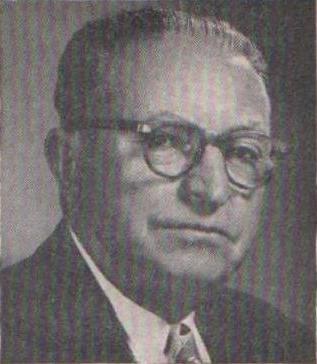
Charles Buckley
Former U.S. Representative · New York District 23 · 1935–1965 · Democratic
Charles Buckley represented New York's District 23 in the United States House of Representatives (1935–1965) for the Democratic party. The page below collects sourced biographical facts, term history, committee roles, and provenance for Buckley.
Bioguide ID: B001024
Key facts
- Full name
- Charles Buckley
- State
- New York
- District
- District 23
- Party
- Democratic
- House service
- 1935–1965
- First House term
- 1935
- Status
- Left office
- Current term ends
- —
- Born
- 1890
- Bioguide ID
- B001024
- Committee assignments
- —
- Dataset version
- 1.20260605
Biographical narrative
983 words · sourced from the Wikipedia REST extract
Charles Buckley was a prominent Democratic politician from The Bronx, New York, who served as a U.S. Representative for New York's 23rd congressional district. His political career spanned three decades, during which he was elected to the House of Representatives for a total of 15 terms from 1935 until 1965. Buckley was not only known for his legislative work but also for his significant influence within the Bronx County Democratic Party, where he served as Chairman of the Executive Committee. His tenure in Congress was marked by his leadership roles on key committees and his involvement in local and national politics.
Early life and career
Charles Buckley was born on June 23, 1890, in New York City. He grew up in a working-class environment and received his education in the public school system. After completing his education, Buckley entered the construction and contracting industry, which laid the groundwork for his future political engagements. His political career began in earnest in 1911 when he became involved in local party politics as a block captain in The Bronx. This early involvement provided him with a foundation in political organization and community engagement.
In 1918, Buckley was elected to the Board of Aldermen, which is now known as the New York City Council. He served in this capacity until 1923, when he was appointed as a state tax appraiser. His experience in local government and his connections within the Democratic Party continued to grow. In 1929, he was appointed by Mayor Jimmy Walker to serve as chamberlain, a role that is now part of the city treasurer's office. This appointment followed the tenure of Edward J. Flynn, a significant political figure in the Bronx and Buckley's mentor.
Buckley’s early political career was characterized by his ability to navigate the complexities of local governance and party dynamics. His work in the Board of Aldermen and as chamberlain allowed him to build a network of supporters and establish himself as a key player in Bronx politics.
House tenure
In 1934, Buckley successfully ran for a seat in the U.S. House of Representatives, marking the beginning of a long and influential congressional career. He was re-elected multiple times, serving a total of 15 terms until his departure from Congress in 1965. During his time in the House, Buckley held several important leadership positions. Notably, he served as the chairman of the House Committee on Pensions during the 78th and 79th Congresses, and later as chairman of the Committee on Public Works during the 82nd Congress and again from the 84th through the 88th Congress.
His role as chairman of the Public Works Committee was particularly significant, as it granted him considerable authority in the allocation of federal funds for various projects. This position enabled him to influence infrastructure development and public works initiatives, which were critical to the economic growth and modernization of his district and beyond. Buckley's leadership in these committees underscored his importance in shaping policy and securing resources for his constituents.
In addition to his congressional responsibilities, Buckley was a prominent figure in the Bronx County Democratic Party. In 1953, he succeeded Ed Flynn as the Chairman of the Executive Committee, a position that allowed him to wield substantial influence within local and state politics. His leadership in the party was instrumental in mobilizing support for various candidates, including John F. Kennedy during his presidential campaign in 1960. Buckley’s connections with national leaders, including Kennedy, further solidified his standing in the Democratic Party.
However, Buckley’s political career was not without challenges. He faced criticism for his absenteeism in Congress, with reports indicating that he attended less than half of the votes in some years. This aspect of his tenure was highlighted by media outlets, which scrutinized his commitment to his congressional duties. Despite these challenges, he maintained his position as a powerful figure in Bronx politics.
Legislative focus and committees
Throughout his congressional career, Buckley was involved in a variety of legislative initiatives, particularly in the areas of public works and pensions. His chairmanship of the House Committee on Public Works allowed him to play a crucial role in determining federal funding for infrastructure projects, which had lasting impacts on his district and the broader New York City area. His influence in this area was significant, as he was able to direct resources to projects that benefited his constituents.
Buckley’s leadership style was characterized by a blend of political acumen and a focus on patronage. He utilized his position to secure jobs and opportunities for loyal supporters from The Bronx, which helped him maintain his political power and influence within the community. This approach was not without its critics, particularly as reformist elements within the Democratic Party began to challenge the traditional power structures that Buckley represented.
In the 1960s, Buckley faced increasing opposition from reform-minded Democrats, particularly from figures such as Mayor Robert F. Wagner Jr. This tension culminated in a bitter primary contest in 1964 against Jonathan Bingham, who was supported by Wagner and other reformers. The race was contentious, with allegations exchanged between the candidates. Ultimately, Buckley lost the election by a narrow margin, marking the end of his congressional career.
Despite his electoral defeat, Buckley continued to hold a prominent position within the Bronx Democratic Party. He sought to maintain his influence and was rumored to be involved in plans to secure a political appointment that would allow him to remain active in politics. However, these plans were met with resistance from party leaders, indicating a shift in the political landscape of the Bronx.
Buckley passed away on January 22, 1967, from lung cancer. His legacy includes a lengthy congressional career marked by significant leadership roles and a lasting impact on the political landscape of The Bronx and New York City. His life and career reflect the complexities of American politics during a transformative period in the 20th century.
Notable legislation
Sponsored and co-sponsored legislation for Charles Buckley is pending operator curation. The biographical narrative above carries the same provenance trail until per-bill rows are written.
Sources
- [1]https://en.wikipedia.org/wiki/Charles_A._BuckleyWikipedia · retrieved 2026-06-05
Notable quotes
Sourced quotes for Charles Buckley are pending operator curation. Narrative-scope provenance remains attached below.
Sources
- [1]https://en.wikipedia.org/wiki/Charles_A._BuckleyWikipedia · retrieved 2026-06-05
Key positions
Curated policy positions for Charles Buckley are pending operator review. The biographical narrative above carries the same provenance trail until per-topic positions are written.
Sources
- [1]https://en.wikipedia.org/wiki/Charles_A._BuckleyWikipedia · retrieved 2026-06-05
Terms served
- 1935–1937U.S. House · Term 1 · Democratic
- 1937–1939U.S. House · Term 2 · Democratic
- 1939–1941U.S. House · Term 3 · Democratic
- 1941–1943U.S. House · Term 4 · Democratic
- 1943–1945U.S. House · Term 5 · Democratic
- 1945–1947U.S. House · Term 6 · Democratic
- 1947–1949U.S. House · Term 7 · Democratic
- 1949–1951U.S. House · Term 8 · Democratic
- 1951–1953U.S. House · Term 9 · Democratic
- 1953–1955U.S. House · Term 10 · Democratic
- 1955–1957U.S. House · Term 11 · Democratic
- 1957–1959U.S. House · Term 12 · Democratic
- 1959–1961U.S. House · Term 13 · Democratic
- 1961–1963U.S. House · Term 14 · Democratic
- 1963–1965U.S. House · Term 15 · Democratic
Sources & provenance
Every attributable claim above carries a per-section [N] marker that resolves to the corresponding URL below. Each entry records the upstream provider, the canonical URL, and the timestamp at which the source was retrieved by the ingest pipeline.
Key facts
- https://bioguide.congress.gov/search/bio/B001024bioguide · retrieved 2026-06-05
- https://www.govtrack.us/congress/members/401974govtrack · retrieved 2026-06-05
Biographical narrative
- https://en.wikipedia.org/wiki/Charles_A._Buckleywikipedia · retrieved 2026-06-05
Find your representative
Every U.S. state elects representatives by district. Browse New York’s delegation, the full former-representative roster, or explore the role and term length.
Related on The Candidate
- Preceded by Frank OliverEarlier holder of the New York District 23 House seat · Democratic.Open
- Succeeded by Peter PeyserLater holder of the New York District 23 House seat · Democratic.Open
- Abel HuntingtonFormer U.S. Representative · New York District 1 · JacksonOpen
- Alfred ChapinFormer U.S. Representative · New York District 1 · DemocraticOpen
- Cadwallader ColdenFormer U.S. Representative · New York District 1 · FederalistOpen
- Charles FloydFormer U.S. Representative · New York District 1 · DemocraticOpen