
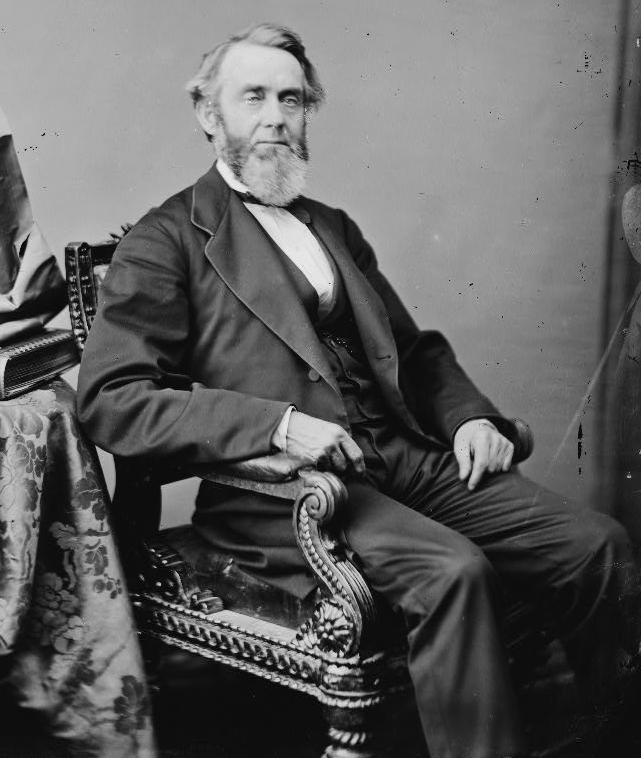
Historical · U.S. House · New York · District 23
Dennis McCarthy
Former U.S. Representative · New York District 23 · 1867–1871 · Republican
Dennis McCarthy represented New York's District 23 in the United States House of Representatives (1867–1871) for the Republican party. The page below collects sourced biographical facts, term history, committee roles, and provenance for McCarthy.
Bioguide ID: M000310
Key facts
- Full name
- Dennis McCarthy
- State
- New York
- District
- District 23
- Party
- Republican
- House service
- 1867–1871
- First House term
- 1867
- Status
- Left office
- Current term ends
- —
- Born
- 1814
- Bioguide ID
- M000310
- Committee assignments
- —
- Dataset version
- 1.20260606
Biographical narrative
904 words · sourced from the Wikipedia REST extract
Dennis McCarthy was an American politician and manufacturer who served as a U.S. Representative for New York's 23rd congressional district during the late 19th century. A member of the Republican Party, he held office in the U.S. House of Representatives from 1867 to 1871. Prior to his congressional tenure, McCarthy had a diverse career that included roles in local government and business. His political journey continued after his time in Congress, as he later served in the New York State Senate and briefly as Acting Lieutenant Governor of New York. McCarthy's life and career reflect the complexities of American politics and industry during a transformative period in U.S. history.
Early life and career
Dennis McCarthy was born on March 19, 1814, to Thomas McCarthy. His early education took place at Valley Academy in Salina, New York, where he received a foundational education that would serve him throughout his career. Following his education, McCarthy entered the manufacturing sector, specifically engaging in the production of salt, which was a significant industry in New York during the 19th century. This involvement in manufacturing provided him with valuable experience in business operations and management.
In the early 1840s, McCarthy expanded his business endeavors by partnering with his brother-in-law, Silas Titus, to operate a general store. This venture not only contributed to his financial stability but also helped him establish connections within the local community. McCarthy's business acumen and community engagement laid the groundwork for his subsequent entry into politics.
His political career began in earnest when he was elected as a member of the New York State Assembly, representing Onondaga County in 1845. This position marked his first foray into public service, allowing him to engage with legislative processes and local governance. His political career continued to evolve when he was elected Mayor of Syracuse, New York, in 1853. As mayor, McCarthy was responsible for overseeing the administration of the city and addressing the needs of its residents, further solidifying his reputation as a dedicated public servant.
House tenure
Dennis McCarthy's tenure in the U.S. House of Representatives began on March 4, 1867, when he was elected to the 40th Congress. He represented New York's 23rd congressional district, a position that allowed him to influence national legislation and advocate for the interests of his constituents. His election to Congress came during a period of significant political and social change in the United States, particularly in the aftermath of the Civil War. The Republican Party, which McCarthy represented, was focused on issues such as Reconstruction and civil rights for formerly enslaved individuals.
During his time in the House, McCarthy served two consecutive terms, concluding his service on March 3, 1871. His legislative contributions during this period included participation in discussions and votes on various bills and resolutions that shaped the nation’s policies. While specific details of his voting record and the legislation he supported are not documented in the available references, it is understood that members of Congress during this era were often involved in critical debates regarding the Reconstruction efforts and the integration of Southern states back into the Union.
After completing his terms in the House, McCarthy returned to his business pursuits, indicating a shift back to the private sector after his public service. His experience in Congress likely provided him with insights and connections that would benefit his business endeavors.
Legislative focus and committees
While specific details regarding Dennis McCarthy's legislative focus and committee assignments during his time in the House of Representatives are not provided in the available references, it can be inferred that, as a Republican representative during the Reconstruction era, he would have been engaged in the pressing issues of the time. This period was characterized by significant debates over civil rights, economic recovery, and the reintegration of Southern states into the Union following the Civil War.
McCarthy's background in business and local governance likely informed his perspectives on economic policies and community development. His experience as a mayor would have equipped him with a practical understanding of the challenges faced by urban areas, which could have influenced his legislative priorities.
After his congressional service, McCarthy continued to be active in public life. He was elected to the New York State Senate, where he served from 1876 to 1885. During his time in the Senate, he participated in numerous legislative sessions, contributing to the governance of the state. His leadership capabilities were recognized when he was appointed President pro tempore of the Senate in multiple years, a role that involved presiding over the Senate in the absence of the Lieutenant Governor and managing legislative proceedings.
In 1885, following the resignation of Governor Grover Cleveland, McCarthy briefly assumed the role of Acting Lieutenant Governor of New York. This position underscored his prominence in state politics and his ability to navigate the complexities of governance at both the state and federal levels.
Dennis McCarthy passed away on February 14, 1886, in Syracuse, New York. His contributions to both local and national politics, as well as his involvement in business, reflect a multifaceted career that spanned several decades. He was laid to rest at Saint Agnes Cemetery in Syracuse, leaving behind a legacy of public service and community engagement. McCarthy's life serves as a representation of the opportunities and challenges faced by politicians during a critical period in American history, illustrating the interconnectedness of business and politics in shaping the lives of citizens.
Notable legislation
Sponsored and co-sponsored legislation for Dennis McCarthy is pending operator curation. The biographical narrative above carries the same provenance trail until per-bill rows are written.
Sources
- [1]https://en.wikipedia.org/wiki/Dennis_McCarthy_(politician)Wikipedia · retrieved 2026-06-06
Notable quotes
Sourced quotes for Dennis McCarthy are pending operator curation. Narrative-scope provenance remains attached below.
Sources
- [1]https://en.wikipedia.org/wiki/Dennis_McCarthy_(politician)Wikipedia · retrieved 2026-06-06
Key positions
Curated policy positions for Dennis McCarthy are pending operator review. The biographical narrative above carries the same provenance trail until per-topic positions are written.
Sources
- [1]https://en.wikipedia.org/wiki/Dennis_McCarthy_(politician)Wikipedia · retrieved 2026-06-06
Terms served
- 1867–1869U.S. House · Term 1 · Republican
- 1869–1871U.S. House · Term 2 · Republican
Sources & provenance
Every attributable claim above carries a per-section [N] marker that resolves to the corresponding URL below. Each entry records the upstream provider, the canonical URL, and the timestamp at which the source was retrieved by the ingest pipeline.
Key facts
- https://bioguide.congress.gov/search/bio/M000310bioguide · retrieved 2026-06-06
- https://www.govtrack.us/congress/members/407323govtrack · retrieved 2026-06-06
Biographical narrative
- https://en.wikipedia.org/wiki/Dennis_McCarthy_(politician)wikipedia · retrieved 2026-06-06
Find your representative
Every U.S. state elects representatives by district. Browse New York’s delegation, the full former-representative roster, or explore the role and term length.
Related on The Candidate
- Preceded by Thomas DavisEarlier holder of the New York District 23 House seat · Republican.Open
- Succeeded by Scott LordLater holder of the New York District 23 House seat · Democratic.Open
- Abel HuntingtonFormer U.S. Representative · New York District 1 · JacksonOpen
- Alfred ChapinFormer U.S. Representative · New York District 1 · DemocraticOpen
- Cadwallader ColdenFormer U.S. Representative · New York District 1 · FederalistOpen
- Charles FloydFormer U.S. Representative · New York District 1 · DemocraticOpen