
Historical · U.S. House · New York · District 23
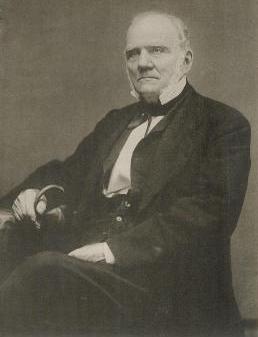
Orville Robinson
Former U.S. Representative · New York District 23 · 1843–1845 · Democratic
Orville Robinson represented New York's District 23 in the United States House of Representatives (1843–1845) for the Democratic party. The page below collects sourced biographical facts, term history, committee roles, and provenance for Robinson.
Bioguide ID: R000351
Key facts
- Full name
- Orville Robinson
- State
- New York
- District
- District 23
- Party
- Democratic
- House service
- 1843–1845
- First House term
- 1843
- Status
- Left office
- Current term ends
- —
- Born
- 1801
- Bioguide ID
- R000351
- Committee assignments
- —
- Dataset version
- 1.20260606
Biographical narrative
970 words · sourced from the Wikipedia REST extract
Orville Robinson was an American lawyer and politician who served as a U.S. Representative for New York's 23rd congressional district during the mid-19th century. A member of the Democratic Party, Robinson's congressional career spanned from 1843 to 1845. His professional life was marked by a series of legal and political roles at both local and state levels, reflecting a commitment to public service and governance in New York.
Early life and career
Orville Robinson was born on October 28, 1801, in Richfield, New York. Growing up in the early 19th century, he pursued an education in law, which was a common pathway for many individuals seeking to enter public service during that era. After completing his studies, he was admitted to the bar in 1827, marking the beginning of his legal career. Robinson initially practiced law in Mexico, New York, where he began to establish his reputation within the community.
In 1828, Robinson took on the role of Justice of the Peace, a position that allowed him to exercise judicial authority at a local level. This role was significant in small communities, as it involved overseeing minor legal disputes and maintaining public order. The following year, he was elected Town Clerk, further solidifying his involvement in local governance. His career continued to progress when he was appointed as the surrogate of Oswego County, a position he held from 1830 to 1838. As surrogate, Robinson was responsible for overseeing matters related to wills and estates, which required a keen understanding of the law and a commitment to serving the public interest.
In addition to his legal responsibilities, Robinson was active in the political landscape of New York. He served as a member of the New York State Assembly in 1834, 1836, and 1837, participating in the legislative process and contributing to the development of state laws. His experience in the Assembly provided him with valuable insights into the workings of government and the needs of his constituents.
Robinson's legal and political career continued to evolve as he became the district attorney of Oswego County from 1841 to 1843. In this role, he was responsible for prosecuting criminal cases and representing the interests of the state in legal matters. His tenure as district attorney helped to further establish his reputation as a dedicated public servant. In 1843, he also served as Town Supervisor of Mexico, a position that involved overseeing local government operations and addressing community concerns.
House tenure
In 1843, Orville Robinson was elected as a Democrat to the 28th United States Congress, representing New York's 23rd congressional district. His term in the House of Representatives began on March 4, 1843, and concluded on March 3, 1845. During his time in Congress, Robinson participated in the legislative process and contributed to discussions on various issues pertinent to his constituents and the nation at large.
As a member of the House, Robinson was part of a legislative body that was navigating the complexities of a rapidly changing America. The early 1840s were marked by significant social, economic, and political transformations, including debates over issues such as westward expansion, economic policy, and the role of the federal government. While specific details regarding his legislative activities and the bills he supported during his term are not extensively documented, it is understood that Robinson's background in law and local governance informed his contributions to congressional discussions.
Robinson's tenure in the House was relatively brief, as he served only one term. After completing his service, he returned to New York, where he continued to engage in public service and community affairs. His experiences in Congress likely influenced his subsequent roles in local and state government, as he remained active in political and civic matters.
Legislative focus and committees
While specific details regarding Orville Robinson's legislative focus and committee assignments during his time in Congress are not provided, it is important to contextualize his role within the broader framework of the House of Representatives during the mid-19th century. Members of Congress were often involved in a variety of issues that reflected the interests and concerns of their constituents. Given Robinson's legal background and experience in local governance, it can be inferred that he likely engaged with matters related to law, justice, and public administration.
The mid-1800s were characterized by significant national debates, including discussions surrounding the expansion of the United States, economic development, and the implications of slavery. As a representative from New York, Robinson would have been attuned to the unique challenges and opportunities facing his state, particularly in relation to issues such as trade, transportation, and immigration. His legal expertise may have also positioned him to contribute to discussions on judicial matters and the rule of law.
After his congressional term, Robinson continued to be involved in public service. He moved to Oswego, New York, in 1847, where he took on various roles, including serving as city recorder in 1853. His ongoing engagement in local politics demonstrated his commitment to serving the community and addressing the needs of his constituents.
In 1856, Robinson returned to the New York State Assembly, representing Oswego County's 1st District. He was elected Speaker of the Assembly, a significant leadership position that involved overseeing legislative proceedings and guiding the work of the Assembly. Additionally, he served as collector of customs for the District of Oswego from 1858 to 1860, further contributing to the administration of local governance and public service.
Orville Robinson's life and career reflect a dedication to the legal profession and public service. His experiences as a lawyer, local official, and U.S. Representative illustrate the interconnectedness of law and politics in the 19th century. Robinson passed away on December 1, 1882, in Oswego, New York, and was laid to rest at Riverside Cemetery, leaving behind a legacy of civic engagement and commitment to his community.
Notable legislation
Sponsored and co-sponsored legislation for Orville Robinson is pending operator curation. The biographical narrative above carries the same provenance trail until per-bill rows are written.
Sources
- [1]https://en.wikipedia.org/wiki/Orville_RobinsonWikipedia · retrieved 2026-06-06
Notable quotes
Sourced quotes for Orville Robinson are pending operator curation. Narrative-scope provenance remains attached below.
Sources
- [1]https://en.wikipedia.org/wiki/Orville_RobinsonWikipedia · retrieved 2026-06-06
Key positions
Curated policy positions for Orville Robinson are pending operator review. The biographical narrative above carries the same provenance trail until per-topic positions are written.
Sources
- [1]https://en.wikipedia.org/wiki/Orville_RobinsonWikipedia · retrieved 2026-06-06
Terms served
- 1843–1845U.S. House · Term 1 · Democratic
Sources & provenance
Every attributable claim above carries a per-section [N] marker that resolves to the corresponding URL below. Each entry records the upstream provider, the canonical URL, and the timestamp at which the source was retrieved by the ingest pipeline.
Key facts
- https://bioguide.congress.gov/search/bio/R000351bioguide · retrieved 2026-06-06
- https://www.govtrack.us/congress/members/409322govtrack · retrieved 2026-06-06
Biographical narrative
- https://en.wikipedia.org/wiki/Orville_Robinsonwikipedia · retrieved 2026-06-06
Find your representative
Every U.S. state elects representatives by district. Browse New York’s delegation, the full former-representative roster, or explore the role and term length.
Related on The Candidate
- Preceded by A. FosterEarlier holder of the New York District 23 House seat · Whig.Open
- Succeeded by William HoughLater holder of the New York District 23 House seat · Democratic.Open
- Abel HuntingtonFormer U.S. Representative · New York District 1 · JacksonOpen
- Alfred ChapinFormer U.S. Representative · New York District 1 · DemocraticOpen
- Cadwallader ColdenFormer U.S. Representative · New York District 1 · FederalistOpen
- Charles FloydFormer U.S. Representative · New York District 1 · DemocraticOpen