
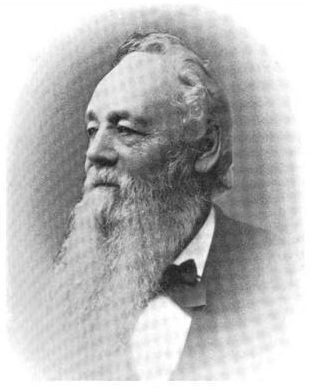
Historical · U.S. House · New York · District 23
William Bacon
Former U.S. Representative · New York District 23 · 1877–1879 · Republican
William Bacon represented New York's District 23 in the United States House of Representatives (1877–1879) for the Republican party. The page below collects sourced biographical facts, term history, committee roles, and provenance for Bacon.
Bioguide ID: B000020
Key facts
- Full name
- William Bacon
- State
- New York
- District
- District 23
- Party
- Republican
- House service
- 1877–1879
- First House term
- 1877
- Status
- Left office
- Current term ends
- —
- Born
- 1803
- Bioguide ID
- B000020
- Committee assignments
- —
- Dataset version
- 1.20260606
Biographical narrative
860 words · sourced from the Wikipedia REST extract
William Bacon was an American politician who served as a U.S. Representative for New York's 23rd congressional district. A member of the Republican Party, he held office from 1877 until 1879. Bacon's career spanned several decades, during which he engaged in various roles within the legal and political spheres. His contributions to local governance and the judiciary, along with his brief tenure in Congress, mark him as a notable figure in 19th-century American politics.
Early life and career
William Bacon was born on February 18, 1803, in Williamstown, Massachusetts. He was the son of Abigail Smith and Ezekiel Bacon, and he belonged to a family with a history of public service; he was the grandson of John Bacon. In 1815, when Bacon was just twelve years old, his family relocated to Utica, New York. This move would later serve as a foundation for his professional and political career.
Bacon pursued higher education at Hamilton College, where he graduated in 1822. Following his graduation, he attended Litchfield Law School, a prominent institution for legal education at the time, and completed his studies there in 1824. After his formal education, he gained practical experience by working in the law office of Joseph and Charles P. Kirkland for a year. He was admitted to the bar in the same year, 1824, and subsequently began his legal practice in Utica.
Bacon's early career was marked by a series of public service roles that showcased his legal expertise and commitment to his community. In 1837, he was appointed as the city attorney of Utica, where he handled legal matters for the city government. His political involvement deepened when he was elected to the New York State Assembly in 1850, allowing him to participate in the legislative process at the state level. In 1851, he was elected as a trustee of Hamilton College, reflecting his ongoing connection to his alma mater and his dedication to education.
Bacon's judicial career began in 1854 when he was appointed as a justice of the New York Supreme Court for the 5th District. He served in this capacity until 1870, during which time he also held the position of ex officio judge of the New York Court of Appeals in 1860 and 1868. His tenure on the bench was significant, as he contributed to the development of legal precedents and the administration of justice in New York State.
House tenure
William Bacon's congressional career began when he was elected as a Republican to the 45th United States Congress. He represented New York's 23rd congressional district, a position he held from March 4, 1877, until March 3, 1879. His election to the House of Representatives marked a transition from his extensive legal and judicial career to a role in national politics.
During his time in Congress, Bacon participated in the legislative process, contributing to discussions and decisions that shaped national policy. However, the specifics of his legislative activities and the bills he supported are not detailed in the available records. His term in the House was relatively brief, and he did not seek re-election after his first term ended. Following his departure from Congress, Bacon returned to his legal practice in Utica, where he continued to apply his legal knowledge and experience.
Legislative focus and committees
While specific details regarding Bacon's legislative focus and committee assignments during his time in Congress are not provided, it is important to contextualize his role within the broader political landscape of the late 19th century. The period in which Bacon served was characterized by significant political and social changes in the United States, including the aftermath of the Civil War, the Reconstruction era, and the beginnings of industrialization.
As a member of the Republican Party, Bacon would have aligned with the party's platform, which during this era often emphasized issues such as civil rights, economic development, and the expansion of infrastructure. The Republican Party was also focused on promoting policies that supported the Union's recovery and the integration of formerly enslaved individuals into society. Given his background in law and governance, it is likely that Bacon's contributions in Congress were informed by his extensive experience in the judicial system and his understanding of the legal complexities of the time.
After his congressional term concluded, Bacon continued to engage in legal practice, utilizing the skills and insights he had gained throughout his career. His return to law allowed him to remain active in his community and contribute to the legal framework of New York State.
Bacon's personal life included two marriages. He married Eliza Kirkland on October 23, 1828. Following her death in 1872, he married Susan Sloan Gillette in 1874. Bacon's family life, while not extensively documented, reflects the personal commitments that accompanied his professional endeavors.
William Bacon passed away on July 3, 1889, in Utica, Oneida County, New York. He was interred at Forest Hill Cemetery in Utica, where he rests alongside other notable figures from the region. His life and career illustrate the pathways of legal and political service in 19th-century America, highlighting the roles individuals played in shaping local and national governance during a transformative period in U.S. history.
Notable legislation
Sponsored and co-sponsored legislation for William Bacon is pending operator curation. The biographical narrative above carries the same provenance trail until per-bill rows are written.
Sources
- [1]https://en.wikipedia.org/wiki/William_J._BaconWikipedia · retrieved 2026-06-06
Notable quotes
Sourced quotes for William Bacon are pending operator curation. Narrative-scope provenance remains attached below.
Sources
- [1]https://en.wikipedia.org/wiki/William_J._BaconWikipedia · retrieved 2026-06-06
Key positions
Curated policy positions for William Bacon are pending operator review. The biographical narrative above carries the same provenance trail until per-topic positions are written.
Sources
- [1]https://en.wikipedia.org/wiki/William_J._BaconWikipedia · retrieved 2026-06-06
Terms served
- 1877–1879U.S. House · Term 1 · Republican
Sources & provenance
Every attributable claim above carries a per-section [N] marker that resolves to the corresponding URL below. Each entry records the upstream provider, the canonical URL, and the timestamp at which the source was retrieved by the ingest pipeline.
Key facts
- https://bioguide.congress.gov/search/bio/B000020bioguide · retrieved 2026-06-06
- https://www.govtrack.us/congress/members/401025govtrack · retrieved 2026-06-06
Biographical narrative
- https://en.wikipedia.org/wiki/William_J._Baconwikipedia · retrieved 2026-06-06
Find your representative
Every U.S. state elects representatives by district. Browse New York’s delegation, the full former-representative roster, or explore the role and term length.
Related on The Candidate
- Preceded by Scott LordEarlier holder of the New York District 23 House seat · Democratic.Open
- Succeeded by Cyrus PrescottLater holder of the New York District 23 House seat · Republican.Open
- Abel HuntingtonFormer U.S. Representative · New York District 1 · JacksonOpen
- Alfred ChapinFormer U.S. Representative · New York District 1 · DemocraticOpen
- Cadwallader ColdenFormer U.S. Representative · New York District 1 · FederalistOpen
- Charles FloydFormer U.S. Representative · New York District 1 · DemocraticOpen