
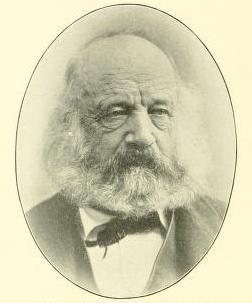
Historical · U.S. House · New York · District 24
Charles Sedgwick
Former U.S. Representative · New York District 24 · 1859–1863 · Republican
Charles Sedgwick represented New York's District 24 in the United States House of Representatives (1859–1863) for the Republican party. The page below collects sourced biographical facts, term history, committee roles, and provenance for Sedgwick.
Bioguide ID: S000221
Key facts
- Full name
- Charles Sedgwick
- State
- New York
- District
- District 24
- Party
- Republican
- House service
- 1859–1863
- First House term
- 1859
- Status
- Left office
- Current term ends
- —
- Born
- 1815
- Bioguide ID
- S000221
- Committee assignments
- —
- Dataset version
- 1.20260606
Biographical narrative
1,068 words · sourced from the Wikipedia REST extract
Charles Sedgwick was an American lawyer and politician who served as a U.S. Representative for New York's 24th congressional district from 1859 to 1863. A member of the Republican Party, Sedgwick played a significant role in the legislative processes of his time, particularly in relation to naval affairs. His career in public service was marked by his contributions to the codification of naval laws and his involvement in the political landscape during a tumultuous period in American history.
Early life and career
Charles Baldwin Sedgwick was born on March 15, 1815, in Pompey, New York. He was the son of Stephen Sedgwick and Anna Baldwin, which placed him within a family that valued education and public service. His early education took place at Pompey Hill Academy, a local institution that provided foundational learning. Following his time at the academy, he furthered his studies at Hamilton College, where he likely acquired the skills and knowledge that would later serve him in his legal and political career.
After completing his education, Sedgwick pursued a career in law. He studied diligently and was admitted to the bar in 1848, marking the beginning of his professional legal practice in Syracuse, New York. His work as a lawyer allowed him to engage with the community and understand the legal issues facing his constituents, which would later inform his legislative priorities. Sedgwick's legal background provided him with a strong foundation for his subsequent political career, equipping him with the skills necessary to navigate the complexities of governance and lawmaking.
Sedgwick's entry into politics came as he aligned himself with the Republican Party, which was emerging as a significant force in American politics during the 1850s. His commitment to the party's principles and his understanding of legal matters positioned him well for a role in the United States Congress. In 1859, he was elected to represent New York's 24th congressional district, marking the beginning of his tenure in the House of Representatives.
House tenure
Charles Sedgwick's congressional career spanned two terms, during which he served in the 36th and 37th United States Congresses. His first term began on March 4, 1859, and he continued to serve until March 3, 1863. During this time, he was involved in various legislative initiatives and discussions that were critical to the nation, particularly as the country was on the brink of the Civil War.
In the 37th Congress, Sedgwick was appointed as the chairman of the United States House Committee on Naval Affairs. This role was significant, as it placed him at the forefront of discussions regarding the United States Navy and maritime policy during a period when naval power was becoming increasingly important. His leadership on this committee allowed him to influence legislation related to naval operations, shipbuilding, and the overall readiness of the Navy, which was crucial given the impending conflict that would soon engulf the nation.
Throughout his time in Congress, Sedgwick was involved in various legislative efforts aimed at strengthening the Navy and addressing the needs of the military. His work on the Committee on Naval Affairs involved not only overseeing existing naval policies but also advocating for reforms that would enhance the capabilities of the Navy. This was particularly relevant as tensions escalated between the North and South, and the need for a strong naval presence became apparent.
After completing his congressional terms, Sedgwick continued to be active in public service. He engaged in efforts to codify naval laws for the United States Department of the Navy in Washington, D.C., for the next two years. This work was critical in establishing a coherent legal framework for naval operations and ensuring that the Navy could function effectively within the bounds of U.S. law. Following this period, he returned to Syracuse to resume his legal practice, where he continued to contribute to his community through his legal expertise.
Legislative focus and committees
During his time in the House of Representatives, Charles Sedgwick's legislative focus was primarily centered around naval affairs, reflecting his role as chairman of the House Committee on Naval Affairs. This committee was responsible for overseeing matters related to the Navy, including shipbuilding, naval operations, and military readiness. Sedgwick's leadership in this capacity allowed him to play a pivotal role in shaping policies that would impact the Navy's effectiveness during a critical time in American history.
The 37th Congress, in which Sedgwick served, was marked by significant national challenges, including the rising tensions that would lead to the Civil War. As a member of the Republican Party, Sedgwick was part of a political movement that sought to address the issues of the day, including the expansion of the Navy and the need for a robust defense strategy. His work on the Naval Affairs Committee involved not only legislative oversight but also collaboration with military leaders and other lawmakers to ensure that the Navy was adequately prepared for the challenges it would face.
In addition to his focus on naval legislation, Sedgwick's legal background informed his approach to governance. His understanding of the law and its implications for military operations allowed him to advocate for policies that balanced legal considerations with the practical needs of the Navy. This dual perspective was essential in navigating the complexities of military legislation during a time of national crisis.
Sedgwick's contributions to the House extended beyond his committee work. He was involved in broader discussions about the role of the federal government in military affairs and the importance of maintaining a strong naval presence to protect American interests. His legislative efforts reflected a commitment to ensuring that the Navy could respond effectively to both domestic and international challenges.
After leaving Congress, Sedgwick continued to engage with the community and the legal profession. His involvement in codifying naval laws demonstrated his ongoing commitment to public service and his desire to contribute to the development of a cohesive legal framework for the Navy. This work was indicative of his belief in the importance of law and governance in shaping the future of the nation.
Charles Sedgwick passed away on February 3, 1883, at the age of 67. His legacy as a lawyer and politician remains tied to his contributions to the U.S. House of Representatives and his efforts to strengthen the Navy during a pivotal time in American history. His life and career reflect the complexities of governance and the importance of legal expertise in shaping public policy.
Notable legislation
Sponsored and co-sponsored legislation for Charles Sedgwick is pending operator curation. The biographical narrative above carries the same provenance trail until per-bill rows are written.
Sources
- [1]https://en.wikipedia.org/wiki/Charles_B._SedgwickWikipedia · retrieved 2026-06-06
Notable quotes
Sourced quotes for Charles Sedgwick are pending operator curation. Narrative-scope provenance remains attached below.
Sources
- [1]https://en.wikipedia.org/wiki/Charles_B._SedgwickWikipedia · retrieved 2026-06-06
Key positions
Curated policy positions for Charles Sedgwick are pending operator review. The biographical narrative above carries the same provenance trail until per-topic positions are written.
Sources
- [1]https://en.wikipedia.org/wiki/Charles_B._SedgwickWikipedia · retrieved 2026-06-06
Terms served
- 1859–1861U.S. House · Term 1 · Republican
- 1861–1863U.S. House · Term 2 · Republican
Sources & provenance
Every attributable claim above carries a per-section [N] marker that resolves to the corresponding URL below. Each entry records the upstream provider, the canonical URL, and the timestamp at which the source was retrieved by the ingest pipeline.
Key facts
- https://bioguide.congress.gov/search/bio/S000221bioguide · retrieved 2026-06-06
- https://www.govtrack.us/congress/members/409726govtrack · retrieved 2026-06-06
Biographical narrative
- https://en.wikipedia.org/wiki/Charles_B._Sedgwickwikipedia · retrieved 2026-06-06
Find your representative
Every U.S. state elects representatives by district. Browse New York’s delegation, the full former-representative roster, or explore the role and term length.
Related on The Candidate
- Preceded by Amos GrangerEarlier holder of the New York District 24 House seat · Republican.Open
- Succeeded by George CowlesLater holder of the New York District 24 House seat · Republican.Open
- Abel HuntingtonFormer U.S. Representative · New York District 1 · JacksonOpen
- Alfred ChapinFormer U.S. Representative · New York District 1 · DemocraticOpen
- Cadwallader ColdenFormer U.S. Representative · New York District 1 · FederalistOpen
- Charles FloydFormer U.S. Representative · New York District 1 · DemocraticOpen