
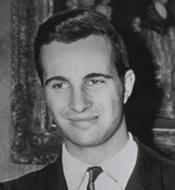
Historical · U.S. House · New York · District 24
Ogden Reid
Former U.S. Representative · New York District 24 · 1963–1975 · Democratic
Ogden Reid represented New York's District 24 in the United States House of Representatives (1963–1975) for the Democratic party. The page below collects sourced biographical facts, term history, committee roles, and provenance for Reid.
Bioguide ID: R000150
Key facts
- Full name
- Ogden Reid
- State
- New York
- District
- District 24
- Party
- Democratic
- House service
- 1963–1975
- First House term
- 1963
- Status
- Left office
- Current term ends
- —
- Born
- 1925
- Bioguide ID
- R000150
- Committee assignments
- —
- Dataset version
- 1.20260605
Biographical narrative
926 words · sourced from the Wikipedia REST extract
Ogden R. Reid was an American politician and diplomat who served as a U.S. Representative for New York's 24th congressional district from 1963 to 1975. A member of the Democratic Party, Reid was known for his progressive stances during his time in Congress and later served as the U.S. Ambassador to Israel. His political career spanned over a decade, during which he was involved in significant legislative efforts and party realignments.
Early life and career
Ogden Rogers Reid was born on June 24, 1925, in New York City. He was the son of prominent publishers Helen Rogers Reid and Ogden Mills Reid, and he grew up in a family deeply entrenched in journalism and public service. His grandfather, Whitelaw Reid, was a notable diplomat and the Republican vice-presidential candidate in 1892. Reid's family background included connections to influential figures in both media and politics, which likely shaped his future endeavors.
Reid attended Deerfield Academy, graduating in 1943, before enrolling at Yale University, where he earned his degree in 1949. While at Yale, he was a member of the secret society Book and Snake, a distinction that reflects his engagement in campus life and leadership. Throughout his youth, Reid lived at Ophir Cottage, a family estate in Purchase, New York, which was built by his grandfather.
In 1943, Reid enlisted in the United States Army, where he served as a private during World War II. He was discharged in 1946 with the rank of first lieutenant and later held the rank of captain in the Army Reserve. Following his military service, Reid returned to the family business, becoming the publisher, president, and editor of the New York Herald Tribune from 1955 to 1958. His tenure at the newspaper included introducing new features such as puzzle contests and Hollywood stories, although he faced challenges in improving the paper's financial situation.
Reid's career in public service began to take shape when he was appointed as the United States Ambassador to Israel from 1959 to 1961. In this diplomatic role, he engaged with key political figures, including Israeli Foreign Minister Golda Meir, during a period of significant geopolitical tension in the region. After returning to the United States, he took on a directorship at the Massachusetts Mutual Life Insurance Company.
House tenure
Reid's political career in Congress began when he was elected to the Eighty-eighth Congress in 1962 as a Republican. He was known for his liberal views within the party, which often put him at odds with more conservative factions. During his time in the House of Representatives, Reid was recognized for his support of civil rights legislation, including the Civil Rights Act of 1964 and the Voting Rights Act of 1965. He was also a proponent of Medicare and housing legislation aimed at improving the lives of Americans, particularly those in underserved communities.
Reid's liberal stance was further highlighted when he co-sponsored the Kennedy-Griffiths universal healthcare bill in 1971, showcasing his commitment to expanding healthcare access. His political alignment began to shift, and on March 22, 1972, he switched his party affiliation from Republican to Democrat. Reid cited a growing discomfort with the Republican Party's direction under President Richard Nixon, stating that he felt the party had moved too far to the right and was failing to address the needs of average Americans.
Despite the challenges of switching parties, Reid successfully fended off a Republican challenge in the 1972 elections. However, he chose not to seek re-election in 1974, concluding his six terms in Congress on January 3, 1975. Throughout his congressional career, Reid sponsored 85 pieces of legislation and co-sponsored 99, reflecting an active engagement in legislative processes.
Legislative focus and committees
During his tenure in the House of Representatives, Reid was involved in various committees and legislative initiatives that aligned with his progressive values. His commitment to civil rights was a defining aspect of his legislative focus, as he supported key legislation that aimed to dismantle systemic discrimination and promote equality. Reid's voting record included support for landmark civil rights laws, which were crucial in advancing social justice during the 1960s and early 1970s.
In addition to civil rights, Reid was an advocate for healthcare reform, demonstrating a keen interest in expanding access to medical services for the elderly and underprivileged populations. His co-sponsorship of the Kennedy-Griffiths universal healthcare bill illustrated his belief in the necessity of a comprehensive healthcare system that would provide for all Americans.
Reid's legislative efforts also extended to housing and urban development, where he supported initiatives designed to improve living conditions and promote economic opportunities for marginalized communities. His work in these areas reflected a broader commitment to social welfare and economic equity.
After leaving Congress, Reid briefly ran for Governor of New York in 1974 but withdrew from the race before the election. He continued his public service by serving as the Commissioner of Environmental Conservation under Democratic Governor Hugh Carey. In 1983, he was the Democratic nominee for Westchester County Executive but was unsuccessful in that bid.
Reid's contributions to public service and his legislative achievements are preserved in his papers, which are held at the Manuscripts and Archives at the Sterling Memorial Library at Yale University. His legacy includes a commitment to social justice, healthcare reform, and environmental conservation.
Ogden R. Reid passed away on March 2, 2019, at his home in Waccabuc, New York, at the age of 93. His life and career reflect a dedication to public service and a significant impact on American politics during a transformative period in the nation's history.
Notable legislation
Sponsored and co-sponsored legislation for Ogden Reid is pending operator curation. The biographical narrative above carries the same provenance trail until per-bill rows are written.
Sources
- [1]https://en.wikipedia.org/wiki/Ogden_ReidWikipedia · retrieved 2026-06-05
Notable quotes
Sourced quotes for Ogden Reid are pending operator curation. Narrative-scope provenance remains attached below.
Sources
- [1]https://en.wikipedia.org/wiki/Ogden_ReidWikipedia · retrieved 2026-06-05
Key positions
Curated policy positions for Ogden Reid are pending operator review. The biographical narrative above carries the same provenance trail until per-topic positions are written.
Sources
- [1]https://en.wikipedia.org/wiki/Ogden_ReidWikipedia · retrieved 2026-06-05
Terms served
- 1963–1965U.S. House · Term 1 · Republican
- 1965–1967U.S. House · Term 2 · Republican
- 1967–1969U.S. House · Term 3 · Republican
- 1969–1971U.S. House · Term 4 · Republican
- 1971–1973U.S. House · Term 5 · Democratic
- 1973–1975U.S. House · Term 6 · Democratic
Sources & provenance
Every attributable claim above carries a per-section [N] marker that resolves to the corresponding URL below. Each entry records the upstream provider, the canonical URL, and the timestamp at which the source was retrieved by the ingest pipeline.
Key facts
- https://bioguide.congress.gov/search/bio/R000150bioguide · retrieved 2026-06-05
- https://www.govtrack.us/congress/members/409127govtrack · retrieved 2026-06-05
Biographical narrative
- https://en.wikipedia.org/wiki/Ogden_Reidwikipedia · retrieved 2026-06-05
Find your representative
Every U.S. state elects representatives by district. Browse New York’s delegation, the full former-representative roster, or explore the role and term length.
Related on The Candidate
- Preceded by Benjamin RabinEarlier holder of the New York District 24 House seat · Democratic.Open
- Succeeded by Sherry BoehlertLater holder of the New York District 24 House seat · Republican.Open
- Abel HuntingtonFormer U.S. Representative · New York District 1 · JacksonOpen
- Alfred ChapinFormer U.S. Representative · New York District 1 · DemocraticOpen
- Cadwallader ColdenFormer U.S. Representative · New York District 1 · FederalistOpen
- Charles FloydFormer U.S. Representative · New York District 1 · DemocraticOpen