
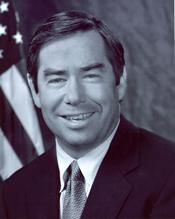
Historical · U.S. House · New York · District 25
Jim Walsh
Former U.S. Representative · New York District 25 · 1989–2009 · Republican
Jim Walsh represented New York's District 25 in the United States House of Representatives (1989–2009) for the Republican party. The page below collects sourced biographical facts, term history, committee roles, and provenance for Walsh.
Bioguide ID: W000099
Key facts
- Full name
- Jim Walsh
- State
- New York
- District
- District 25
- Party
- Republican
- House service
- 1989–2009
- First House term
- 1989
- Status
- Left office
- Current term ends
- —
- Born
- 1947
- Bioguide ID
- W000099
- Committee assignments
- —
- Dataset version
- 1.20260605
Biographical narrative
826 words · sourced from the Wikipedia REST extract
James T. Walsh is a former American politician who served as a Republican member of the United States House of Representatives, representing New York's 25th congressional district from 1989 until his retirement in 2009. Born on June 19, 1947, in Syracuse, New York, Walsh's political career spanned two decades, during which he became known for his moderate stance within the Republican Party and his active involvement in various legislative initiatives, particularly those concerning veterans and healthcare.
Early life and career
James T. Walsh was born and raised in Syracuse, New York. He pursued higher education at St. Bonaventure University, where he earned a bachelor's degree in history. Following his graduation, Walsh served in the Peace Corps from 1970 to 1972, working as an agricultural extension agent in Nepal. This experience contributed to his understanding of international issues and public service.
In the years leading up to his political career, Walsh held various positions in the workforce. He worked as a Social Services income examiner and later transitioned to the telecommunications industry, where he held executive roles at AT&T and NYNEX Telecommunications. His academic contributions included serving as the Director of the Telecommunication Institute at SUNY Utica-Rome, where he also taught telecommunication policy as an adjunct professor.
Walsh's political career began at the local level when he was elected to the Syracuse City Council, where he served from 1977 to 1985. During this time, he held the position of president of the Common Council from 1985 until 1988. His leadership in local government helped to establish his reputation as a dedicated public servant and paved the way for his subsequent election to the U.S. House of Representatives.
House tenure
In 1988, Walsh successfully ran for a seat in the U.S. House of Representatives, representing what was then New York's 27th District. He won the election by defeating state Public Service Commissioner Rosemary S. Pooler. Over the course of his career, Walsh was re-elected to Congress nine times, typically by comfortable margins. However, the political landscape shifted in the 1990s, leading to a more Democratic-leaning constituency following the redistricting that renumbered his district to the 25th after the 1990 census.
Throughout his tenure, Walsh faced various electoral challenges. Notably, in 1996, he encountered a well-funded opponent in Cortland attorney Marty Mack, securing only 53 percent of the vote. His closest race occurred in 2006 when he narrowly defeated former congressional aide Dan Maffei with a 51 percent to 49 percent margin. Despite losing Onondaga County, which includes Syracuse, Walsh's support in the more rural areas of his district helped him maintain his seat. However, in early 2008, he announced that he would not seek an 11th term, leading to Maffei's victory in the November election.
Legislative focus and committees
During his time in Congress, Walsh was recognized for his moderate, pro-labor Republican stance. He served on the United States House Committee on Appropriations for 16 years, where he played a significant role in shaping federal spending priorities. As chair of the Appropriations Subcommittee on Military Construction, Veterans Affairs, and Related Agencies, he oversaw a substantial budget that included funding for the Department of Veterans Affairs and military family housing.
Walsh was particularly active in advocating for veterans' issues. He was involved in initiatives aimed at improving healthcare for veterans and ensuring adequate funding for military construction projects. His leadership in the Appropriations Committee allowed him to influence legislation that directly impacted the lives of service members and their families.
In addition to his work on veterans' affairs, Walsh was a co-founder and co-chair of the Congressional Hearing Health Caucus. He championed legislation that aimed to guarantee universal hearing screenings for newborns and infants, culminating in the enactment of the James T. Walsh Universal Newborn Hearing Screening Program in 2009. This initiative reflected his commitment to public health and the welfare of children.
Walsh's views on foreign policy, particularly regarding the Iraq War, evolved during his congressional tenure. He initially supported the war but later called for a gradual withdrawal of American troops, citing concerns about the Iraqi government's performance. This shift in perspective garnered media attention and highlighted his willingness to reassess his positions based on changing circumstances.
Throughout his two decades in Congress, Walsh introduced 53 bills and co-sponsored nearly 1,700 pieces of legislation, successfully enacting 10 bills. His legislative efforts spanned a wide range of issues, reflecting his engagement with both local and national concerns.
After retiring from Congress in 2009, Walsh transitioned to a role as a government affairs counselor for K & L Gates in Washington, D.C. His extensive experience in public service and legislative affairs continued to inform his work in this capacity.
James T. Walsh's political career is marked by his commitment to public service, his moderate approach to governance, and his focus on issues affecting veterans and healthcare. His legacy includes significant contributions to legislation that improved the lives of many constituents in Central New York and beyond.
Notable legislation
Sponsored and co-sponsored legislation for Jim Walsh is pending operator curation. The biographical narrative above carries the same provenance trail until per-bill rows are written.
Sources
- [1]https://en.wikipedia.org/wiki/James_T._WalshWikipedia · retrieved 2026-06-05
Notable quotes
Sourced quotes for Jim Walsh are pending operator curation. Narrative-scope provenance remains attached below.
Sources
- [1]https://en.wikipedia.org/wiki/James_T._WalshWikipedia · retrieved 2026-06-05
Key positions
Curated policy positions for Jim Walsh are pending operator review. The biographical narrative above carries the same provenance trail until per-topic positions are written.
Sources
- [1]https://en.wikipedia.org/wiki/James_T._WalshWikipedia · retrieved 2026-06-05
Terms served
- 1989–1991U.S. House · Term 1 · Republican
- 1991–1993U.S. House · Term 2 · Republican
- 1993–1995U.S. House · Term 3 · Republican
- 1995–1997U.S. House · Term 4 · Republican
- 1997–1999U.S. House · Term 5 · Republican
- 1999–2001U.S. House · Term 6 · Republican
- 2001–2003U.S. House · Term 7 · Republican
- 2003–2005U.S. House · Term 8 · Republican
- 2005–2007U.S. House · Term 9 · Republican
- 2007–2009U.S. House · Term 10 · Republican
Sources & provenance
Every attributable claim above carries a per-section [N] marker that resolves to the corresponding URL below. Each entry records the upstream provider, the canonical URL, and the timestamp at which the source was retrieved by the ingest pipeline.
Key facts
- https://bioguide.congress.gov/search/bio/W000099bioguide · retrieved 2026-06-05
- http://www.house.gov/walshhouse.gov · retrieved 2026-06-05
Biographical narrative
- https://en.wikipedia.org/wiki/James_T._Walshwikipedia · retrieved 2026-06-05
Find your representative
Every U.S. state elects representatives by district. Browse New York’s delegation, the full former-representative roster, or explore the role and term length.
Related on The Candidate
- Preceded by Robert BarryEarlier holder of the New York District 25 House seat · Republican.Open
- Succeeded by Ann Marie BuerkleLater holder of the New York District 25 House seat · Republican.Open
- Abel HuntingtonFormer U.S. Representative · New York District 1 · JacksonOpen
- Alfred ChapinFormer U.S. Representative · New York District 1 · DemocraticOpen
- Cadwallader ColdenFormer U.S. Representative · New York District 1 · FederalistOpen
- Charles FloydFormer U.S. Representative · New York District 1 · DemocraticOpen