
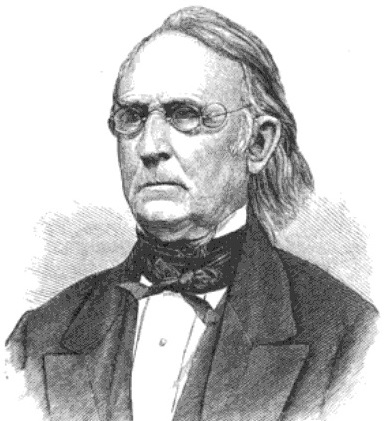
Historical · U.S. House · New York · District 26
William Jackson
Former U.S. Representative · New York District 26 · 1849–1851 · Whig
William Jackson represented New York's District 26 in the United States House of Representatives (1849–1851) for the Whig party. The page below collects sourced biographical facts, term history, committee roles, and provenance for Jackson.
Bioguide ID: J000031
Key facts
- Full name
- William Jackson
- State
- New York
- District
- District 26
- Party
- Whig
- House service
- 1849–1851
- First House term
- 1849
- Status
- Left office
- Current term ends
- —
- Born
- 1794
- Bioguide ID
- J000031
- Committee assignments
- —
- Dataset version
- 1.20260606
Biographical narrative
915 words · sourced from the Wikipedia REST extract
William Jackson was a U.S. Representative from New York, serving as a member of the Whig Party. His congressional career spanned from 1849 to 1851, during which he represented New York's 26th congressional district. Born in 1794, Jackson had a diverse career that included roles in education, surveying, and mercantile activities before his election to the House of Representatives. After his congressional term, he returned to his business pursuits and continued to be active in local governance until his death in 1882.
Early life and career
William Jackson was born on December 29, 1794, in Chester, New York. His early education took place in common schools, where he developed foundational skills that would serve him throughout his life. Following his schooling, Jackson pursued a career in surveying, which provided him with practical skills and knowledge that would later be beneficial in various professional roles.
From 1813 to 1815, Jackson worked as a schoolteacher in Goshen, New York. This experience in education likely contributed to his understanding of community needs and the importance of civic engagement. After his teaching tenure, he transitioned into surveying, which allowed him to engage with the land and communities in a different capacity. His work as a surveyor led him to various locations, including Chester and Owego in New York, as well as Bermerville in Sussex County, New Jersey.
In 1825, Jackson relocated to Havana, Chemung County, New York, where he continued his mercantile pursuits. His involvement in commerce not only provided him with financial stability but also connected him with the local community and its economic landscape. Jackson's business acumen and community involvement eventually paved the way for his entry into local governance.
Jackson's political career began to take shape in the 1830s when he served as a Justice of the Peace from 1836 to 1838. This role allowed him to engage with the legal system and understand the intricacies of local governance. Following this position, he was appointed as a judge of the court of common pleas and general sessions for Chemung County, serving from 1839 to 1846. His judicial experience further solidified his reputation as a community leader and prepared him for his future role in the U.S. Congress.
After his time as a judge, Jackson returned to the position of Justice of the Peace in the town of Catharine, New York, which was originally part of Chemung County but later became part of Schuyler County. His continued involvement in local governance demonstrated his commitment to public service and his understanding of the needs of his constituents.
House tenure
William Jackson's congressional career began when he was elected as a member of the Whig Party to the Thirty-first Congress. His term in the U.S. House of Representatives lasted from March 4, 1849, until March 4, 1851. During this period, he represented New York's 26th congressional district. Jackson's election to Congress marked a significant step in his political career, allowing him to influence national legislation and advocate for the interests of his constituents at the federal level.
As a member of the Whig Party, Jackson was part of a political movement that sought to address various issues of the time, including economic development, infrastructure improvements, and the expansion of civil rights. The Whig Party was known for its opposition to the policies of the Democratic Party, particularly those of President Andrew Jackson, and it aimed to promote a platform that favored a strong legislative branch and active government involvement in economic matters.
During his time in the House, Jackson engaged in the legislative process, contributing to discussions and decisions that shaped the direction of national policy. However, specific details regarding his legislative actions, committee assignments, or the bills he supported are not documented in the available records. After serving one term, Jackson concluded his congressional career in 1851 and returned to his mercantile pursuits.
Legislative focus and committees
While specific details about William Jackson's legislative focus and committee assignments during his time in Congress are not extensively documented, his background in commerce and local governance likely influenced his perspectives on economic and community issues. As a member of the Whig Party, he would have been aligned with the party's priorities, which included promoting economic growth, infrastructure development, and a strong legislative framework to support these initiatives.
The Whig Party's platform during Jackson's tenure emphasized the importance of federal investment in infrastructure, such as roads and canals, which were vital for economic expansion in the United States. Given Jackson's experience in mercantile activities, he may have been particularly attuned to the needs of businesses and the economic challenges faced by his constituents.
Additionally, Jackson's previous roles in local governance and the judiciary would have provided him with insights into the legal and administrative challenges faced by communities. This background may have informed his approach to legislation, particularly in areas related to justice, local governance, and community development.
After his congressional term ended in 1851, Jackson returned to his mercantile pursuits, continuing to engage with the economic landscape of his community. His involvement in local business and governance remained a significant aspect of his life until his passing.
William Jackson passed away on September 15, 1882, in Montour Falls, New York, at the age of 87. He was interred in Montour Falls Cemetery, leaving behind a legacy of public service and community engagement that spanned several decades. His life and career reflect the complexities of 19th-century American politics and the role of local leaders in shaping national policy.
Notable legislation
Sponsored and co-sponsored legislation for William Jackson is pending operator curation. The biographical narrative above carries the same provenance trail until per-bill rows are written.
Sources
- [1]https://en.wikipedia.org/wiki/William_Terry_JacksonWikipedia · retrieved 2026-06-06
Notable quotes
Sourced quotes for William Jackson are pending operator curation. Narrative-scope provenance remains attached below.
Sources
- [1]https://en.wikipedia.org/wiki/William_Terry_JacksonWikipedia · retrieved 2026-06-06
Key positions
Curated policy positions for William Jackson are pending operator review. The biographical narrative above carries the same provenance trail until per-topic positions are written.
Sources
- [1]https://en.wikipedia.org/wiki/William_Terry_JacksonWikipedia · retrieved 2026-06-06
Terms served
- 1849–1851U.S. House · Term 1 · Whig
Sources & provenance
Every attributable claim above carries a per-section [N] marker that resolves to the corresponding URL below. Each entry records the upstream provider, the canonical URL, and the timestamp at which the source was retrieved by the ingest pipeline.
Key facts
- https://bioguide.congress.gov/search/bio/J000031bioguide · retrieved 2026-06-06
- https://www.govtrack.us/congress/members/405937govtrack · retrieved 2026-06-06
Biographical narrative
- https://en.wikipedia.org/wiki/William_Terry_Jacksonwikipedia · retrieved 2026-06-06
Find your representative
Every U.S. state elects representatives by district. Browse New York’s delegation, the full former-representative roster, or explore the role and term length.
Related on The Candidate
- Preceded by William LawrenceEarlier holder of the New York District 26 House seat · Whig.Open
- Succeeded by Henry WalbridgeLater holder of the New York District 26 House seat · Whig.Open
- Abel HuntingtonFormer U.S. Representative · New York District 1 · JacksonOpen
- Alfred ChapinFormer U.S. Representative · New York District 1 · DemocraticOpen
- Cadwallader ColdenFormer U.S. Representative · New York District 1 · FederalistOpen
- Charles FloydFormer U.S. Representative · New York District 1 · DemocraticOpen