
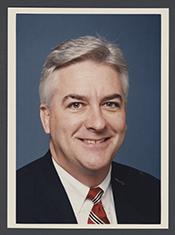
Historical · U.S. House · New York · District 27
Jack Quinn
Former U.S. Representative · New York District 27 · 1993–2005 · Republican
Jack Quinn represented New York's District 27 in the United States House of Representatives (1993–2005) for the Republican party. The page below collects sourced biographical facts, term history, committee roles, and provenance for Quinn.
Bioguide ID: Q000016
Key facts
- Full name
- Jack Quinn
- State
- New York
- District
- District 27
- Party
- Republican
- House service
- 1993–2005
- First House term
- 1993
- Status
- Left office
- Current term ends
- —
- Born
- 1951
- Bioguide ID
- Q000016
- Committee assignments
- —
- Dataset version
- 1.20260605
Biographical narrative
845 words · sourced from the Wikipedia REST extract
John Francis Quinn Jr. is a retired American politician and academic administrator who served as a Republican member of the United States House of Representatives from 1993 until 2005. Representing New York's 27th congressional district, Quinn was known for his moderate conservative stance and his ability to navigate a predominantly Democratic political landscape. After his congressional career, he transitioned to education, serving as the president of Erie Community College from 2008 to 2017.
Early life and career
Jack Quinn was born on April 13, 1951, in Buffalo, New York. He grew up in a family where his father, Jack Quinn Sr., worked as a locomotive engineer for the South Buffalo Railway and also held a position at the Erie County Public Library. His mother, Norma, raised him alongside his four brothers: Kevin, Jeffrey, Thomas, and Michael. This upbringing in a working-class environment influenced Quinn's later political and professional choices.
Quinn pursued higher education at Siena College, where he earned a Bachelor of Arts degree in 1973. He continued his studies at the State University of New York at Buffalo, obtaining a Master’s degree in Education in 1978. Additionally, he achieved a school superintendent credential from the State University of New York at Fredonia, which further equipped him for a career in education and administration.
Before entering politics, Quinn worked as a middle school English teacher in the Orchard Park Central School District for a decade. During his time in education, he also coached various sports, including track and field, basketball, and football. His early career included a brief period working at the Bethlehem Steel Plant in Lackawanna, New York, which provided him with firsthand experience of the challenges faced by laborers in the industrial sector.
Quinn's political career began at the local level, where he served on the Hamburg Town Council from 1982 to 1984. Following this role, he was elected as the town supervisor, a position he held until 1993. His involvement in local government laid the groundwork for his subsequent election to the U.S. House of Representatives.
House tenure
Quinn entered the U.S. House of Representatives after winning a competitive election in 1992, succeeding Congressman Henry Nowak. His district, which encompassed much of Buffalo and suburban Erie County, was historically Democratic and had become even more so due to redistricting. Despite this challenging political environment, Quinn managed to defeat Erie County Executive Dennis Gorski, marking a significant upset.
Throughout his six terms in Congress, Quinn demonstrated a unique ability to connect with constituents and build relationships, particularly with organized labor, which was atypical for a Republican representative in a Democratic stronghold. His electoral success was notable; he was re-elected five additional times, often by substantial margins, despite the district's Democratic leanings.
Quinn's tenure was marked by a complex relationship with national politics. He maintained a friendship with President Bill Clinton, yet he voted in favor of three articles of impeachment against Clinton. This decision was described as a "vote of conscience," reflecting Quinn's belief in the importance of accountability, despite the personal and political ramifications of such a stance.
During the 2002 redistricting process, Quinn's district was renumbered from the 30th to the 27th District, which retained much of its previous territory while adding Chautauqua County. The new district was slightly more favorable to Republicans, although it still had a significant Democratic presence. Quinn announced in April 2004 that he would not seek re-election, concluding his congressional career with a reported approval rating of 70%.
Legislative focus and committees
During his time in the House, Quinn was actively involved in various committees and caucuses, reflecting his interests and the needs of his constituents. He served on the Transportation and Infrastructure Committee, where he held the position of chairman of the Railroads Subcommittee. His work on this committee included participation in several subcommittees focused on aviation, surface transportation, mass transit, and water and environment issues.
Quinn also chaired the Executive Committee of the Congressional Steel Caucus and the Benefits Subcommittee, demonstrating his commitment to labor and industry issues. He was a member of the Veterans' Affairs Committee, where he contributed to the Subcommittee on Hospitals and Health Care, advocating for the needs of veterans.
In addition to these roles, Quinn was involved in several bipartisan initiatives. He co-chaired the Northern Border Caucus and the Northeast-Midwest Congressional Coalition, working to address regional concerns and foster collaboration among representatives from different states. His membership in various other caucuses, including the Congressional Travel and Tourism Caucus, the Congressional Fire Services Caucus, and the Friends of Ireland Congressional Committee, further illustrated his diverse legislative interests.
Quinn's legislative focus was characterized by a blend of support for labor interests and a commitment to infrastructure development, reflecting the priorities of his constituents in a district that relied heavily on both. His ability to navigate the complexities of a predominantly Democratic district while maintaining a Republican identity was a hallmark of his congressional career. After leaving Congress, Quinn transitioned to higher education, where he continued to influence public policy and community development as president of Erie Community College.
Notable legislation
Sponsored and co-sponsored legislation for Jack Quinn is pending operator curation. The biographical narrative above carries the same provenance trail until per-bill rows are written.
Sources
- [1]https://en.wikipedia.org/wiki/Jack_Quinn_(politician)Wikipedia · retrieved 2026-06-05
Notable quotes
Sourced quotes for Jack Quinn are pending operator curation. Narrative-scope provenance remains attached below.
Sources
- [1]https://en.wikipedia.org/wiki/Jack_Quinn_(politician)Wikipedia · retrieved 2026-06-05
Key positions
Curated policy positions for Jack Quinn are pending operator review. The biographical narrative above carries the same provenance trail until per-topic positions are written.
Sources
- [1]https://en.wikipedia.org/wiki/Jack_Quinn_(politician)Wikipedia · retrieved 2026-06-05
Terms served
- 1993–1995U.S. House · Term 1 · Republican
- 1995–1997U.S. House · Term 2 · Republican
- 1997–1999U.S. House · Term 3 · Republican
- 1999–2001U.S. House · Term 4 · Republican
- 2001–2003U.S. House · Term 5 · Republican
- 2003–2005U.S. House · Term 6 · Republican
Sources & provenance
Every attributable claim above carries a per-section [N] marker that resolves to the corresponding URL below. Each entry records the upstream provider, the canonical URL, and the timestamp at which the source was retrieved by the ingest pipeline.
Key facts
- https://bioguide.congress.gov/search/bio/Q000016bioguide · retrieved 2026-06-05
- http://www.house.gov/quinnhouse.gov · retrieved 2026-06-05
Biographical narrative
- https://en.wikipedia.org/wiki/Jack_Quinn_(politician)wikipedia · retrieved 2026-06-05
Find your representative
Every U.S. state elects representatives by district. Browse New York’s delegation, the full former-representative roster, or explore the role and term length.
Related on The Candidate
- Preceded by George WortleyEarlier holder of the New York District 27 House seat · Republican.Open
- Succeeded by Chris CollinsLater holder of the New York District 27 House seat · Republican.Open
- Abel HuntingtonFormer U.S. Representative · New York District 1 · JacksonOpen
- Alfred ChapinFormer U.S. Representative · New York District 1 · DemocraticOpen
- Cadwallader ColdenFormer U.S. Representative · New York District 1 · FederalistOpen
- Charles FloydFormer U.S. Representative · New York District 1 · DemocraticOpen