
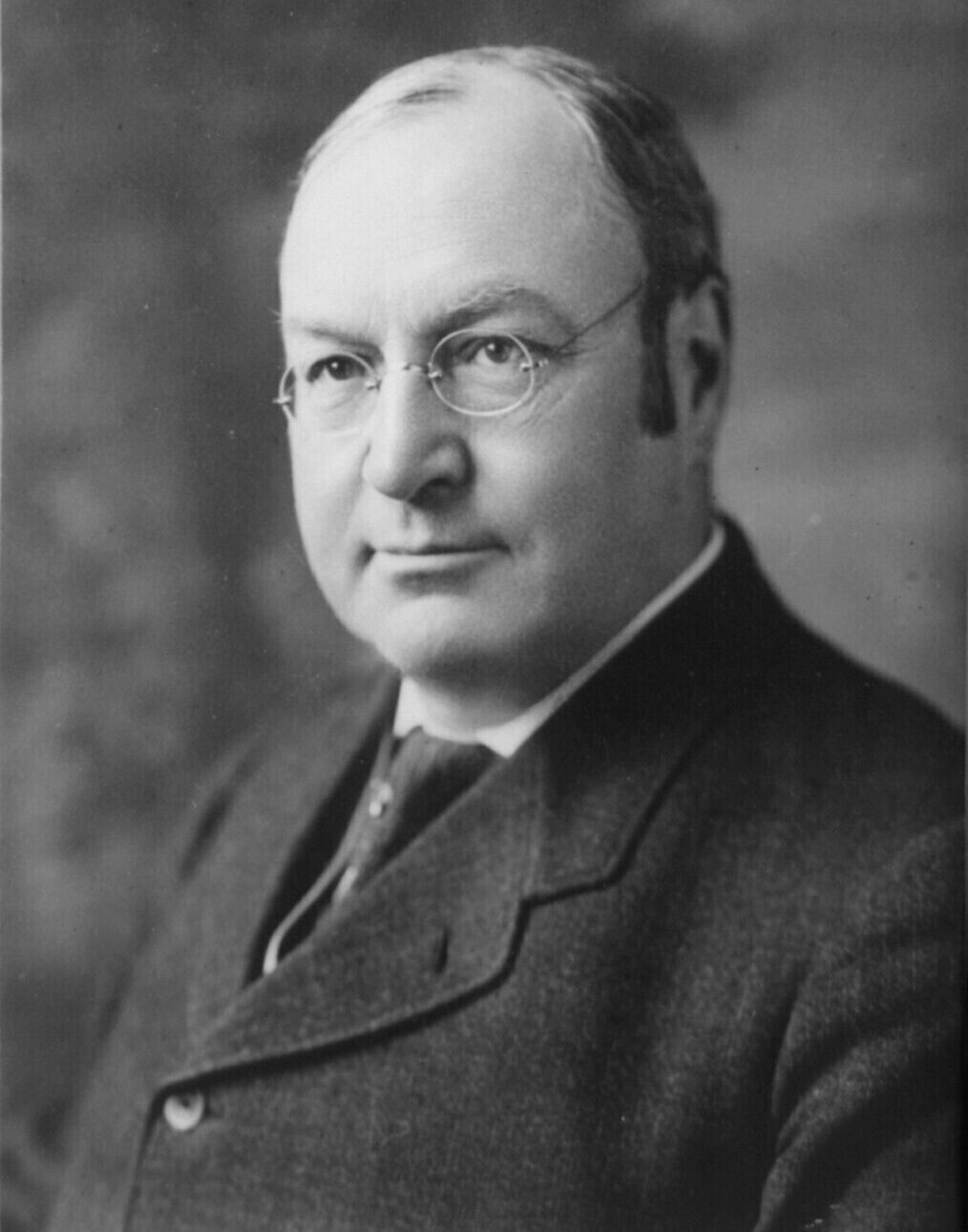
Historical · U.S. House · New York · District 27
James Sherman
Former U.S. Representative · New York District 27 · 1887–1909 · Republican
James Sherman represented New York's District 27 in the United States House of Representatives (1887–1909) for the Republican party. The page below collects sourced biographical facts, term history, committee roles, and provenance for Sherman.
Bioguide ID: S000345
Key facts
- Full name
- James Sherman
- State
- New York
- District
- District 27
- Party
- Republican
- House service
- 1887–1909
- First House term
- 1887
- Status
- Left office
- Current term ends
- —
- Born
- 1855
- Bioguide ID
- S000345
- Committee assignments
- —
- Dataset version
- 1.20260606
Biographical narrative
930 words · sourced from the Wikipedia REST extract
James Sherman was a prominent American politician who served as a U.S. Representative from New York and later as the 27th Vice President of the United States. A member of the Republican Party, Sherman held a significant role in the House of Representatives from 1887 to 1891 and again from 1893 until 1909. He was known for his congenial personality and his ability to facilitate legislative processes, earning him the nickname "Sunny Jim." Following his congressional career, he was elected Vice President under President William Howard Taft, serving from 1909 until his death in 1912.
Early life and career
James Sherman was born on October 24, 1855, in Utica, New York, to Richard Updike Sherman and Mary Frances Sherman. He belonged to a distinguished lineage, being a ninth-generation descendant of Henry Sherman, who was connected to notable historical figures such as Roger Sherman, a signer of the Declaration of Independence, and William Tecumseh Sherman, a Union general during the Civil War. Sherman received his early education at Whitestown Seminary and later attended Hamilton College, where he earned a Bachelor of Arts degree in 1878. During his time at Hamilton, he gained recognition for his oratory and debate skills, which would later serve him well in his political career.
After completing his education, Sherman spent an additional year at Hamilton studying law before continuing his legal studies at the Utica law office of Beardsley, Cookingham, and Burdick, where his brother-in-law, Henry J. Cookingham, was a partner. He was admitted to the bar in 1880 and subsequently practiced law with Cookingham in the firm of Cookingham & Martin. In addition to his legal career, Sherman held several business positions, including serving as president of the Utica Trust & Deposit Company and the New Hartford Canning Company.
Sherman's political career began in earnest when he became active in the Republican Party, eventually being elected chairman of the party in Oneida County. His political ascent continued when he was elected mayor of Utica at the young age of twenty-nine. In 1881, he married Carrie Babcock from East Orange, New Jersey, and the couple had three sons: Sherrill B. Sherman, Richard Updyke Sherman, and Thomas Moore Sherman.
House tenure
James Sherman was first elected to the U.S. House of Representatives in 1886, representing New York's 23rd congressional district as a Republican. His congressional career spanned two decades, during which he served a total of ten terms. His initial term lasted from 1887 to 1891, followed by a two-year hiatus, after which he returned to Congress and served from 1893 until 1909.
During his time in the House, Sherman was involved in significant debates within the Republican Party, particularly regarding protective tariffs. He aligned himself with the conservative faction of the party, supporting William McKinley and advocating for the gold standard while opposing the inflationary policies associated with "free silver." His stance on these issues reflected the broader economic concerns of the time and positioned him as a key player in the party's internal dynamics.
Sherman held the chairmanship of the Committee on Indian Affairs from the 54th through the 60th Congresses, a role he maintained from 1895 to 1909. His leadership in this capacity allowed him to influence legislation affecting Native American affairs significantly. Although he never held a major committee chairmanship such as Ways and Means or Appropriations, his reputation for neutrality made him a suitable candidate for the chairmanship of the Committee of the Whole. This position was crucial for expediting the legislative process, as it allowed for the suspension of certain rules to facilitate the passage of bills. His ability to navigate the complexities of the House earned him respect from colleagues, including Henry Cabot Lodge, who recognized his integrity and judgment.
One notable achievement during Sherman's tenure was his advocacy for the establishment of the Sherman Indian High School in Riverside, California, which was named in his honor. This initiative highlighted his commitment to education and the welfare of Native American communities.
Legislative focus and committees
Throughout his congressional career, James Sherman focused on various legislative issues, particularly those related to economic policy, Native American affairs, and the internal workings of the House. His alignment with the conservative wing of the Republican Party positioned him as a defender of traditional economic principles, particularly in the context of the contentious debates surrounding tariffs and monetary policy.
As chairman of the Committee on Indian Affairs, Sherman played a vital role in shaping policies that affected Native American tribes and their rights. His leadership in this area was marked by efforts to improve the conditions and education of Native Americans, as evidenced by his involvement in the establishment of the Sherman Indian High School. This institution aimed to provide vocational training and education to Native American youth, reflecting Sherman's belief in the importance of education as a means of empowerment.
Sherman's tenure in the House was characterized by his ability to work collaboratively with colleagues across party lines, which was essential for navigating the often contentious political landscape of the time. His reputation for being approachable and congenial facilitated his role as a mediator in legislative discussions, allowing him to build coalitions and foster cooperation among lawmakers.
In summary, James Sherman's legislative career was marked by his commitment to conservative economic principles, his leadership in Indian affairs, and his ability to facilitate legislative processes within the House of Representatives. His contributions to American politics extended beyond his time in Congress, as he later served as Vice President under William Howard Taft, further shaping the political landscape of the early 20th century.
Notable legislation
Sponsored and co-sponsored legislation for James Sherman is pending operator curation. The biographical narrative above carries the same provenance trail until per-bill rows are written.
Sources
- [1]https://en.wikipedia.org/wiki/James_S._ShermanWikipedia · retrieved 2026-06-06
Notable quotes
Sourced quotes for James Sherman are pending operator curation. Narrative-scope provenance remains attached below.
Sources
- [1]https://en.wikipedia.org/wiki/James_S._ShermanWikipedia · retrieved 2026-06-06
Key positions
Curated policy positions for James Sherman are pending operator review. The biographical narrative above carries the same provenance trail until per-topic positions are written.
Sources
- [1]https://en.wikipedia.org/wiki/James_S._ShermanWikipedia · retrieved 2026-06-06
Terms served
- 1887–1889U.S. House · Term 1 · Republican
- 1889–1891U.S. House · Term 2 · Republican
- 1893–1895U.S. House · Term 3 · Republican
- 1895–1897U.S. House · Term 4 · Republican
- 1897–1899U.S. House · Term 5 · Republican
- 1899–1901U.S. House · Term 6 · Republican
- 1901–1903U.S. House · Term 7 · Republican
- 1903–1905U.S. House · Term 8 · Republican
- 1905–1907U.S. House · Term 9 · Republican
- 1907–1909U.S. House · Term 10 · Republican
Sources & provenance
Every attributable claim above carries a per-section [N] marker that resolves to the corresponding URL below. Each entry records the upstream provider, the canonical URL, and the timestamp at which the source was retrieved by the ingest pipeline.
Key facts
- https://bioguide.congress.gov/search/bio/S000345bioguide · retrieved 2026-06-06
- https://www.govtrack.us/congress/members/409841govtrack · retrieved 2026-06-06
Biographical narrative
- https://en.wikipedia.org/wiki/James_S._Shermanwikipedia · retrieved 2026-06-06
Find your representative
Every U.S. state elects representatives by district. Browse New York’s delegation, the full former-representative roster, or explore the role and term length.
Related on The Candidate
- Preceded by Hamilton WardEarlier holder of the New York District 27 House seat · Republican.Open
- Succeeded by Charles MillingtonLater holder of the New York District 27 House seat · Republican.Open
- Abel HuntingtonFormer U.S. Representative · New York District 1 · JacksonOpen
- Alfred ChapinFormer U.S. Representative · New York District 1 · DemocraticOpen
- Cadwallader ColdenFormer U.S. Representative · New York District 1 · FederalistOpen
- Charles FloydFormer U.S. Representative · New York District 1 · DemocraticOpen